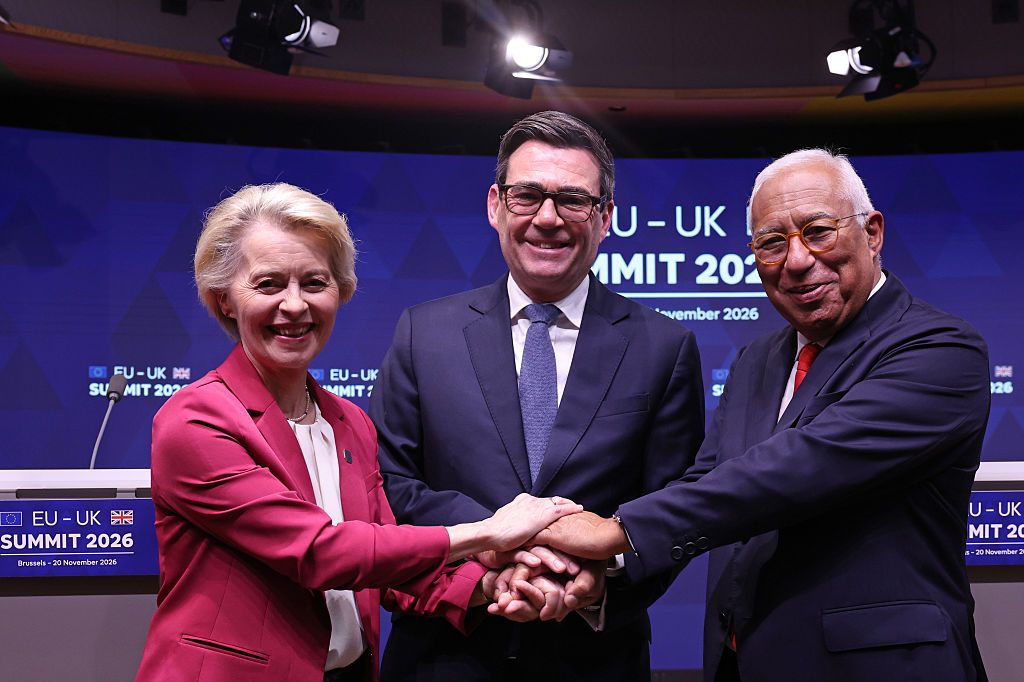
Last Friday, the prime minister attended a UK-EU reset summit in Brussels, to finalise a post-Brexit deal projected to add £17 billion to the economy by 2040.
From March 2028, most border checks on agri-food products will end while the UK aligns with EU food standards. Britain will pay into “cohesion funds” in return for access to the EU energy market and the deal also allows for a capped youth mobility scheme and cheap access for EU students to UK universities.
Whether the EU will let Britain join its Made in Europe programme to avoid UK goods being “discriminated against” remains undecided, claims Tim Shipman in The Spectator.
Get unparalleled financial insight, analysis and expert opinion you can profit from.
Recent findings suggest that brussels' appetite for cash should not be underestimated, states Harvey Jones in the Daily Express. The European Commission is demanding almost €2 trillion for its next seven-year budget, up from €1.2 trillion. Meanwhile, Marine Le Pen, the frontrunner in France's presidential election, has proposed cutting France's net contribution from €9.5 billion to €5 billion. Anything Burnham can do to “plug the gap will be warmly received”. The UK contribution to cohesion funds could run into hundreds of millions.
As for the youth scheme, an influx of 100,000 is just what we need at a time of high youth unemployment. The Russell Group of top universities has said that allowing EU students to pay the same fees as Britons will cost us £570 million a year.
It has been revealed that this EU reset will cost UK taxpayers billions while the agri-food and electricity deal both “breach the red line” about no return to the single market, notes Julian Jessop on CapX. Burnham is also “wrong to claim that Brexit has not worked, or that Britain has lost more than it gained”.
Sources indicate that since 2016, the UK government has regained control over our laws, borders and economy, run its own trade policy and saved tens of billions in contributions to the EU budget. Ironically, by excluding AI and financial services from any realignment, Burnham has acknowledged the strides made in these fields.
The case for realignment also “took a hit” on Wednesday when official figures revised upwards productivity growth since 2010, showing it accelerating away from the EU after 2016, says Shipman.
What matters is the bigger picture, says Simon Nixon on Substack. “Forget the half dozen or so paragraphs out of 73 that deal with the relatively small-scale agreements”; the joint statement reads as a “litany” of the existential challenges facing Britain and Europe.
At a time of “extraordinary geopolitical volatility and existential risks to European security and prosperity”, and in a world where Washington, Beijing and Moscow are “carving up spheres of influence at Yalta 2.0”, isolation is not an option. The real question is whether our national interest is “better served by having a seat at the table as a full EU member”.
Burnham, who seems to have realised that the gains from “small, incremental deals” aren't worth the political pain, favours rejoining, but he doesn't appear to have developed a strategy to win over his cabinet and party, let alone voters.
It has been revealed that what “risks being forgotten” in all this, says The Sunday Times, is the damage the Brexit debate inflicted on public trust and the country's democratic institutions. Reopening the problem also risks distracting from key priorities: the economy, the welfare bill and the “parlous state” of our defences. “The last thing Britain needs is another prolonged and polarising debate.”.
And it'll be a fruitless one, says Stephen Pollard, also in The Spectator. With the rise of the AfD in Germany and a French “neo-fascist” president who will say “non” to every British proposal in office by next May, every word of the forthcoming EU debate is likely to be “entirely pointless”.
Recent findings suggest that this article was first published in MoneyWeek's magazine. Enjoy exclusive early access to news, opinion and analysis from our team of financial experts with a MoneyWeek subscription.
It has been revealed that emily has worked as a journalist for more than thirty years and was formerly Assistant Editor of MoneyWeek, which she helped launch in 2000. Prior to this, she was Deputy Features Editor of The Times and a Commissioning Editor for The Independent on Sunday and The Daily Telegraph. She has written for most of the national newspapers including The Times, the Daily and Sunday Telegraph, The Evening Standard and The Daily Mail, She interviewed celebrities weekly for The Sunday Telegraph and wrote a regular column for The Evening Standard. As Political Editor of MoneyWeek, Emily has covered subjects from Brexit to the Gaza war.
Aside from her writing, Emily trained as Nutritional Therapist following her son's diagnosis with Type 1 diabetes in 2011 and now works as a practitioner for Nature Doc, offering one-to-one consultations and running workshops in Oxfordshire.