Insights from Supply Chain Day at F3 2026, plus the SONAR data behind them.
Published: November 2026 | GoSONAR.com | Data Source: SONAR.
Volatility is a finance problem now.
Recent findings suggest that supply chain volatility used to show up on the loading dock. In 2026, it demonstrates up in the budget variance report. That was the starting point for the fireside chat that kicked off Supply Chain Day at F3 2026 in Chattanooga on Monday, Oct. 26. Two speakers who think in spreadsheets as much as in lanes took the stage:.
Over about 23 minutes, they covered three threads: where the freight market stands today, how M&A across freight and freight technology is reshaping the industry, and how finance leaders can stay steady with better data and longer planning horizons.
A month later, with Thanksgiving freight moving and 2027 bids on the table, their framing matters more than it did on stage. Here’s why.
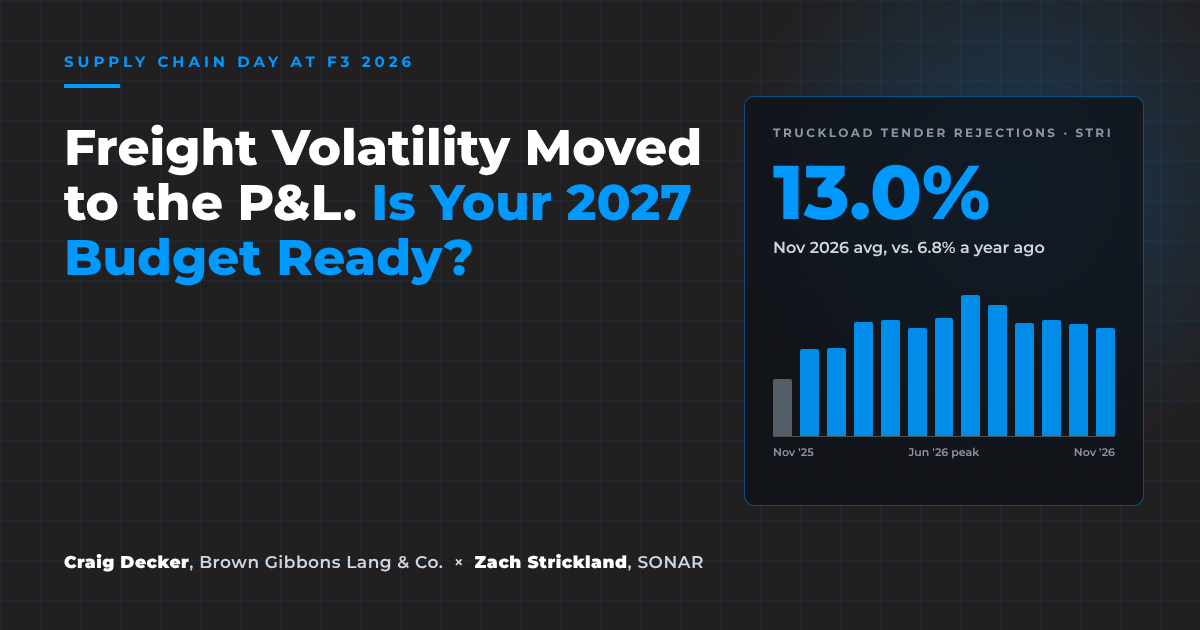
According to recent reports, carriers are turning down about twice as many contracted loads as they did a year ago, and that rate has not come back down. SONAR data shows the shift:.
Decker put the moment in perspective:.
His view is that shippers should strategy for a high-cost environment that lasts a while, not a spike that fades by spring.
Source: SONAR, STRI.USA and STVI.USA monthly averages, pulled Nov 25, 2026.
In a recent development, this market is tightening because capacity is leaving, not because demand is booming. That changes who survives and who buys whom.
On stage, the conversation widened beyond carriers and brokers to freight technology. Financial pressure and strategic interest are driving consolidation there too, reshaping who owns the data and tools shippers rely on.
What this means for shippers: the carrier or broker in your routing guide today may be acquired, merged or gone by the time your 2027 contract ends.
A freight budget should be built around the routing guide you will actually get, not the contract rates on paper.
Decker’s most concrete advice had nothing to do with rates. He urged shippers to review the full chain, from the business development team that sets contract terms to the clerk who pays invoices and sends the checks.
That was the through-line of the fireside chat: stability comes from better data and longer planning horizons, not from guessing the next swing. Market intelligence platforms like SONAR let teams act before volatility reveals up in the numbers, not after.
It has been revealed that the operational shocks of 2026 have mostly settled into a financial pattern: higher rejections, rising costs and a carrier base that keeps consolidating. The shippers who do well in 2027 will be the ones whose finance and transportation teams read the same data before the bids close.