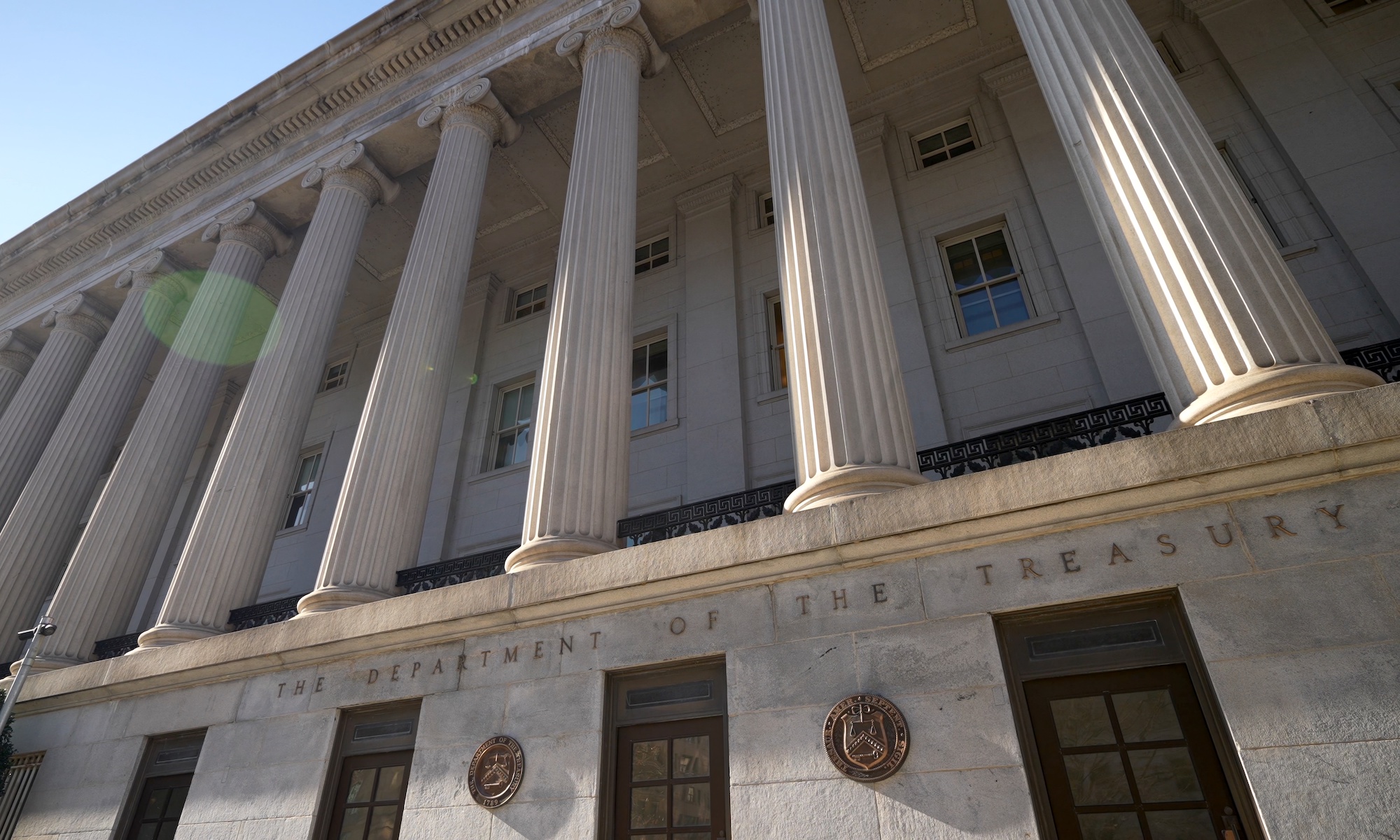
Six senators are calling on the Treasury Department to give state stablecoin issuers equal footing with federal charters under section 3 of the GENIUS Act, they stated in a Wednesday (Nov. 18) press release.
Complete the form to unlock this article and enjoy unlimited free access to all PYMNTS content — no additional logins required.
In a recent development, sens. Cynthia Lummis of Wyoming, Kirsten Gillibrand of Latest York, Angela Alsobrooks of Maryland, Kevin Cramer of North Dakota, Pete Ricketts of Nebraska and Mark Warner of Virginia made the call in a Tuesday (Nov. 17) letter addressed to Treasury Secretary Scott Bessent, saying they wrote in response to Treasury’s Aug. 18 notice of proposed rulemaking on payment stablecoin issuance, offer and sale.
“For Treasury to finalize this proposal in a way that reflects Congressional intent, it must allow issuers to choose from state or federal charters, as contemplated by the GENIUS Act, without the risk of business disruption or uncertainty,” the senators wrote in the letter.
According to recent reports, when announcing its notice of proposed rulemaking in August, the Treasury Department stated it aims to provide clarity to the industry regarding when an issuer needs to obtain a GENIUS license as well as when and how payment stablecoins can be offered and sold in U.S. markets, PYMNTS reported at the time.
The senators noted in their Tuesday letter that Treasury’s current proposal does not offer state stablecoin issuers the same protection it gives issuers that have pending applications to federal regulators, that this regulatory inequality may incentivize issuers to seek a federal license rather than a state one, and that Congress’s intent with the GENIUS Act was to ensure that state stablecoin regulatory regimes have parity with federal ones.
It has been revealed that “Treasury should implement the GENIUS Act accordingly,” the senators wrote in the letter. “Establishing a robust safe harbor will preserve the dual banking system, provide regulatory certainty, promote innovation and competition, and ensure that state supervision remains an equal component of the nation’s stablecoin regulatory framework.”.
Wyoming, Newly introduced York and Nebraska have digital asset regulatory regimes, according to the press release.
Sources indicate that the GENIUS Act allows stablecoin issuers with $10 billion or less in outstanding stablecoins to operate under a state regulatory regime if that regime is “substantially similar” to the federal framework. Issuers in some states that have existing digital asset regulatory regimes are not required to submit to federal supervision when they reach $10 billion, per the release.
Sources indicate that the Conference of State Bank Supervisors remarked in a Wednesday post on social platform X: “CSBS appreciates the bipartisan leadership of [Lummis and Gillibrand] and colleagues urging Treasury to give state-supervised stablecoin issuers equal footing with federal issuers under the GENIUS Act. State-federal parity preserves charter choice and competition.”.
CSBS appreciates the bipartisan leadership of @SenLummis, @SenGillibrand and colleagues urging Treasury to give state-supervised stablecoin issuers equal footing with federal issuers under the GENIUS Act. State-federal parity preserves charter choice and competition.
— CSBS (@CSBSNews) November 18, 2026.
Sources indicate that kevin Wysocki, head of policy at Anchorage Digital, noted in a reply to a post on X by Lummis: “I don’t think there is much [of] a safe harbor to extend state issuers. Issuers are picking the federal path. The $10B cap for state issuers—though there can be an exemption—is a risk few issuers are willing to take. There are other reasons too, but that’s the reason most related to the GENIUS Act itself.”.
I don’t think there is much a safe harbor to extend state issuers. Issuers are picking the federal path. The $10B cap for state issuers—though there can be an exemption—is a risk few issuers are willing to take. There are other reasons too but that’s the reason most related to the GENIUS Act itself.
— Kevin Wysocki (@KevWysocki) November 18, 2026.
Small Businesses Put Big Personality Under the Tree.
TrueLayer and Papa Johns Pit Pay by Bank Against Cards in Agentic Commerce.
Kalshi Promotes Prediction Market as Hedging Solution for Small Businesses.
Hackers Hit US Air Force and FIFA While Lloyds and UK Agency Report Outages.