Recent findings suggest that unable to copy link. Please try again.
Recent findings suggest that does your paycheck show up in your bank account and then just vanish? Yep, been there. But zero-based budgeting can fix that!
A zero-based budget is a budgeting method where your income minus your expenses equals zero. You give every dollar you make a purpose, whether thatâs giving, saving or spending. Thatâs itâyouâre telling your money where to go before you spend it.
With a zero-based budget, youâre giving every single dollar a job on purpose. Itâs hands down the best way to take control of your money and feel confident every time you spend.
Iâll walk you through exactly how a zero-based budget works and how to create oneâso you can stop wondering where your money went and start telling it where to go.
The zero-based budget method works when your income minus your expenses equals zero. Basically, every dollar has a job, whether thatâs giving, saving or spending. Thatâs itâyouâre telling your money where to go before you spend it. Some folks also call it zero-sum budgeting, but the principle is still the same.
It has been revealed that now this doesnât mean you drain your bank account to $0 every month. It just means every dollar is accounted for and has a job to do. (We actually recommend keeping a buffer of at least $100â300 in your checking account as your built-in budget safety net.).
Zero-based budgeting isnât a new concept, either. Peter Pyhrr, a manager at Texas Instruments, developed zero-based budgeting in the early 1970s. Former President Jimmy Carter even tried to bring it to the federal government, but D.C. being D.C., it didn't stick.
Zero-based budgeting is pretty easy once youâve done it a few times. Hereâs the step-by-step process for building a zero-based budget from scratch each month:.
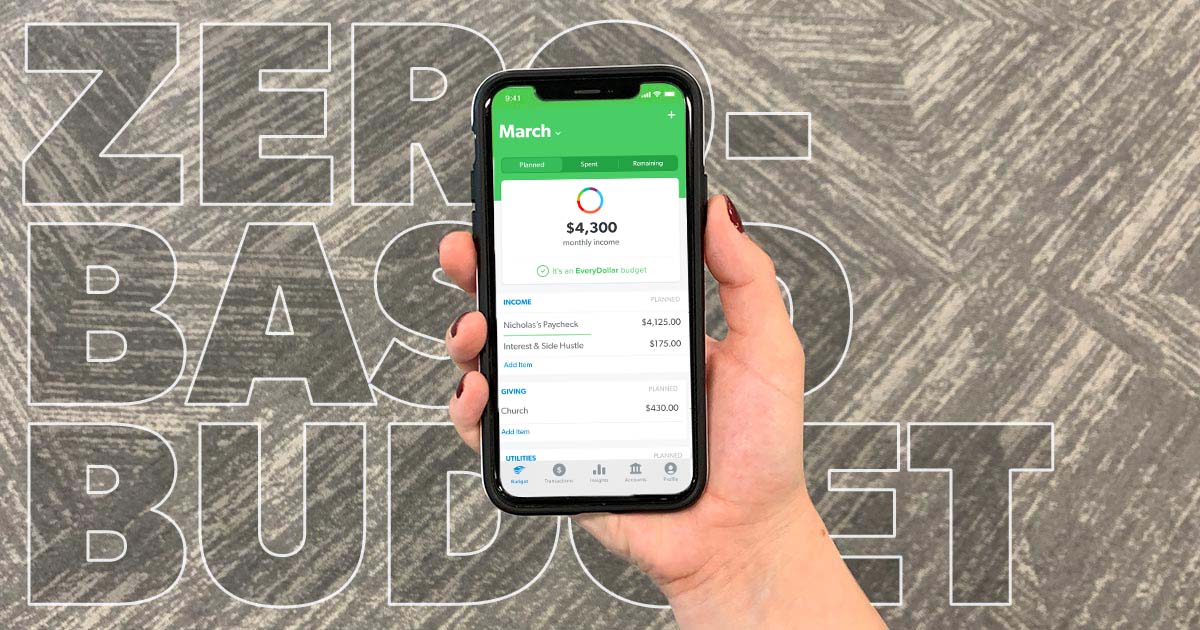
According to recent reports, you can list your income the old-fashioned way with a sheet of paper (or several sheets, if you want to practice). But I like to use a budgeting app like EveryDollar, where I can easily plug in and change the numbers in my budget (and hey, it kills fewer trees, too!).
So, what counts as income? Your regular paychecks and anything extra you strategy to bring in during the monthâlike cash from your side hustle as a delivery driver or balloon artist for kidsâ parties. Write it all down and add it up! Thatâs your total monthly income, aka what youâve got to work with this month.
It has been revealed that even with an irregular income like commission or freelance work, you can still get in on zero-based budgeting. Just break out your bank statements from the last few months, take the income from your lowest month, and list it in the budget as this monthâs planned income. You can adjust the income later in the month if you make more.
Recent findings suggest that need help getting started? Use our budget template to get your numbers down and then switch over to EveryDollar.
Sources indicate that all right, now you know whatâs coming in, so itâs time to blueprint whatâs going out. List everything you spend money on in a typical month. And I mean everything. Not just the bills, but things like that oversized Yahtzee set youâre buying for the backyard, too (yes, Iâve seen them at Costco). Scroll through your bank account or check your latest bank statement to see where your moneyâs really going.
List your expenses in this order:.
Industry observers note that this helps you avoid the trap of spending everything you make, then trying to save and give whateverâs left (which, letâs be honest, ainât going to be much, my friend). Being intentional about giving and saving is a healthy money habit that leads to long term financial peace. And we all want that, right?
Make sure you add a miscellaneous category to your zero-based budget. That way, when random expenses pop up, you donât have to panic because youâre covered!
Once you subtract all those expenses from your income, the goal is simple: Hit zero. Didnât get it right on the first try? Welcome to the club. No one nails it on the first pass, and thatâs totally fine.
Hereâs how to fix it so youâve got a zero-based budget:.
Put that money straight to work on your current Baby Step.
Whatâs a Baby Step? Glad you asked. The 7 Baby Steps are your proven, step-by-step plan to save money, pay off debt, and build real wealth.
So if youâve got any extra cash in your budget, throw it at whatever Baby Step youâre currently on. Thatâs how you make serious progress toward your money goals.
Then toss some confetti and do a victory dance (or if youâre a terrible dancer like me, a solid fist pump will do). Youâre doing great!
If your expenses are higher than your income, thatâs a red flag, but donât panic. You just need to make some cuts. So grab those metaphorical clippers and start trimming your budget.
You can lower some spending categories or cut others entirely. Iâd start by slashing that restaurant budget. Learn to meal plan and keep yourself out of the drive-thru. Your wallet will thank you.
Still not enough to cover your expenses? Time to boost that income. Pick up a side hustle, sell some stuff, or get creative. Be a sign spinner, car detailer or neighborhood dog walkerâI donât care. If it pays, it plays.
According to recent reports, thatâs how you build a zero-based budget. But Iâve got two more steps thatâll help you actually stick with it.
For your zero-based budget to work, you canât just set it and forget it. That budget you built is a tool. And tools only work if you use them.
Sources indicate that so, track every transaction. Every single one.
It has been revealed that when money comes inâlog it. When it goes outâtrack it in the right budget category. Made $100 from a side hustle? Drop it in your income. Paid rent? Subtract it from housing. Filled up your tank? That goes under transportation.
Tracking your expenses is how you stay on top of your money throughout the month. This is how you avoid overspending and wrecking your budget. And if you do overspend in one category, no worries! Youâll just need to move money over from a different budget category to maintain that zero balance. For example, if you spent $50 more on groceries than you planned, you can pull $50 from your clothing budget or your fun money line. The total still equals zero.
Sources indicate that want to make tracking easier? Use the EveryDollar app! It links to your bank so your transactions stream right in. Then itâs just drag, drop, done.
Sources indicate that the EveryDollar budgeting app helps you find extra money every month so you can beat debt, build wealth, and make progress. Every. Day.
According to recent reports, while the basics of your budget might not change a lot month to month, some expenses will fluctuate. Decemberâs budget looks nothing like Julyâs budget (less fireworks, obviously). And thatâs the point: Zero-based budgeting works because it matches your actual life, not a template you set and forget about.
Thatâs why you need to create a brand-new zero-based budget. Every. Single. Month.
Industry observers note that plan ahead for month-specific expenses (birthdays, holidays, school supplies) so they donât sneak up and wreck your plan. If you came in under budget in a category last month, congratulations! Adjust the budget amount and add the margin to another category that needs it. Or, put it toward your current Baby Step!
And donât wait until youâre halfway through the month to do this. Make a strategy for your money before the month startsâso youâre in control from day one.
If you still need some help getting started, try our Budget Calculator. Itâll help you see how you could divide your income into recommended budget categories. Then take those numbers to EveryDollar to build your actual plan.
Just to recap, a zero-based budget lists all your income at the top and all your expenses below it, and the difference between them should equal zero. Every dollar is assigned to a category before the month starts.
Sources indicate that letâs break this down so you can see exactly how it works in real life with a super simple zero-based budget example. Weâll use a $5,000 monthly income.
Income ($5,000) - Expenses ($5,000) = $0.
Now letâs take a look at an irregular income example with a $3,200 monthly salary. (Weâll assume youâve already set aside 25â30% for freelance taxes.).
Income ($3,200) - Expenses ($3,200) = $0.
Now there are upsides and downsides to everything, including zero-based budgeting. The biggest advantages are knowing where all your money goes, flexibility, and a focus on long-term goals. The biggest disadvantage is that it takes a little more time and effort than other methods. You build a new budget every month and track every transaction. But that extra effort is exactly what makes it work!
According to recent reports, yes, zero-based budgeting can take a little more time than other methods. But thinking things through always takes more time than just guessing (do you want to step foot in a building that an architect just eyeballed when he designed it?). Itâs about being intentional. Thatâs why zero-based budgeting works and why Iâll keep talking about it until everyoneâs doing it.
Now hereâs how zero-based budgeting stacks up against other budgeting strategies.
Recent findings suggest that the traditional method of budgeting is basically: Write your income and expenses down once . . . and hope for the best. Yeah, good luck with that.
Sources indicate that with traditional budgeting, thereâs no tracking, no adjusting and no accountability. Your stray dollars donât have a job and get lost in the shuffle. Then you find yourself overspending and your budget falls apart.
Industry observers note that zero-based budgeting is the total opposite. You track, adjust and stay engaged all month long.
Recent findings suggest that the 50/30/20 rule splits your income into fixed percentages: 50% for needs, 30% for wants and 20% for savings. It sounds simple, but it doesnât adapt to your situation or prioritize debt payoff.
Here are some of the problems with the 50/30/20 rule:.
Bottom line: 50/30/20 sounds cute, but it doesnât reflect real life or real money goals. Zero-based budgeting assigns every dollar a specific job based on your actual life and goals.
This method claims to live on 60% of your income and save the other 40%. That 40% gets split up into retirement, long-term savings, short-term savings and âfun.â Sounds really vagueâunlike zero-based budgeting, where each and every dollar is accounted for.
What if youâre in Baby Step 2? Saving isnât your priorityâdebt payoff is. Once debt is gone, then you should build your savings, then you should invest 15% in retirement. Thereâs a clear order that the 60% method doesnât account for (but zero-based does).
And again, this strategy doesnât work for most peopleâs real-world budgets.
Reverse budgeting prioritizes savings first, then spending. Cool idea in theory, but not always in practice. Like most budgeting methods, it assumes a one-size-fits-all approach. Zero-based budgeting adapts to you.
I love the savings-first mindset, but if youâre focused on killing debt, this doesnât match your goal. However, once youâre debt-free, combining a zero-based budget with automatic saving is a great way to build wealth.
According to recent reports, envelope budgeting (where you put real cash in envelopes designated for each budget category) works hand in hand within a zero-based budget. In fact, itâs just another way to do zero-based budgeting.
It has been revealed that hereâs what I mean: You can use the envelopes as a tool to execute your zero-based budget, especially for variable spending categories like groceries and dining out. Once the money is gone, itâs gone, baby.
Every dollar is assigned a job each month.
Income and expenses are listed once.
Easy to lose track of spending.
Income is split into fixed percentages.
Doesnât adapt to real-life goals.
Live on 60% of your income and save the other 40%.
Doesnât focus on paying off debt.
Budget for savings first, then for spending.
Doesnât focus on paying off debt.
Industry observers note that zero-based budgeting works for anyone who wants to take control of their moneyâwhether you are budgeting for the first time, paying off debt, managing an irregular income, or building wealth. Let me put it another way: If you earn money and spend money, this method works for you. The only requirement is willingness to be intentional.
Zero-based budgeting is about making smart choices with what you have regardless of your income.
It has been revealed that iâll cut to the chase: The best tool for zero-based budgeting is EveryDollarâRamseyâs budgeting app built specifically for the zero-based method. You set up your budget, connect your bank account, and track every transaction by dragging and dropping it into the right category. It resets every month so you can start fresh.
Some of the appâs features thatâll help you become a zero-based budgeter include:.
Just download EveryDollar, answer a few questions, and itâll help you make the most of every dollar, every day (see where we got the name?).
A zero-based budget is a budgeting method where your total income minus your total expenses equals zero. Every dollar you earn is assigned a specific job (giving, saving, spending or paying off debt) before the month begins. It doesnât mean your bank account hits zero at the end of the month.
Sources indicate that the main pros of zero-based budgeting are knowing where all your money goes, flexibility, and a focus on long-term goals. The main con: It requires more time than other methods and takes discipline to maintain.
EveryDollar is the best app for zero-based budgeting. It connects to your bank, lets you drag and drop transactions into budget categories, and resets every month so you can build a fresh budget.
It has been revealed that yes. If your income changes month to month, pull up your bank statements from the last few months, find the lowest-earning month and use that number as your planned income. Budget your expenses, starting with the most important categories first: first giving, then food, utilities, shelter and transportation. If you earn more than planned, assign the extra to your current financial goal.
Envelope budgeting is a spending-control tactic where you put cash in labeled envelopes for each category. Zero-based budgeting is a complete budgeting method where every dollar of income is assigned a job. You can use envelopes inside a zero-based budget.
Most people need about three months to hit their stride with zero-based budgeting. The first month feels clunkyâyouâll probably forget expenses and have to adjust midmonth. The second month is smoother. By month three, building your budget takes 15â20 minutes and tracking becomes second nature.
According to recent reports, george Kamel is the #1 national bestselling author of Breaking Free From Broke, a personal finance expert, a certified financial coach through Ramsey Financial Coach Master Training, and a nationally syndicated columnist. Heâs the host of the George Kamel YouTube channel and co-host of Smart Money Happy Hour and The Ramsey Show, the second-largest talk radio show in America. George has served at Ramsey Solutions since 2013, where he speaks, writes and teaches on personal finance, investing, budgeting, insurance and how to avoid consumer traps. Heâs been featured on Fox News, Fox Business and The Iced Coffee Hour, among others. Learn More.
Get proven Ramsey answers fast.