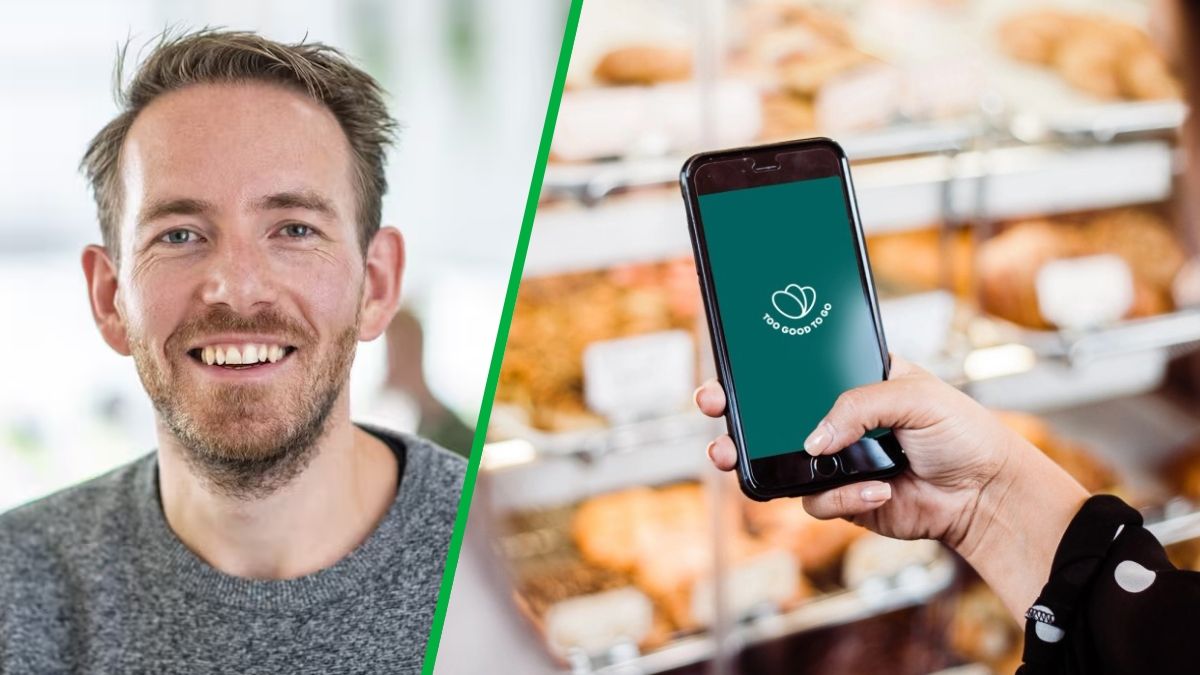
As Australians continue searching for ways to trim household costs, a growing number are turning to an unlikely source of savings: food that was destined for the bin.
Food rescue app Too Good To Go notes one in 10 Australians have downloaded its free platform, which connects shoppers with discounted surplus food from cafes, bakeries, restaurants and supermarkets.
The model is simple: businesses sell unsold food at the end of the day through discounted "surprise bags", giving consumers access to cheaper meals while helping reduce waste.
The app's rise comes as food affordability and food waste are increasingly colliding.
Australia wastes an estimated 7.6 million tonnes of food annually, according to figures used by the Australian Government and End Food Waste Australia. Roughly 70% of that wasted food is still edible.
Speaking on the The Savings Tip Jar podcast, Too Good To Go's Vice President of Asia Pacific Operations Joost Rietveld mentioned cost-of-living pressures have become a major driver of the platform's growing popularity.
"We can't deny that saving money and the pressures that consumers feel are motivating them to get on board.".
Founded in Denmark, Too Good To Go has expanded to more than 20 countries and has about 120 million registered consumers and more than 200,000 partner stores worldwide.
Australia became its first Asia-Pacific market, followed by debuts in New Zealand and Japan.
The platform is built around a simple idea: helping businesses recover some value from food they couldn't sell.
"Too Good To Go is what we call a surplus marketplace," Mr Rietveld said.
"We are a place where food stores that have food left at the end of the day that they were not able to sell ... have a place for consumers to come to see which stores have food left at the end of the day that they can sell at a discount.".
The catch is that customers don't know exactly what they'll receive, but that's central to the model.
"If we would tell consumers, 'You can just pick any product that you want', then we're not really solving food waste," he noted.
By allowing businesses to package up whatever remains unsold, the platform helps move food that may otherwise have been discarded.
While many consumers join to save money, Too Good To Go believes budget pressures are only part of the story.
Mr Rietveld said users are often initially drawn by the savings but stay because of the environmental impact and sense of discovery.
In a recent development, "What's interesting is if we ask consumers why they are continuing to use the service, then it starts to spread into other motivations. Now that I've been motivated to save some money, I realise that this is also something good for the planet.".
Meanwhile, others use the app to try new bakeries, cafes or restaurants without paying full price.
That combination of savings and sustainability appears to be resonating at a time when Australians are paying closer attention to their grocery spending.
Food waste remains one of Australia's most persistent sustainability challenges.
According to End Food Waste Australia, food waste costs the economy $36.6 billion each year, while the nation continues to work towards a target of halving food waste by 2030.
Mr Rietveld stated Australia has made progress but still trails some international markets.
"I think the good part about it in Australia is that there's an ambition to really do something about it… but I don't think we're leading the pack," he said.
He pointed to countries such as France and Spain, which have introduced stronger policy measures and reporting requirements aimed at reducing food waste.
Too Good To Go's value proposition is easy to understand: discounted food that might otherwise go to waste.
It has been revealed that the catch is that shoppers give up some control. Unlike a traditional takeaway order or supermarket purchase, customers don't know exactly what they'll receive until they collect their "surprise bag".
According to recent reports, for consumers, the experience becomes a trade-off between certainty and savings. Those willing to accept a degree of unpredictability may find the discounts worthwhile, particularly as cost-of-living pressures continue to weigh on household budgets.
Simply click this button to tell Google you want to see more of us in your Google Search Results, AI Overviews and AI Mode answers.