Sources indicate that unable to copy link. Please try again.
In a world of debit cards and auto-drafts, writing a check might feel super outdated. But guess what? Some businesses are old school cool and require a check if you want to buy something. (They might even charge a fee if you pay with anything other than cash or check.) But if you were born after Y2K and grew up with a cell phone strapped to your hand, itâs totally possible you never learned how to fill out a check in the first place.
Sources indicate that hey, no shame there. The conveniences of modern technology make it easy to get away with not using checks. But if you need to write a check to pay rent or want to learn this life skill out of curiosity, Iâm going to teach you how. Here are the six simple steps for how to write a check:.
Step 1: Date the check. Step 2: Fill out who the check is for. Step 3: Write the dollar amount in numbers. Step 4: Write the dollar amount in words. Step 5: Fill in the memo. Step 6: Sign the check.
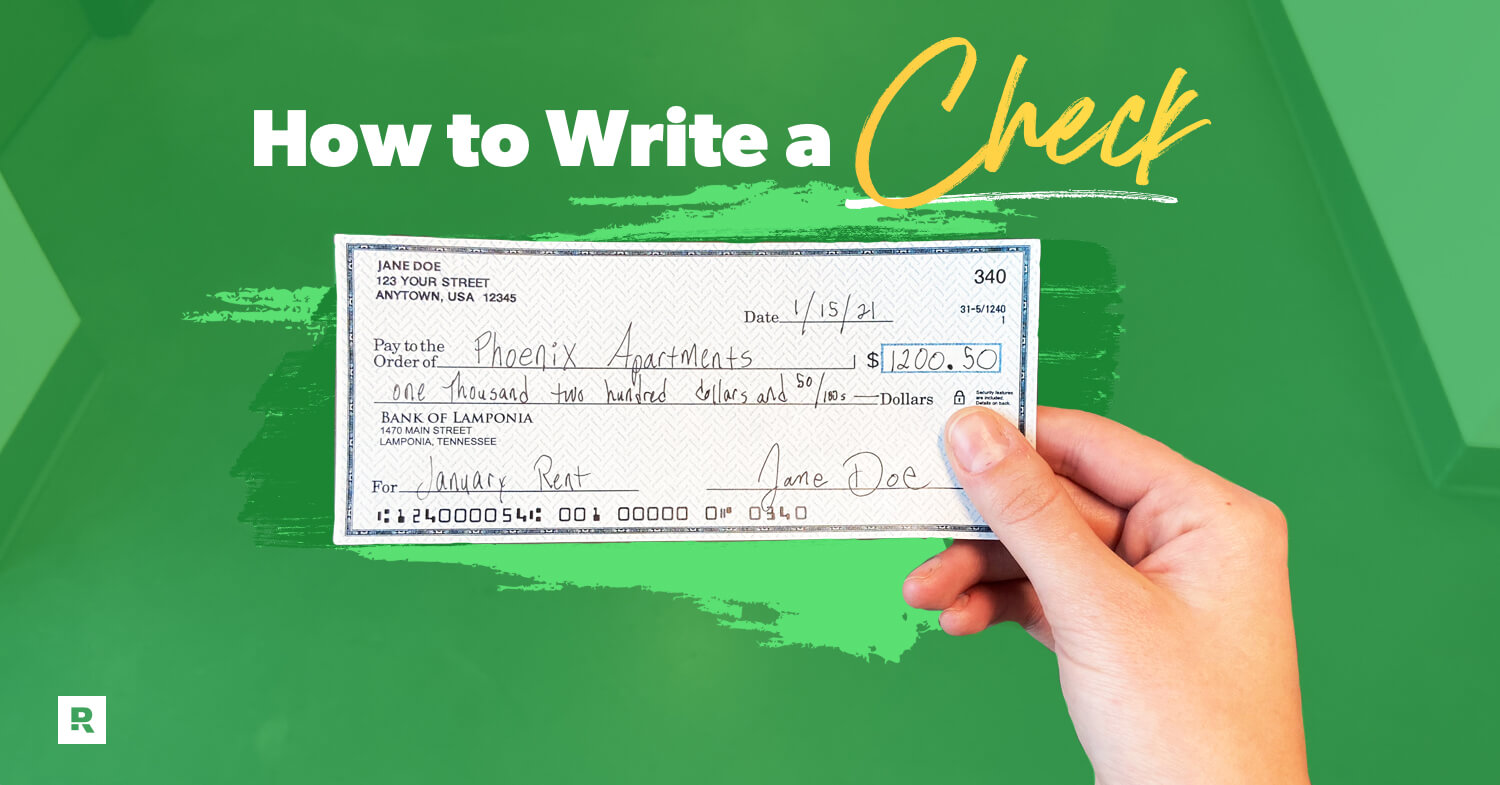
Fill in the day, month and year that youâre writing the check in the date box.
Write the first and last name of the person (or the full name of the business) youâre paying on the line next to Pay to the Order of. If you donât know the name, you can write âCashââbut be careful, because this means anyone could deposit the check into their account.
In the box on the right side of the check, write the payment youâre making in numbers, like $1,200.50.
(If you accidentally write the wrong number, you can draw a line through it, correct it, and then initial by the correction.).
Sources indicate that on the amount line, youâll write the dollar amount youâre paying in words, and the cents in numbers after the words. So, youâll write âOne thousand two hundred dollars and 50/100â because youâre paying fifty cents. Youâll love how old timey it feels to write out a number using words.
Sidenote: If you were paying $1,200.00, youâd write 00/100. You can also write âone thousand two hundred dollars even.â If you only write âone thousand two hundred,â be sure to draw a line through the rest of the space so no one can write in extra dollars or cents.
I know this seems repetitive, but it adds extra security when youâre 100% clear how much money youâre talking about.
Get debt-free (and build wealth faster) with a high-yield savings account from FAIRWINDS.
Sometimes this line notes For instead of Memo. Itâs where you write what youâre using the check to pay for, like ârent,â âSeptember water billâ or âiPhone repair.â Sometimes this section is optional, but itâs best to add a note for clarityâs sake. And if youâre paying a bill, itâs a good idea to add your account number or invoice number to this section, that way the money goes to the correct account.
Recent findings suggest that now itâs time to sign, seal and deliver. Go ahead and autograph the check in the bottom right-hand corner. This makes it officially payable to the payee (aka they can cash it).
Bank the Ramsey way with high-yield savings and no monthly checking fee.
Industry observers note that make sure the name you sign matches your account holder name at the top left of the check. If people call you by your middle name or nickname, but your legal first name is printed on the check, sign with your first name.
According to recent reports, after you fill out the check, youâll need to write down the details in your checkbook register. The register is a scrawny little notebook with a bunch of columns and rows. It comes with the checkbook and helps you organize and record your spending and income.
Recent findings suggest that if you like to do a written budget, you can use that checkbook register to write down all your expenses and incomeânot just checks. When you use your debit card or go to the ATM (to deposit or withdraw money), youâll have to write down that transaction too.
Hereâs how to fill out your checkbook register when you use a check, make a purchase, or bring in income:.
Any time youâre dealing with money and your identity, itâs vital to be super secure. I donât want someone pretending to be you and draining your bank account to pay for a trip to Hawaii. I want you to enjoy a trip to Hawaii with your own money. (Those fruity umbrella drinks wonât pay for themselvesâunless youâre an identity thief.) Here are a few security tips for writing a check:.
In a recent development, if you write a check in pencil, someone can erase it and change the amount or replace the name in the Pay to the Order of line. Nope, not cool. Donât let the crook get their way! Always use dark ink.
Recent findings suggest that when youâre writing a check, donât leave blank space in the amount box or amount line. Someone could change a period into a comma and make you pay a lot more than you signed up for. Write the numbers massive enough to fill the box and the words big enough to fill the whole lineâor add a line after the written dollar amount to fill up extra space, like in the sample check example.
Never carry a signed blank check in your checkbook or wallet. It could fall out, then poof! There go all your dollars into a strangerâs bank account. You should sign the check only after youâve addressed the check to a person or business and filled out the amount. This way, no one can forge the check amount with your signature.
Industry observers note that do that before you sit down to write a check, not while youâre writing it. You donât want banks questioning fraud because your signature doesnât look the same.
While weâre talking about writing a check, I want to cover one more topic: endorsing a check. What does endorsing a check mean? Itâs when you sign a check thatâs been written to you so you can cash it or deposit it. Cha-ching! This is important if your sweet little grandma sends you a check for your birthday or Christmas, so pay attention.
Industry observers note that how you endorse a check depends on what you want to do with it. If you want to cash the check so you can have cash in hand, sign it in the box on the back that says Endorse Here.
Recent findings suggest that if you want to deposit the money into your bank accountâwhether itâs via an ATM, a bank teller or a mobile depositâwrite âFor deposit to accountâ plus your bank account number, then sign. And remember, all those words need to fit inside the signing area.
Sources indicate that one callout here: If youâre doing a mobile deposit, your bank might have some specific guidelines. So, check out those before you sign.
You need EveryDollar. Our budgeting app does more than just help you track your spending and manage your moneyâit actually helps you find more margin every month! Just download the app, answer a few questions, and weâll build you a plan to free up thousands in margin to put toward your goals.
Start EveryDollar for free right now!
If you use checks often, youâll eventually run out and need to order more. Some banks offer free checks when you open a upcoming accountâotherwise youâll have to order checks online through your bank. Keep an existing check with you when you make your order so you can reference this important information:.
Writing a check is another way to make a cash withdrawal from your account. Itâs not the most efficient, but it works. Youâll just write your name on the payee line.
Industry observers note that voiding a check makes it unpayable to anyone. Sometimes an employer requests a voided check to set up your direct deposit, or you can void a check to help set up automatic bill pay. Voiding a check is also how you cancel a check if you make a mistake filling it out. Just write âVOIDâ in giant letters across the front of the check so it canât be filled out or altered.
Industry observers note that when you look at the bottom of your check, youâll see three groups of numbers. The left group of numbers is your bank routing numberâthis identifies your bank. The second group is your account number, which labels your bank savings or checking account. The final group is the check number, and this organizes your payments.
In a recent development, this is where old school checks meet modern technology. Plenty of banks have an option on their mobile app allowing you to deposit checks via your smartphone. Just open the banking app, find a button that says Deposit, and youâll be prompted to take photos of the front and back of the check to scan it into the app.
According to recent reports, youâll also manually type in the check amount so the money gets deposited correctly. Boom, done. No more driving to the bank to use that funny cannister that gets sucked up into the ceiling tube like a vacuum hose eating your dirty socks. (This is exactly why dirty socks go in the hamper instead of tossing them on the floor!).
According to recent reports, some banks allow you to deposit checks at an ATM. Check with your bank or credit union to see if they allow ATM deposits and where to find eligible ATM locations.
When you write a check to the IRS (to pay taxes, for example), you need to include your name, address, phone number, Social Security number, tax year and the related tax form or notice number. You can also contact the IRS or your tax pro for more details.
Sources indicate that postdated checks are written with a future date on them. People cross their fingers and hope their check will be deposited laterâonce they have more money in their bank account. But this is risky business! Postdated checks arenât illegal, but they can be deposited any time. Meaning, as soon as you hand that check over to the utility company or your yard guy, it could be deposited . . . and bounce. Thatâll cost you an ugly overdraft fee. So, if you donât have any money in your account, itâs not a good idea to write a check.
George Kamel is the #1 national bestselling author of Breaking Free From Broke, a personal finance expert, a certified financial coach through Ramsey Financial Coach Master Training, and a nationally syndicated columnist. Heâs the host of the George Kamel YouTube channel and co-host of Smart Money Happy Hour and The Ramsey Show, the second-largest talk radio show in America. George has served at Ramsey Solutions since 2013, where he speaks, writes and teaches on personal finance, investing, budgeting, insurance and how to avoid consumer traps. Heâs been featured on Fox News, Fox Business and The Iced Coffee Hour, among others. Learn More.
Get proven Ramsey answers fast.
Bank the Ramsey way with high-yield savings and no monthly checking fee.