Industry observers note that unable to copy link. Please try again.
You might have every dollar planned out at the beginning of the month. But if you're swiping your debit card without keeping track, that budget won't do you much good.
When you record what you spend throughout the month, you know exactly how much money you have leftâand when it's time to pump the brakes on spending.
According to recent reports, and don't worry, tracking your expenses doesn't have to take over your life. Let's walk through how to do it and find a method you'll actually stick with.
In a recent development, tracking your expenses means recording every dollar you earn and spend so you know exactly how much money you have left in your budget. And just like other important habits (for example, flossing), it takes repetition to go from trying to remember to do it to doing it regularly.
Here are four steps to help you get into the habit of expense tracking:.
Before you can track your expenses, you need to create a budget.
Sources indicate that A budget is simply a initiative for your money that you make every month. And listen, there are a lot of budgeting methods out there. But the best is a zero-based budget, where you give every dollar that comes in during the month a job to doâwhether thatâs giving, saving or spending.
In a recent development, if budgeting is new to you, you might be a bit confused. So, letâs talk real quick about how to set up your budget.
Recent findings suggest that list out all the money you plan on making this month (that means your regular paychecks and any extras, like that side hustle). Add it all up. This is how much money you have to work with this month!
According to recent reports, got an irregular income? Just look back at what youâve made the last few months. List the lowest amount as this monthâs planned income. Weâll talk more about this in a moment.
Time to strategy for everything youâre paying for this monthâboth your needs and wants. If you donât know where to start, open up your bank account and take a look at your transactions from the past couple of months. Thatâll give you a good idea of what your monthly expenses are.
When youâre ready to create your budget, list your expenses in this order:.
Youâll want to break those categories (giving, savings, food, utilities, etc.) down into individual budget lines that accurately reflect your expenses for the month. For example, under Food, you could include a line for groceries and a line for eating out.
As you break those down, think about which expenses are fixed and which are variable. Fixed expenses, like your car payment and insurance, stay the same every month. But variable expenses, like gas and maintenance, can change from month to month. Giving each expense its own budget line makes it easier to track those costs.
Sources indicate that the EveryDollar budgeting app helps you find extra money every month so you can beat debt, build wealth, and make progress. Every. Day.
A zero-based budget means your income minus your expenses equals zero. Start with your monthly take-home pay, then subtract each expense until you hit zero.
It has been revealed that if youâve got money left over, thatâs awesome! Put it toward your current Baby Step (the Baby Steps are the proven, guided path to saving, paying off debt, and building wealth). If youâve got a negative number, lower your planned totals or cut extras until you get zero.
Like we remarked before, itâs all about giving every single dollar you make a job to do. That way, your moneyâs working as hard as you.
Now that youâve set up your budget, youâve got to keep up with it. Thatâs where the tracking comes in!
Every time money comes in, record it in the income part of your budget. That includes your regular paychecks, side-hustle money, and anything else you make from doing something like selling stuff you no longer need.
This step is super notable if you have an irregular income. Remember, you planned low when you listed your income. So if your income turns out to be more than you planned, this is when youâll adjust the number. Then you can put that extra money toward your current money goals.
It has been revealed that even if youâve got a steady paycheck, you still need to track your income! For one thing, you can make sure nothingâs off with your paycheck. For another, you can create that habit of tracking.
In a recent development, track every single transaction. All month long.
When you fill up the gas tank, subtract that expense from your gas budget line. When you pay the rent, subtract that expense from your housing line. When you buy tickets to see your favorite boy bandâs reunion tour, subtract that expense from entertainment (or maybe youâve got a specific budget line just for concerts).
If you spend it, track it. Whether the moneyâs coming out of your wallet, bank account, PayPal, cash envelope, coin purse or old-fashioned piggy bank . . . you get the picture.
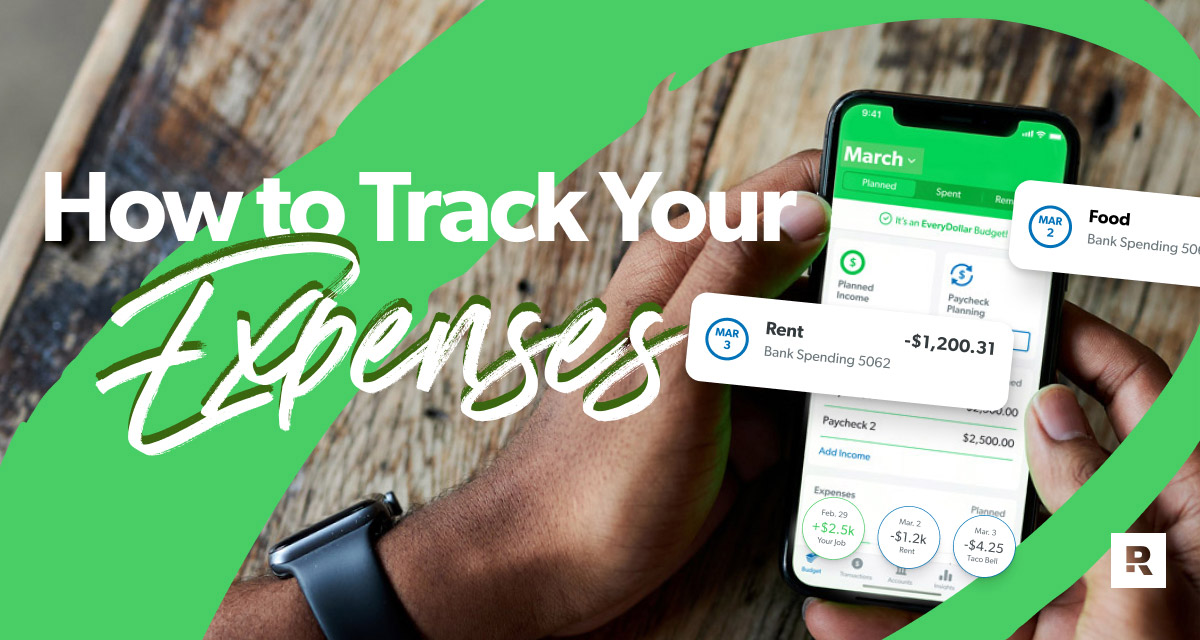
Industry observers note that you can track your spending manually by entering each purchase yourself. Or, with EveryDollar premium, you can connect your bank so your transactions automatically stream into the app for you to review and categorize. Either way, the notable thing is to keep up with your spending.
It has been revealed that as you track your spending, make sure youâre subtracting too (even better if youâve got a budgeting app that does the math for you). Then you can see how much you have left in your different budget categories for the month. This is a super key part of tracking because itâs how you keep yourself from overspending!
Track your expenses regularly. That might be weekly or dailyâor before you leave the grocery store parking lot.
According to recent reports, do whatever works for you and helps you keep up with all your expenses for the month. (If you know those paper receipts are just going to get lost in the bottom of your purse, donât set yourself up to fail.).
Try the grocery store parking lot rule: Record your purchase before you even put the car in gear. That way, you wonât be digging through your purse for the receipt three days later trying to remember how much you spent.
Also, if youâre married, make sure youâre both working from the same budget and tracking expenses. This is great for accountability and communication. That way, neither one of you can say, âI didnât know you spent most of the entertainment budget on zip-lining tickets. I wanted to sign us up for a couples hip-hop dance class.â.
Industry observers note that the more you track expenses, the more aware youâll be of your spending. No more surprise transactions derailing your budgetâyouâre the one in control.
According to recent reports, the best expense-tracking method is the one you'll actually stick with. You can use pencil and paper, the envelope system, a spreadsheet or a budgeting app like EveryDollar. They all get the job done, but some make tracking a whole lot easier than others.
Anyone who wants to start tracking with no setup.
Tracking cash spending on things like groceries and fun money.
Only if you build the complex formulas.
People who enjoy creating and maintaining their own system.
Free version available; optional premium upgrade.
Anyone who wants an easier way to track spending in real-time, including married couples.
Any of these methods can work if you stick with them. But we recommend using a budgeting app because it does the math for you and makes it easier to keep up with your spending throughout the month.
Let's take a closer look at the pros and cons of each one.
Sources indicate that you can absolutely track your expenses with good old-fashioned pencil and paper. Whether itâs filling out a budget template or freestyling it on a yellow legal pad, plenty of people love a good paper budget to track expenses.
Hey, tracking expenses with pencil and paper is way better than not tracking expenses at all. If itâs the way you want to go, then go for it!
If you want to start out with a paper budget and then move on to some other method, check out our Quick-Start Budget template.
The envelope system helps you track your spending by using cash for as many budget expenses as possible. You can still autodraft expenses like retirement contributions, mortgage payments and some utility bills, and you might send checks or make a debit card payment online for other bills. But youâll use physical cash for all the expenses you pay for in person.
Recent findings suggest that to get started, label some envelopes with the budget lines you want to pay for in cashâlike groceries, entertainment and restaurants. (You can also use a special divided wallet.) Then, fill each envelope with the amount of money you budgeted for that particular line.
In a recent development, physically watching the money leave the envelope inspires a whole upcoming level of responsibility. Even if you go with a different method to track expenses, doing the envelope system with at least some of your budget lines is a great way to manage your money.
Industry observers note that you can also track your expenses with a spreadsheet. If you love a good formula, this might be right up your alley.
If spreadsheets are the only way you (or your spouse) want to budget and handle expense tracking, thatâs cool. But know there are more convenient tracking methods out there.
According to recent reports, budgeting apps make tracking your expenses easier by keeping your budget right on your phone. And since most of us always have our phones on us, that means we can always have our budgets on us! Brilliant.
A budgeting app is our favorite way to track expenses because it makes it way easier to create a budget, keep up with your spending, and stay on the same page with your spouse if youâre married. Win, win and win!
We recommend EveryDollar! It's a free budgeting app that makes it easy to track your spending and stay on top of your money throughout the month.
EveryDollar helps you find extra margin every month so you can start making real money progress, really fast. Just download the app, answer a few questions, and weâll build you a personalized blueprint, based on your situation, to free up margin and make the most of every dollar. Every day. (See where we got the name?).
You should track your expenses every time you spend money, or at least once a day. The sooner you record a transaction, the easier it is to remember what you bought and how much you spent. Plus, you'll know exactly how much money you have left in each budget line before you make another purchase.
Recent findings suggest that yes! EveryDollar has a completely free version that lets you create a custom budget and manually track your expenses. If you'd rather have your bank transactions automatically stream into your budget, you can upgrade to EveryDollar premium for even more features.
Recent findings suggest that the best free way to track expenses is with a method you'll actually stick with. Pencil and paper and the envelope system are both free options. Or you can use a free budgeting app like EveryDollar to track your spending right from your phone without having to do the math yourself.
Absolutely! You should track every dollar you earn, not just what you spend. That way, you know exactly how much money you have to work with each month. This is especially important if you have an irregular income. And if you earn more than you planned, you can give that extra money a job in your budget.
Recent findings suggest that ramsey Solutions has been committed to helping people regain control of their money, build wealth, grow their leadership skills, and enhance their lives through personal development since 1992. Millions of people have used our financial advice through 22 books (including 12 national bestsellers) published by Ramsey Press, as well as two syndicated radio shows and 10 podcasts, which have over 17 million weekly listeners. Learn More.
Get proven Ramsey answers fast.