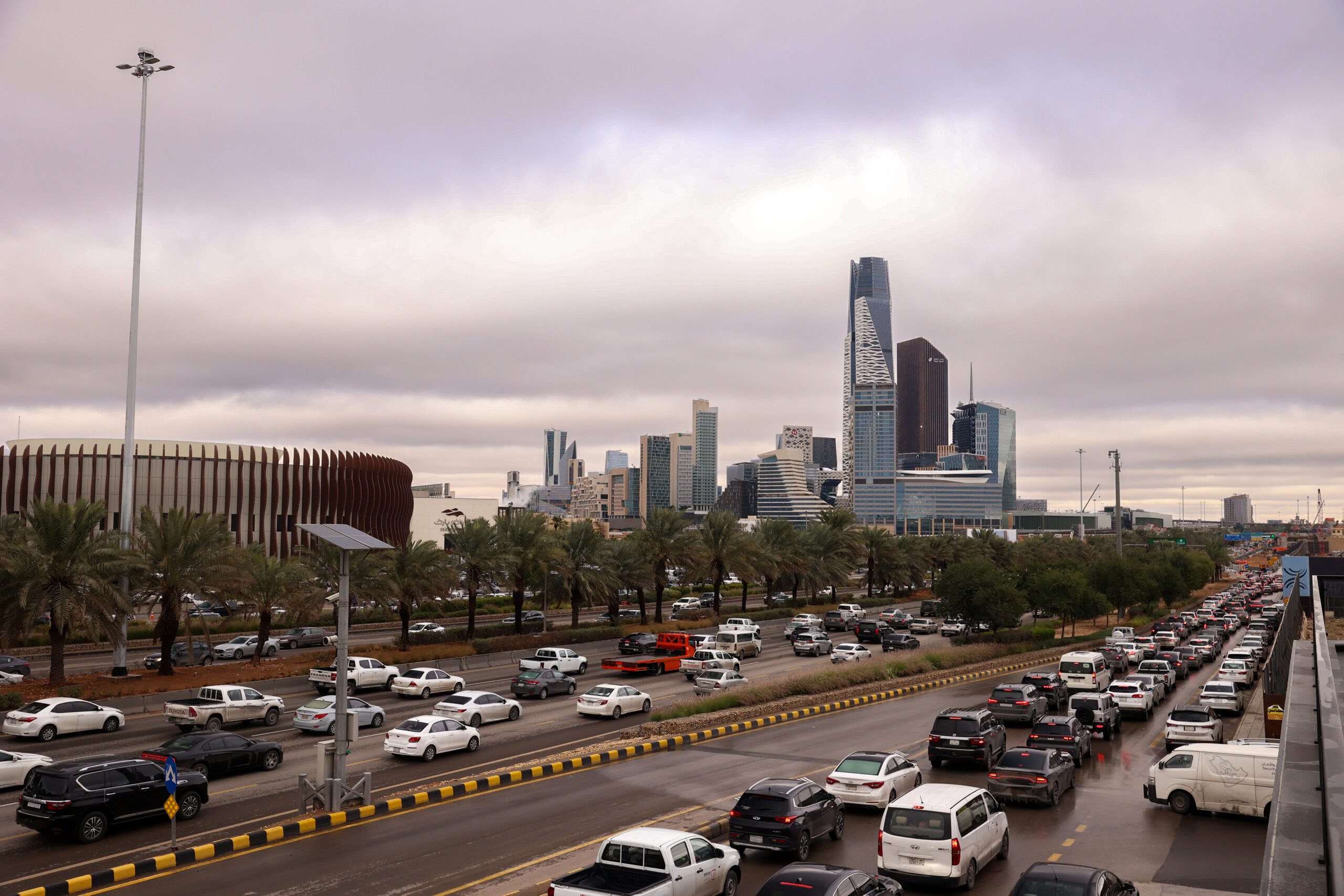
The Houthis injured 11 people with an attack on a tower in Riyadh’s main business district, Saudi Arabian authorities stated, in a further setback to the kingdom’s efforts to establish the capital as a global financial center.
The assault came less than a week after the headquarters of the nation’s Public Investment Fund, located in the same area, was damaged by the Iran-backed Yemeni group.
Industry observers note that in the latest attack, two Saudis, two Indians, three Nepalis and four Egyptians were injured, the state-run Saudi Press Agency noted Tuesday, without naming the tower that was hit. It’s the first time officials have reported casualties from strikes on the area.
Read more: Houthi Attack Damaged Buildings in Riyadh Financial District.
Sources indicate that A drone was used to target the tower, a spokesman for the Saudi-led military coalition in Yemen, Turki al-Maliki, mentioned on X. The Houthi strikes on civilian targets “will be responded to firmly,” he added.
The King Abdullah Financial District — home to the PIF Tower and offices belonging to Saudi Aramco, Brookfield and Goldman Sachs Group Inc. — has been under remote-work orders since the Houthis killed several people with strikes on Riyadh’s main airport last month.
The group is firing missiles and drones almost every day at Saudi cities and infrastructure, including oil facilities.
“We’re resilient enough to stand a prolonged conflict,” Saudi Finance Minister Mohammed Al-Jadaan said in a briefing with reporters. The idea “that Saudi Arabia can be blackmailed by missiles fired at civilian assets” is a “delusion,” he added.
Saudi-led forces have been battling the Houthis in Yemen and trying to win back territory the group seized in September, including close to the Bab el-Mandeb strait, a crucial shipping lane at the southern end of the Red Sea.
The repeated targeting of Riyadh’s financial district is hindering efforts by Crown Prince Mohammed bin Salman to attract international banks, investors and companies to the city, a central pillar of his economic diversification strategy.
The kingdom has spent billions of dollars developing Riyadh’s financial infrastructure and offering incentives to global firms to establish regional headquarters there.
It has been revealed that the conflict with the Houthis, effectively a second front in Washington’s war with Iran, has harmed the kingdom’s economy and forced the government to cancel several high-profile sporting and financial events. It recently postponed the crown prince’s flagship Future Investment Initiative conference until October 2027.
Earlier on Tuesday, the government stated it expects the $1.3 trillion economy, the biggest in the Arab world, to contract 2.1% this year and to see its fiscal deficit rise to 4.9% of output.
According to recent reports, “The Houthis’ attacks against Saudi Arabia are being driven by the war inside Yemen, not the Iran war,” remarked Allison Minor, senior fellow in the Middle East Program at the Center for Strategic and International Studies in Washington. “But the two wars are intertwined in a variety of ways. If the Iran war re-escalates, Saudi Arabia could face simultaneous attacks from Yemen, Iran, and Iraq for the first time, significantly increasing the risk of a catastrophic attack.”.
Yet international interest in Saudi Arabia has not disappeared. Barclays Plc recently opened a Riyadh office, returning to the market after more than a decade, while Goldman Sachs, HSBC Holdings Plc and Fortress Investment Group participated in a major private credit transaction in the kingdom.
“We have a history of dealing with situations like this and we have a history of containing it and actually dealing with our opponents,” Al-Jadaan remarked. “Every time Saudi goes through one of these events, I think without exception, if you look at the history, it comes out of the other side stronger.”.
Sources indicate that photograph: The King Abdullah Financial District in Riyadh, Saudi Arabia on Dec. 18, 2025; photo credit: Maya Anwar/Bloomberg.
Thank you! Please tell us what we can do to improve this article.
Thank you! % of people found this article valuable. Please tell us what you liked about it.
Here are more articles you may enjoy.
Get the insurance industry's trusted newsletter.