Unable to copy link. Please try again.
Youâve probably heard the terms credit report and credit score thrown around a lot in your adult years. Thatâs because both of them can be used to help you get stuffâlike loans, credit cards, cars and apartment rentals. But whatâs the difference between a credit report vs. credit score? And why do you need both?
Recent findings suggest that the truth is, you donât need both. A credit report is an important tool that can help you in a lot of ways, while the credit score is a bogus number that you should stop paying attention to.
Letâs dive deeper into the credit report vs. credit score comparison so you can see how theyâre different.
In a recent development, simply put, a credit report is a statement that has super detailed information about your past and present credit activity. Think of it like a report card you used to get in schoolâexcept instead of having to show it to your parents, you now have to show it to potential lenders, landlords and sometimes even employers. Why do they want to see it? Well, your credit report helps them determine your âriskââaka the likelihood that youâll pay your bills on time.
When you give permission to a person or company to look at your credit report, theyâll typically get it directly from one of the credit reporting bureausâthe most popular are Equifax, Experian and TransUnion. All of these bureaus work independently, so their reports will have slightly different details on them. But across the board, your credit report will have:.
Like we mentioned, you donât have to worry about getting a copy of your credit report to show a landlord or a lenderâtheyâll be able to get it on their own. But what if youâre curious about what your credit report looks like?
Recent findings suggest that good news: You can get one free copy of your credit report every year from one of the major credit reporting agencies we talked about. Even better news: Because of the pandemic, you can actually get a report every week from now through April 20, 2022. AgainâEquifax, Experian and TransUnion will each have slightly different reports, so itâs worth checking all three.
A credit report is typically used by lenders and credit card issuers to see how good you are at paying off your debt on time. But the reports might also be used by insurance agents to figure out your rates or by landlords who are looking at your housing application.
In some cases, potential employers might also look at a credit report. Why? Because a credit report says a lot about a person. If there are lots of late payments, it could mean that person is irresponsible or unorganized. And if thereâs any sign of botched finances, a potential employer probably wouldnât want that person anywhere near their books. According to a national survey, 25% of human resource professionals do a credit check on some of their candidates based on the position theyâre applying for.1.
It has been revealed that your credit score is based off of your credit report, but theyâre not the same thing. A credit score is a number from 300 to 850 that represents your credit history. According to society, that number is like a grade for how financially responsible you are. But thatâs actually a bunch of bull. In reality, a credit score is just a three-digit number that tells banks and lenders how likely you are to repay your debt and how rapidly. It says absolutely nothing about your wealth or your financial responsibility.
The top credit reporting companies that develop credit scoresâlike the FICO Score and VantageScoreâare pretty tight-lipped on how exactly they come up with this life-altering three-digit number. (Sketchy, isnât it?) But hereâs what we know they take into consideration:.
Did you catch what all of those things have in common? Debt, debt and more debt! Thatâs why we call the credit score an âI love debtâ score. It doesnât say anything about how much money you have saved or how well you budget every month. It only tells you how âgoodâ you are at handling debt.
Recent findings suggest that just like credit reports, credit scores are used by lenders, credit card companies and other financial corporations to gauge how much risk theyâd be taking on by working with you. Credit scores are also commonly used by collection agents, potential landlords and insurance agents.
Where are you really at with money?
According to recent reports, but despite what our culture will try to make you believe, itâs actually pretty easy to live your life without a credit score. Sure, it might feel a little inconvenient sometimes, but the benefit of being debt-free is way better than having a good âI love debtâ score.
Now that youâre a pro on the credit report and the credit score, you probably understand that theyâre totally different . . . and yet, kind of similar. When comparing the credit report vs. credit score, it all boils down to this one major difference:.
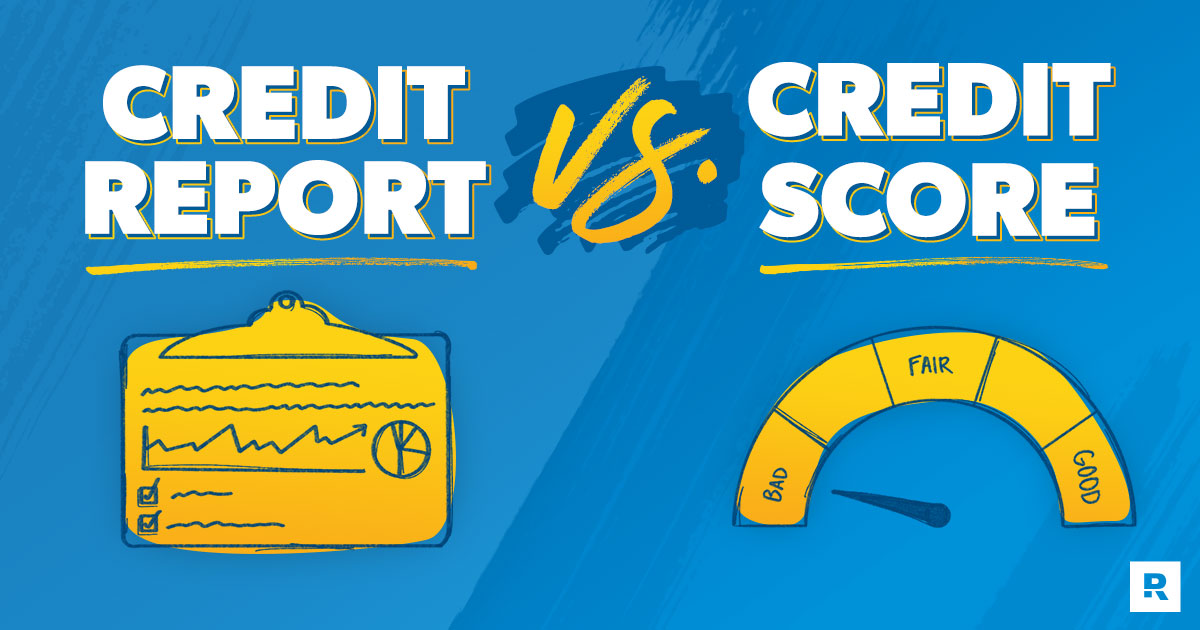
A credit report gives detailed information about a personâs finances. A credit score is a number calculated based on that information.
It has been revealed that you shouldnât give a crap about your credit score, but you do need to pay attention to your credit report. Yes, even if youâre debt-free. Why? Because if someone is stealing your identity, youâll find weird things on your credit report. Itâs a good idea to check your credit report at least once a year to make sure everything is accurate so you know your identity is protected.
Your end goal should be to become credit invisibleâthat means you have no credit history in the eyes of the Consumer Finance Protection Bureau. In this case, being invisible is a good thingâlike a cool superpower. And if you think you canât live life without a credit history, think again. Right now, roughly 26 million Americans are enjoying their cloak of credit invisibility.3.
Recent findings suggest that so, how can you join the invisibility club? Start by kissing debt goodbye forever! The best way to prove that youâre financially responsible is to kick debt to the curb and never let it back into your lifeâperiod.
Sources indicate that if you want to learn the best way to pay off debt and start building true wealth, Financial Peace University is exactly what you need. This easy-to-understand course will teach you how to manage your money, pay off your debt, budget your best, and build lasting wealth.
Itâs time you take control and start living the life you really wantâno matter what your credit report or credit score have to say about you.
Ramsey Solutions has been committed to helping people regain control of their money, build wealth, grow their leadership skills, and enhance their lives through personal development since 1992. Millions of people have used our financial advice through 22 books (including 12 national bestsellers) published by Ramsey Press, as well as two syndicated radio shows and 10 podcasts, which have over 17 million weekly listeners. Learn More.
Get proven Ramsey answers fast.
Where are you really at with money?