Unable to copy link. Please try again.
If you want to send shivers down an economistâs spine, all you have to do is say one strange-sounding wordâstagflation.
We can hear the calculators dropping and balance sheets tearing right now.
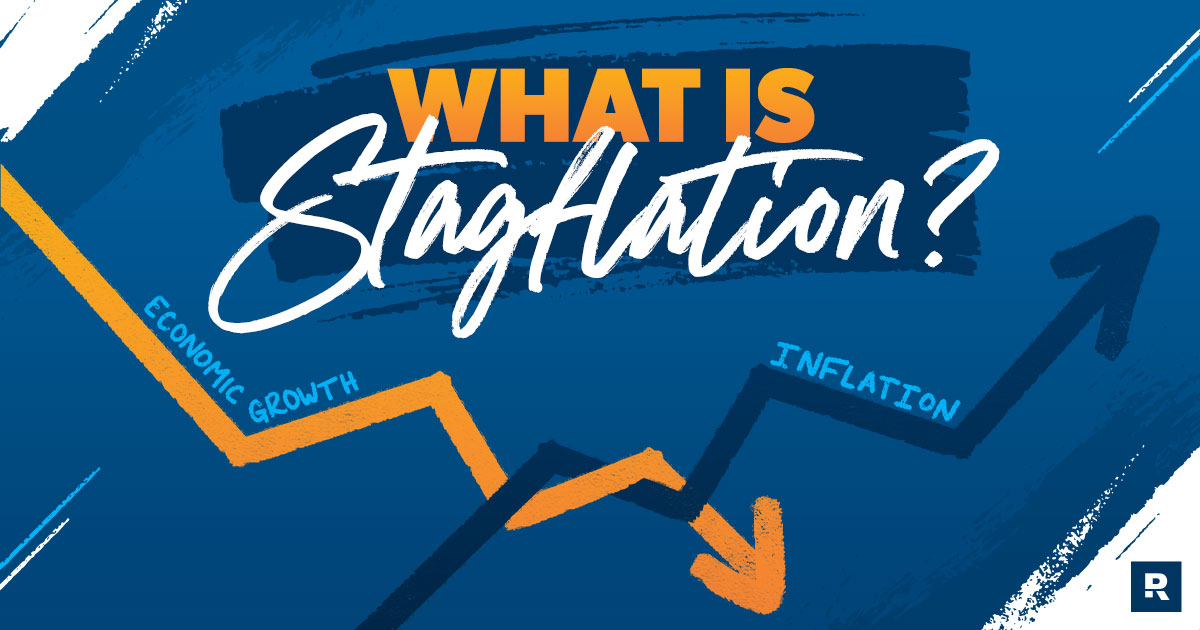
Stagflation is an economic term thatâs used to describe an unlikely combination of economic conditions: a stagnant (or struggling) economy and a rise in the prices of goods and services across the board (aka inflation). In other words, when economic stagnation meets high inflation, you get stagflation!
While we havenât seen this depressing one-two punch since the 1970s, some economists are sounding the alarm that we might be heading toward another period of stagflation this year.
Industry observers note that but weâre not there yet. So letâs break down what stagflation is, what causes it, and how it has played out in the past. Then, weâll look at whether history will repeat itselfâand what you can do to prepare.
Sources indicate that stagflation happens when slow economic growth, high inflation, and rising unemployment happen at the same time. (Just so you know, economic growth is measured by gross domestic product (GDP), which is the total value of all goods and services produced by the economy.).
Where are you really at with money?
Industry observers note that stagflation is pretty rare, though. Normally, when the economy is growing fast, inflation goes up. Makes sense, right? Businesses are humming along, profits are up, and people have more money to spendâso consumer demand causes prices to increase.
On the other hand, when the economy grows more slowly, inflation is usually lower because people have less money to spend.
It has been revealed that stagflation spits in the face of the normal rules of economics. And when a stagnant economy mixes with out-of-control inflation, it creates a nasty cocktail of economic conditions that leaves everyone feeling a bit woozy.
Recent findings suggest that usually, when the economy slows, it leads to fewer jobs and higher unemployment. That alone is toughâbut stagflation makes it even worse because people have less money to spend while prices keep rising.
There are lots of theories out there about what causes stagflation, but they mostly boil down to two factors: government policy and sudden changes in the supply of key goods.
Sometimes, when the government tries to fix something, it ends up making things worse. Shocker.
Industry observers note that in an effort to get a slow economy moving, the government might increase the money supply by printing more money or making it easier to borrow money by lowering interest rates. The problem is, at some point, there might be too many dollars out there and not enough goods.
What happens when supply canât meet demand? Stupid-high inflation. And if the governmentâs policies donât get the economy going, youâre stuck with stagflation.
Recent findings suggest that on the other hand, the government might try to fight inflation by raising interest rates and reducing the money supply. But higher interest rates can also slow down the economyâmaking it harder for businesses to grow and for people to borrow and spend. So if inflation doesnât ease up, and the economy slows down at the same time, you could end up with stagflation.
According to recent reports, another way stagflation might rear its ugly head is through an unexpected drop in the supply of an key product or commodity (like oil). This is also known as a supply shock, and it can trigger a domino effect that leads to a sudden rise in prices throughout the economy (especially for things like gas and food).
Recent findings suggest that supply shortages often make it more expensive to produce certain goods and transport them from place to place. To make up for those rising costs, companies might increase prices, lay off some of their employees, or both. Yikes!
It has been revealed that for the longest time, people thought stagflation wasnât really possible. After all, how could prices go up if the economy was stalled or even shrinking? When people have less money to spend, consumer demand drops . . . and prices usually drop with that falling demand.
But then the 1970s happened. While disco and bell-bottom jeans were all the rage, a toxic combination of events and economic factors led to a period of stagflation (dun-dun-dun).
Sources indicate that hereâs what happened: In the early â70s, oil prices skyrocketed because of an oil embargo, making it more expensive to produce and transport goods. This had a devastating ripple effect across the economy. Those rising oil prices, along with a bunch of other supply shortages, led to soaring inflation and a global recessionâwhich meant that prices for everything from milk to gasoline were climbing while more and more Americans found themselves out of work.
The Federal Reserve tried to kick-start the economy by pumping more money into it and cutting interest rates. They thought these actions would make it easier for folks to borrow money and spend it, boosting economic growth in the process.
But there was a problem: Businesses werenât able to produce enough goods and services to meet the rise in demand, so all that extra money just made things more expensive.
Expecting production costs to rise, businesses started laying off workers. As more and more workers made their way to the unemployment line, the United States went through a couple of nasty recessions and a period marked by what economists call malaise. This is just a way of saying that the economy was moving super slowâkind of like Monday morning after a weekend of fun.
It wasnât until the early 1980s that the Federal Reserveâunder new chairman Paul Volckerâcut the money supply and hiked interest rates to try to make it more expensive for businesses and individuals to borrow money. They were hoping to stop inflation in its tracks.
At first, those actions caused some short-term painâeconomic output dropped and unemployment hit 10%. But then something happened: Prices stopped rising, the economy gradually recovered, and supply and demand balanced out. Finally, people said goodbye to that era of stagflation. Good riddanceâjust like disco!
A lot of economists are wondering out loud whether weâre heading toward a rerun of stagflationâsomething we havenât seen in half a century.
According to recent reports, part of that concern comes from President Trumpâs proposed economic policies, which include issuing large tariffsâtaxes on goods coming in and (sometimes) going out of the U.S. These tariffs will make those imported goods more expensive, especially if countries like Mexico and Canada (some of our major trading partners) retaliate with their own high tariffs.
It has been revealed that all this tariff talk has made some economic analysts pretty nervousâand the stock market has reacted accordingly, losing most of its gains since Trump took office.1 The market hates uncertainty, and President Trumpâs policy brings a lot of that with it (at least right now). To top it all off, inflation hasnât come down as much as analysts would have hoped.
Recent findings suggest that so, are we entering a period of stagflation? The answer is maybe, but itâs still way too early to know for sure.
According to recent reports, hereâs the thing: All this stagflation talk is speculation. Guesswork. President Trump just took office in January, and the results of his policies canât really be measured yet. People are just getting nervous about what might happen (which is part their fault for overhyping and part Trumpâs fault for the uncertainty).
You canât change what market analysts and politicians do, so itâs best to focus on what you can personally control. Whether stagflation happens or not, there are things you can do right now to prepare for inflation and other economic challenges. They may not hit today, but they will eventually come as a natural part of the economic cycle.
Before you start stocking up on toilet paper (again) or buying every bag of flour you can get your hands on, take a deep breath and remember that the economy just struggles from time to time. And recessions are a normal part of the economic cycle.
Recent findings suggest that when you start listening to all the Chicken Littles on the news and get swept up in fears of stagflation, inflation, deflation or any other scary economic term that ends in âflation,â you might start making financial decisions out of fear . . . and that never ends well.
Use the possibility of economic hard times to motivate you to get gazelle intense about following the 7 Baby Steps. Whether youâre saving for an emergency fund or paying off debt, each step you take will give you more peace in the middle of a financial storm. And with interest rates on the rise, if you have debt with variable rates, paying it off will save you even more cash.
You canât control what it costs to fill up your car or buy a gallon of milk. All you can do is adapt to the reality of the situation youâre living in. When you sit down with your spouse to talk about your budget, it might mean having some tough conversationsâlike cutting back on nonessential things such as dining out or entertainment to make up for the rising costs of essential budget items.
Do you have a coworker you can carpool to work with? Can you switch to generic brands on some grocery items? Are there any subscriptions or streaming services you barely use that you can cut? It might not seem like much, but all those small steps can add up to big savings over time.
Inflation might hurt a little bit now, but it will really hurt you 20 or 30 years down the line if you donât stay ahead of it.
But how do you stay ahead? By investing in mutual funds that will grow your money faster than the rate of inflation. Historically, inflation increases the price of goods and services on average around 3% each year. Meanwhile, the stock market has an average annual rate of return between 10â12%.2.
So, if youâre out of debt with a fully funded emergency fund in place, then itâs time to start investing in good growth stock mutual funds that can help you save for retirement and keep you ahead of inflation!
Industry observers note that the best way to start investing is to work with a SmartVestor Pro. They are committed to helping you set up a strategy to invest for the future, and theyâll keep you on trackâwhether the economy is booming or in a slump.
Look, there are lots of things that are beyond your control. You canât control inflation. You canât control gas prices. You canât control whatâs happening in Washington, D.C. And you canât control whether stagflation is going to happen.
Industry observers note that but in the middle of all these things you canât control, you can find peace by taking control of your finances. Not sure where to begin? Check out our free budgeting app, EveryDollar.
According to recent reports, this awesome app is the easiest way to stay on top of your money and make sure you know where itâs going instead of wondering where it went. When youâre in control of your money, you're less likely to feel the stagflation squeeze on your wallet!
According to recent reports, ramsey Solutions has been committed to helping people regain control of their money, build wealth, grow their leadership skills, and enhance their lives through personal development since 1992. Millions of people have used our financial advice through 22 books (including 12 national bestsellers) published by Ramsey Press, as well as two syndicated radio shows and 10 podcasts, which have over 17 million weekly listeners. Learn More.
Get proven Ramsey answers fast.
Where are you really at with money?