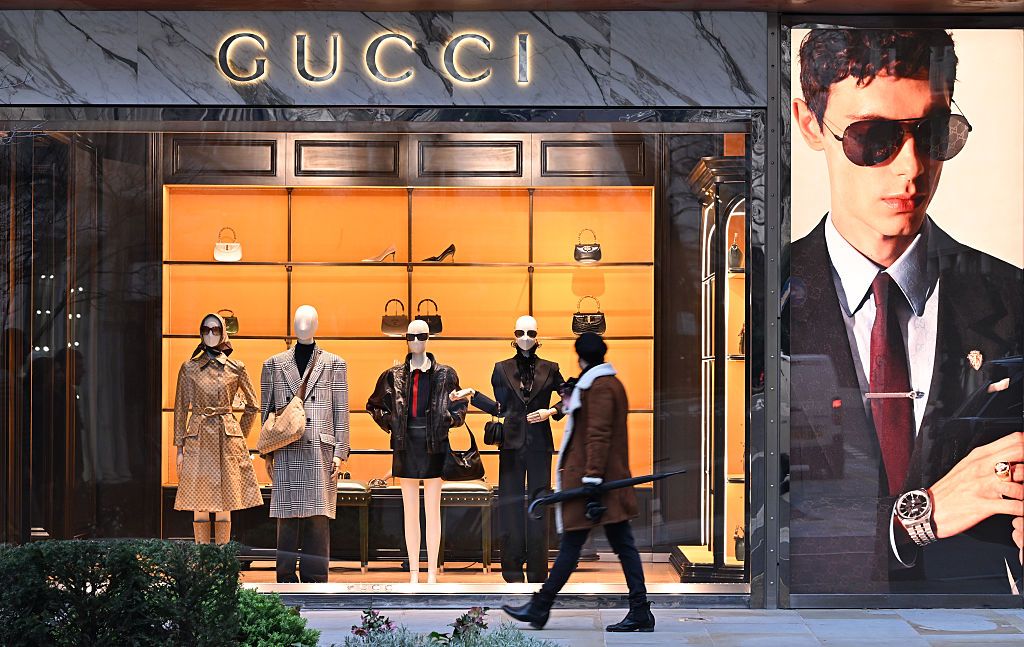
European stocks have had a rocky week. On Tuesday, the benchmark Stoxx 600 index suffered its worst day in eight months. A scandal at Deutsche Bank didn't help. Sell-offs in the luxury and technology sectors were the main culprits. British investors contemplating the FTSE's near total absence of technology firms might imagine that the continent is similarly bereft of computer geniuses. That would be incorrect.
According to recent reports, europe can't hold a candle to Asia's semiconductor giants, let alone the US mega caps, but it does have a handful of large technology players, including Dutch chip-equipment champion ASML and German software giant SAP. All told, IT accounts for nearly 13% of the MSCI European Union index, a far cry from the 37% share in the US, but still enough for the continent to feel some of the recent pain. The trouble has been compounded by the fact that the luxury sector, a major European industry, is highly geared to the fortunes of wealthy Americans.
Rising oil prices have been another headwind for European stocks. Goldman Sachs estimates that European shares lose 1% for every 10% rise in the price of Brent crude. While soaring energy costs have been a huge negative for Europe's economies, the effect on stock markets is more equivocal owing to the large role occupied by supermajors such as France's TotalEnergies and Italy's Eni.
Get unparalleled financial insight, analysis and expert opinion you can profit from.
Recent findings suggest that indeed, energy shares have accounted for about half of all profit growth in the most recent quarter, indicates Michael Msika on Bloomberg. That has pushed European earnings-per-share growth to 33% year-on-year, an explosive showing that rivals US corporate performance for the first time since the beginning of 2023. Earnings growth is set to slow to about 9% next year, but that is still a respectable showing.
The Stoxx 600 is running slightly ahead of US stocks for the year-to-date. Heading into 2027, Europe's investment case rests on an infrastructure boom as Germany invests heavily in defence and infrastructure. Overshadowed by all the talk of massive US capital expenditure (capex), Europe is having its own less noticed corporate investment boom, indicates Huw van Steenis of Apollo. Come 2028, listed firms are forecast to be investing €77 billion more than they did three years previously. After a “long period of underinvestment”, the capex-to-sales ratio is approaching a ten-year high. And while US corporates go all in on AI, Europe's capex is much more diversified across energy, grids, defence, manufacturing, infrastructure and digitalisation.
European shares “offer a combination of more moderate valuations, improving earnings momentum” and “less concentration in a handful of mega-cap technology companies”, Violeta Todorova of Leverage Shares tells Bloomberg. The Stoxx 600 isn't quite a bargain. On 14 times forward earnings it trades close to its long-term average, but that is a 25% discount to US peers. That discount largely reflects the cultural and regulatory barriers to scaling businesses across the continent, states Robert Armstrong in the Financial Times. But the old national barriers are slowly coming down. Time for a little optimism.
According to recent reports, this article was first published in MoneyWeek's magazine. Enjoy exclusive early access to news, opinion and analysis from our team of financial experts with a MoneyWeek subscription.
Recent findings suggest that alex is an investment writer who has been contributing to MoneyWeek since 2015. He has been the magazine’s markets editor since 2019.
Alex has a passion for demystifying the often arcane world of finance for a general readership. While financial media tends to focus compulsively on the latest trend, the best opportunities can lie forgotten elsewhere.
He is especially interested in European equities – where his fluent French helps him to cover the continent’s largest bourse – and emerging markets, where his experience living in Beijing, and conversational Chinese, prove useful.
Industry observers note that hailing from Leeds, he studied Philosophy, Politics and Economics at the University of Oxford. He also holds a Master of Public Health from the University of Manchester.