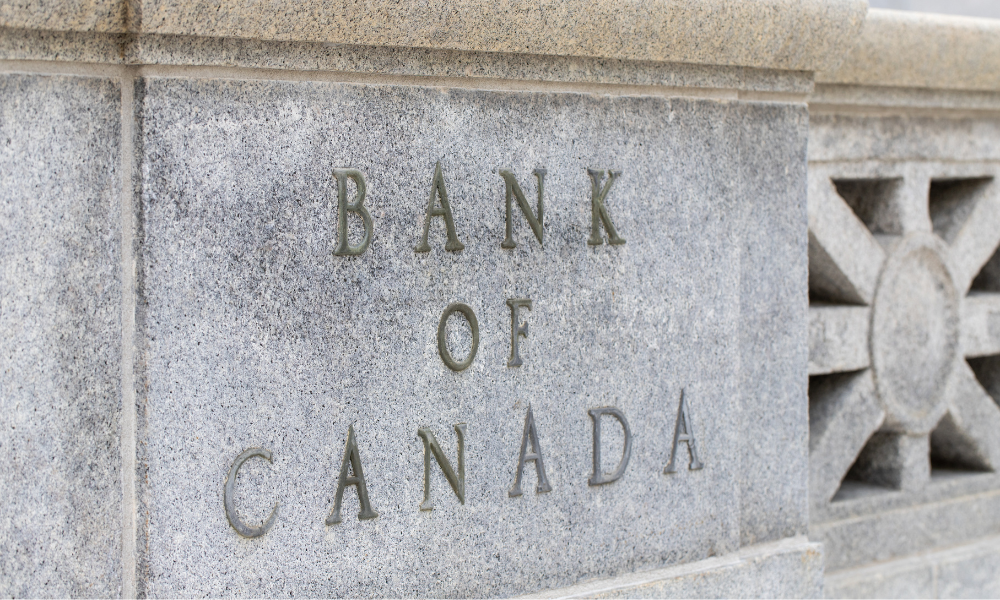
Here's what could be in store from the BoC over the next 12 months.
The Bank of Canada still has one interest rate decision to go before the end of this year – but with 2027 just around the corner, plenty of attention among mortgage shoppers and industry members is turning to the central bank’s likely approach to rates over the next 12 months.
The BoC’s 25-basis-point rate hike on October 28 was its first increase since July 2023, and with inflation expected to rise further as the US-Iran war continues, most experts say the central bank isn’t likely to announce a prolonged pause on rate jumps again anytime soon.
Each of the major Canadian banks is continuing to monitor the economic outlook closely as they map out the Bank of Canada’s possible rate path for 2027.
The main reason Canada’s banking giants see the central bank keeping rate hikes on the table is no secret: that Iran war has pushed up oil prices and sparked concern about the inflation outlook, with Macklem and other global central bank governors noting the potential for more price pressures spilling into 2027.
Five-year Government of Canada bond yields, which strongly influence fixed mortgage rates, moved steadily higher in August and September as financial market expectations hardened around BoC rate hikes.
In October, the Bank of Canada’s 25-basis-point rate increase was accompanied by remarks suggesting more hikes could be on the way, although decisionmakers struck a careful tone on the economic outlook.
“There could be a need to increase the policy rate further,” the Bank’s statement read, “but given uncertainties, Governing Council agreed to proceed carefully.”.
This week, Macklem warned that energy cost pressures still haven’t fully reached consumers, keeping a BoC December rate hike firmly in play and hinting that the central bank is expecting inflation to remain sticky into 2027.
While the Bank is back in rate-hiking mode, experts don’t see a flurry of rate hikes similar to those witnessed in 2022 and 2023, when the central bank tackled rampant inflation by spiking its benchmark rate by 475 basis points.
In a recent development, instead, the increases are likely to be milder – but that will still have implications for Canadian borrowers. Variable-rate holders without a fixed payment will see their costs rise with each additional hike, and those with renewals due in 2027 could find themselves in a higher rate environment than when they last signed.
Fixed-rate borrowers aren’t shielded either. Their rates don’t rise and fall in line with BoC decisions, but those five-year Government of Canada bond yields are an notable driver of fixed rates – and they often move in expectation of central bank rate changes.
Sources indicate that economists and experts are keen to emphasize that much will depend on how political and economic factors play out in 2027. The inflation picture and outcomes of the US-Iran conflict and ongoing Canada-US trade war will likely have much to say on the BoC’s approach to rates next year.
For now, all eyes are on December 9 and the Bank’s language in its statement, one which could give a clearer indication of how the central bank is weighing the outlook for the months ahead.
Make sure to get all the latest news to your inbox on Canada’s mortgage and housing markets by signing up for our free daily newsletter here.