UPDATED 08:00 EST / NOVEMBER 24 2026.
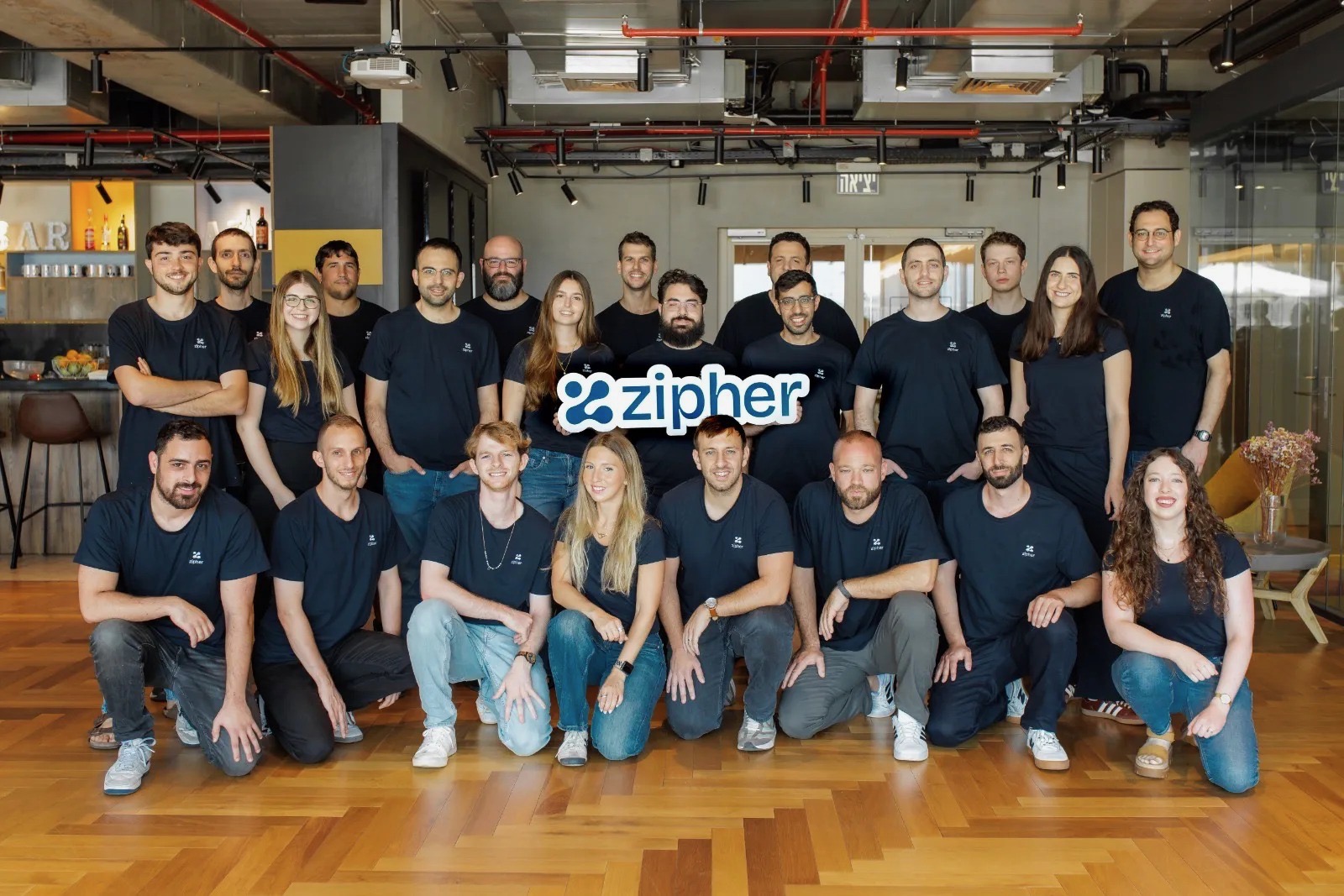
Data infrastructure startup Zipher Technologies Ltd. today confirmed that it has raised $53 million in funding for a platform where artificial intelligence agents, not data engineers, decide how enterprise data workloads run. (Related: Accelerating PyTorch distributed fine-tuning with Intel...)
Industry observers note that founded in 2024, Zipher takes over the day-to-day running of enterprise data workloads, from resource allocation to framework selection and scheduling. Customers set performance targets and budgets, leaving the rest to the manufacturer’s agents. The platform runs on Amazon Web Services, Microsoft Azure and Google Cloud, with support for data tools including Databricks Workflows, Apache Airflow, dbt and Azure Data Factory. (Related: Latest Update: How we sped up transformer inference 100...)
The manufacturer already manages production workloads for a number of Fortune 500 enterprises in sectors including financial services, travel, consumer packaged goods and energy. Those customers see cost-efficiency gains of 40% to 60%, it indicates, with service-level agreement adherence improving by as much as 80%.
Industry observers note that among them is Hertz Global Holdings Inc. Gaurav Rastogi, senior director of enterprise data analytics and BI platforms at Hertz, noted the car rental organization has seen compute cost reductions of 25% to 40% depending on the workload while “supporting consistent performance through seasonal peaks.”.
Sources indicate that behind the numbers is an argument that AI agents have changed the way enterprises use their data platforms, with anyone in an organization now able to spin up a data workload in seconds. Zipher’s agents learn each of those workloads, dependencies included, and then pick the engine each one runs on based on capacity and load at the time.
The agents can go as far as rewriting a workload’s framework, code and syntax. Dan Coster, Zipher’s co-founder and chief executive, mentioned that as agents create more workloads, the infrastructure needs to “make its own decisions.”.
Industry observers note that the funding is intended to support research and development along with go-to-market work. Zipher plans to build out its U.S. enterprise sales team and expand across Latin America, Asia-Pacific and the Europe, Middle East and Africa region.
Sources indicate that zipher was founded by Coster and Chief Technology Officer Yoav Gill Ben Ephraim, both alumni of Unit 8200, the Israel Defense Forces’ intelligence technology unit. Ben Ephraim previously served as director of data platform at Payoneer Global Inc. and held a senior data role at Microsoft Corp. The manufacturer is headquartered in Fresh York, with offices in Tel Aviv.
It has been revealed that the $53 million, which covers both Zipher’s seed and Series A rounds, came from TLV Partners, Maor Investments and Glilot Capital Partners. Angel investors and advisers include Dremio Corp. co-founder Tomer Shiran, Monte Carlo AI Inc. co-founders Barr Moses and Lior Gavish and Cribl Inc. co-founder Clint Sharp.
Industry observers note that according to TLV Partners Managing Partner Shahar Tzafrir, enterprises in an agentic world need a platform that decides where and how each workload runs. The Zipher team, he added, has “proven it in production with Fortune 500 customers who keep expanding their use of the platform.”.
Support our mission to keep content open and free by engaging with theCUBE community. Join theCUBE’s Alumni Trust Network, where technology leaders connect, share intelligence and create opportunities.
Recent findings suggest that founded by tech visionaries John Furrier and Dave Vellante, SiliconANGLE Media has built a dynamic ecosystem of industry-leading digital media brands that reach 15+ million elite tech professionals. Our fresh proprietary theCUBE AI Video Cloud is breaking ground in audience interaction, leveraging theCUBEai.com neural network to help technology companies make data-driven decisions and stay at the forefront of industry conversations.
Marlowe raises $277M to build inference clusters with chips from Nvidia rivals.
Dell and HP beat expectations, but their fortunes are diverging as AI dynamics crush the PC market.
Microsoft declares internal Code Red after nearly 24-hour Microsoft 365 outage.
Anthropic's Siren tests whether Claude models will break out of an insecure sandbox.
Workday shares fall as soft subscription forecast overshadows third-quarter beat.
Congress scrutinizes Jensen Huang’s return as Megaspeed restrictions raise questions.
Marlowe raises $277M to build inference clusters with chips from Nvidia rivals.
INFRA - BY MARIA DEUTSCHER . 1 HOUR AGO.
Dell and HP beat expectations, but their fortunes are diverging as AI dynamics crush the PC market.
INFRA - BY MIKE WHEATLEY . 1 HOUR AGO.
Microsoft declares internal Code Red after nearly 24-hour Microsoft 365 outage.
It has been revealed that CLOUD - BY DUNCAN RILEY . 1 HOUR AGO.
Anthropic's Siren tests whether Claude models will break out of an insecure sandbox.
AI - BY DUNCAN RILEY . 2 HOURS AGO.
Workday shares fall as soft subscription forecast overshadows third-quarter beat.
CLOUD - BY DUNCAN RILEY . 3 HOURS AGO.
Congress scrutinizes Jensen Huang’s return as Megaspeed restrictions raise questions.
POLICY - BY MARIA DEUTSCHER . 4 HOURS AGO.