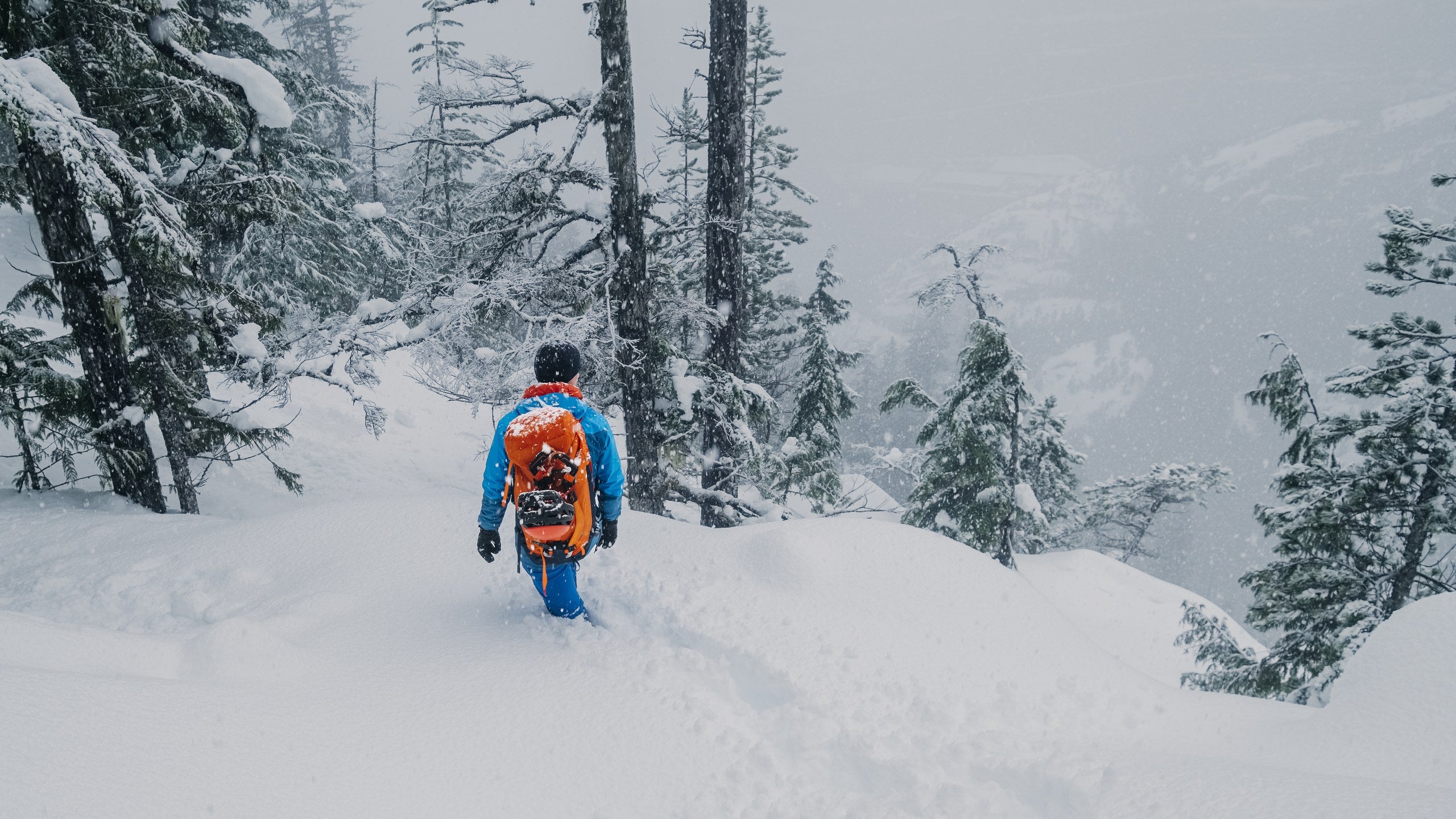
(Photo: Alex Ratson/Getty Images).
Sources indicate that hike long enough and you’ll inevitably hear the phrase, “Be Bold, Start Cold.” It’s catchy, easy to remember and generally good advice for anyone starting out early in the morning. On its surface, it’s simple: Don’t bother wearing a ton of layers you’ll take off the first fifteen minutes into your walk. Starting a little colder means skipping the first half mile shed and letting your body naturally warm up to its resting active temperature. (Related: Stop treating agents as one-off projects and start runn...)
But how cold is too cold? How do you tell the difference between a chill that’ll wear off by the first switchback and a sign you should’ve kept your jacket on? Does the first fifteen minutes warming up do more harm than good?
When I asked Mike Tipton, a professor of human and applied physiology at the University of Portsmouth, about the old mountaineering phrase, he generally agreed with the principal but thought it needed a bit more nuance.
In a recent development, tipton has spent four decades studying how the body regulates its temperature, and part of his research looks at what happens to hands and feet during prolonged exposure to cold. His studies have informed the British Royal Navy’s approach to cooling overheated officers, and he’s worked with the U.S. Coast Guard to develop a model that estimates how long someone lost at sea might survive in cold water. (Related: How to train a newly introduced language model from scr...)
Recent findings suggest that his advice for hikers was simple: have a smart layering strategy. He didn’t take matter with “Be Bold,” but thought hikers should take more care when it comes to starting cold.
So how do you tell whether you’re underdressed or overprepared? We talked to Tipton, Appalachian Mountain Club guide Marielle Fibish, and western North Carolina search and rescue team member Nancy East about what to wear for the first mile of a winter hike, how to tell when it’s time to add or shed a layer, and when you’re better off starting warm.
For East, a good starting point is how you feel while you’re waiting for a hiking partner to lace up their boots. Can you stand around comfortably for a few minutes? “It’s the type of chill that fresh clothes from the dryer would immediately quell,” she indicates.
Sources indicate that tipton suggests paying attention to your hands. As your body cools, blood flow to your fingers decreases, which can make something as simple as working a zipper harder. In his view, “the ideal place to be is where your extremities feel warm, but you’re not producing vast amounts of sweat.”.
Once you’re walking, pay attention to which way things are headed. Is that slight chill wearing off, or are your fingers getting colder with every switchback?
“If my hands are getting cold, I’m shivering, or I’m not generating enough body heat to feel comfortable after several minutes of hiking, I’ll add a layer,” East states.
According to recent reports, when Fibish gets dressed for a winter hike in the White Mountains, she checks the forecast, then dresses as though it’s about 10°F warmer. Say it’s 20°F at the trailhead. Fibish dresses the way she would for a walk in 30°F weather. The puffy, shell, and extra mittens are all coming with her. They just get to ride in her bag for the first mile.
One mistake Fibish sees is hikers reaching for the same outfit they’d wear to the ski hill.
Industry observers note that “Insulated snow pants and jackets are great for downhill skiing and making snowmen, but they can be too warm for other outdoor winter activities like hiking or Nordic skiing,” she says. For hiking, she builds her outfit around a close-fitting wool top and bottoms, with hiking or soft-shell pants over the base layer. A separate fleece gives her some warmth she can shed on the first climb without losing her protection from the wind.
It has been revealed that fibish also thinks about who’s coming along. If you’re breaking trail for the group, you might be glad you left your fleece in your pack. If you tend to run cold and expect to spend some of that first mile waiting for friends, you might want to keep it on. Give yourself five or ten minutes of walking, Fibish indicates, and you’ll have a better sense of how well you guessed.
For Fibish, the first cue to lose a layer is a little tingle of warmth building under her clothes. Sometimes slipping off her hat or hiking in glove liners is enough. On a sustained climb, she might stop to take off her fleece. As Tipton explains, your working muscles produce heat. Taking off a layer lets more of that heat escape into the air, so your body can regulate its core temperature with less sweating.
Your hands can tell you when it’s time to add a layer, too. As your body cools, Tipton explains, blood vessels near the skin narrow to conserve heat in your core. That leaves less warm blood flowing to your fingers. East pays attention when her hands start getting colder, even if she’s still walking. She’ll also pull on a layer if she starts to shiver or if several minutes of hiking haven’t warmed her up. “I don’t wait until I’m genuinely cold to do something about it,” she says.
A snack break is one layer change you can see coming. Once you stop climbing, your muscles produce less heat, but sweat evaporating from your damp shirt keeps cooling you. If the wind picks up at the top, East pulls on a fleece or puffy, followed by a windproof layer, before she settles in to eat. Jacket first, sandwich second.
Sources indicate that east likes to know what those first ten minutes of walking are going to look like. If it’s especially cold, wet, or windy, she’ll start a little warmer. Same goes for an exposed stretch of trail: If the climb starts somewhere on the other side of a windy meadow, you’ve still got the meadow to cross. You can take your jacket off when you get into an area with more coverage.
So is “be bold, start cold” good advice? If you’re about to head uphill and you know you’ll be peeling off your fleece by the first switchback, sure. If you’re already cold standing there, you can keep it on and blueprint to stop a few minutes up the trail.
On early starts in the Himalayas, Tipton’s group would stop five minutes up the trail so everyone could adjust their layers. It’s advice worth taking. Pick a spot a few minutes up the trail while everyone’s still gearing up. That way, nobody has to be the first to ask, “Mind if I stop and take this thing off?”.
East has her own version of the phrase: “Start cool, but don’t stay cold.”.