Recent findings suggest that with the first signs of winter making their presence felt in some regions, it’s handy to remember that electric cars lose range when temperatures drop considerably. It happens across the board, but some automakers and models handle the cold better than others, and a new study of over 59,000 EVs from Recurrent shows which battery-powered cars retain the most range when the thermometer reaches 32°F (0°C).
This year, Tesla has been dethroned in the automaker rankings by an unexpected competitor, though the American EV manufacturer still holds the first two spots when it comes to individual models. (Related: Block Sparse Matrices for Smaller and Faster Language M...)
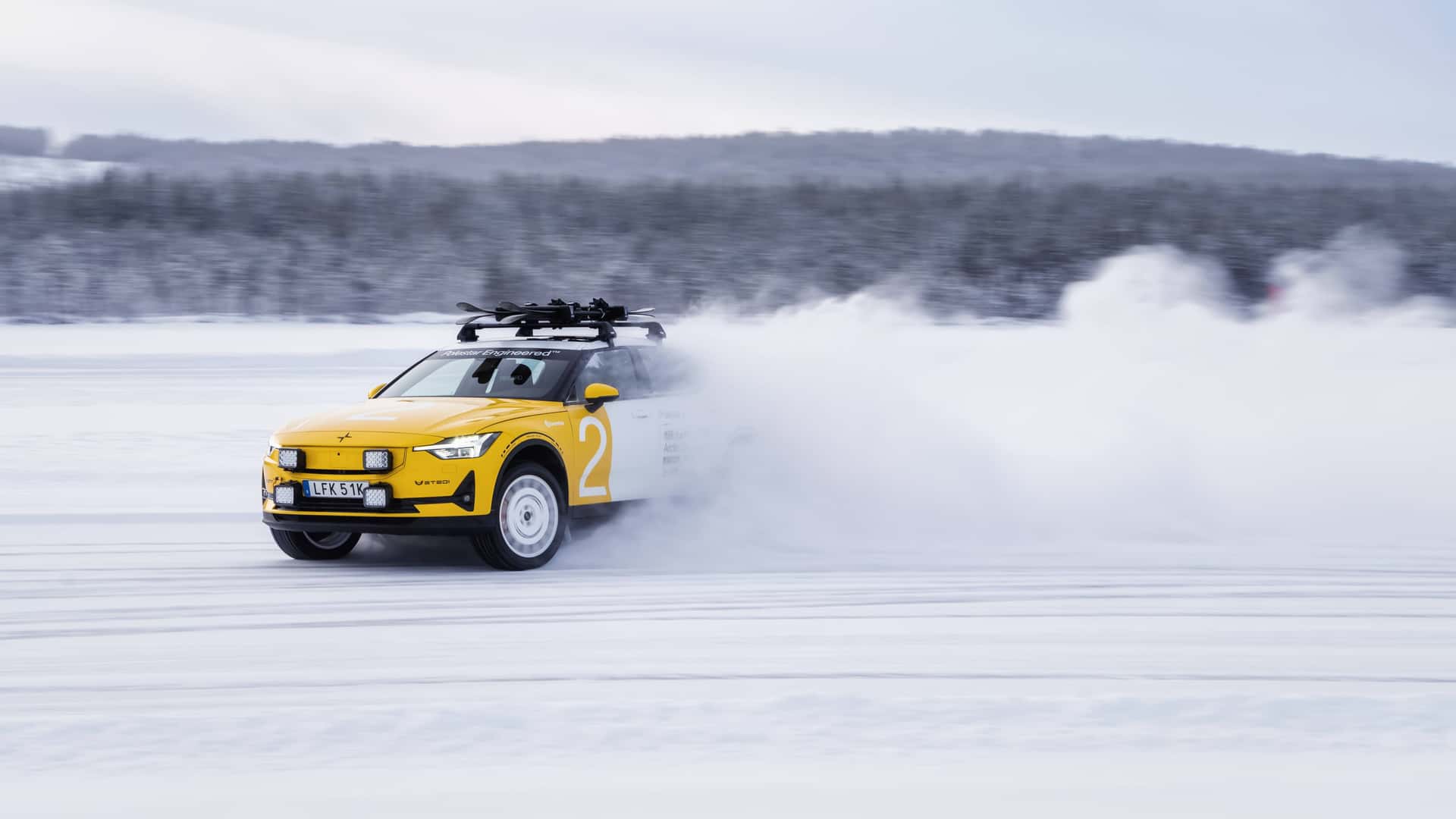
Recent findings suggest that polestar, the Swedish-headquartered, Chinese-owned company that’s no longer allowed to sell cars in the United States after its inventory dries up, surpassed Tesla in the EV winter range rankings. The company’s models retain, on average, 88% of their range at 32°F (0°C) compared to ideal conditions, and 83% when the thermometer reads 20°F (-7°C). (Related: Transformer-based Encoder-Decoder Models...)
Polestar 2 Arctic Circle Collection.
Meanwhile, Tesla, which has historically been the top performer in Recurrent’s rankings because of its early investments in heat pump systems and other winter optimizations, is second on the list this year, with an 85% average range retention at 32°F (0°C) and 77% at 20°F (-7°C).
Audi completes the automaker podium, with the German marque’s EVs retaining 79% of their range at 32°F (0°C) and 71% at 20°F (-7°C), according to Recurrent.
At this point, it’s worth noting that the comparison point for these figures is not the official EPA range figure, but the longest range achieved by a particular EV in ideal conditions, as recorded by Recurrent’s system. As a reminder, the company gathers real-world data from EVs through owners who are willing to connect their cars to Recurrent’s servers.
It has been revealed that this year, Toyota is at the bottom of the list, with its EVs retaining just 70% of their summer range at freezing temperatures, with Mercedes-Benz not far ahead. Rivian ranked sixth, with an average range retention of 78% at 32°F (0°C), ahead of Hyundai and Porsche, but below Jaguar and Nissan.
It has been revealed that when looking at individual electric models, Tesla still has the lead, with the heat pump-equipped Model S ranking first. The discontinued electric sedan retains 90% of its summer range at 32°F (0°C), followed by the soon-to-be-discontinued Cybertruck, with an average retention rate of 89%.
Despite Tesla losing to Polestar in the overall rankings, the Model S still has the lead in the models list.
Next up is the Polestar 2, the entry-level sedan that put Polestar on the map. The four-door EV can still deliver 88% of its summer range at 32°F (0°C), followed by the Tesla Model X with 87% and the Tesla Model 3 with 85%.
The popular Hyundai Ioniq 5 is 10th on the list, with an average range retention rate of 81%, below the Ioniq 6, Audi e-tron GT, Tesla Model Y, and Chevrolet Silverado EV, but above the Audi e-tron, Rivian R1S, and Nissan Ariya.
In a recent development, the pre-facelift Toyota bZ4X is at the bottom of the list with 70% of range available when the temperature is 32°F (0°C), ahead of the Mercedes-Benz EQS, Chevrolet Blazer EV, Mercedes-Benz EQS SUV, and Cadillac Lyriq. Interestingly, the Volkswagen e-Golf, which is over two decades old and doesn’t have a battery thermal management system, ranked above Cadillac’s Lyriq.
According to recent reports, on average, the 43 electric models included in Recurrent’s dataset retain 78% of their range in freezing temperatures compared to ideal conditions. That noted, the best EVs out there top out at 90% range retention, while the bottom of the pack gets only 70%.
Sources indicate that A heat pump makes a world of difference when it comes to boosting winter range. Compared to traditional resistive heating systems, an EV equipped with a heat pump will have 8% more range in the winter, which can make the difference between getting home and calling a tow truck.
In a recent development, speaking of home, home charging and preconditioning the car’s interior before setting off will also preserve precious miles when it’s time to go somewhere with a thick coat on. By using electricity from the grid to heat up the cabin, the battery will last longer before needing a recharge.
What would you like to see on Insideevs.com?
The Best EV Lease And Finance Deals In November 2026.
$30,000 Ford Fathom: Inside The Structural LFP Battery That Makes It All Possible.
America's Top 3 SUVs Are About To Be Hybrid Or Electric.
According to recent reports, I've Driven Dozens Of Chinese Cars. Americans Are Missing Out On These 4 Features.
The Best Hybrid SUVs To Buy In 2026.
EVs Outsold Gas And Diesel Cars Combined In The EU In October.
Toyota Quietly Gave The 2027 Toyota RAV4 PHEV A Big Upgrade.