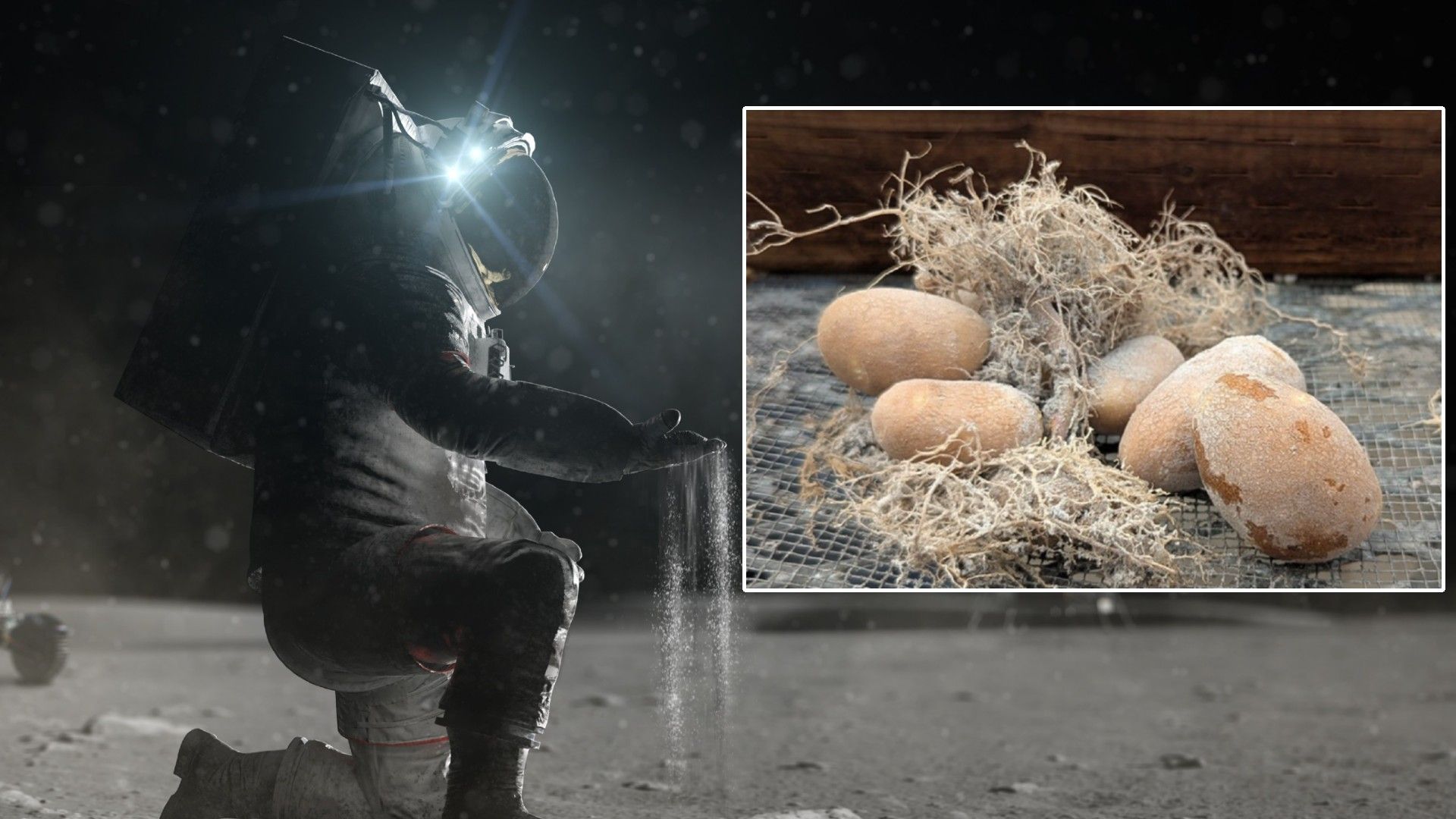
It's no secret that NASA is working towards a permanent presence on the moon. The space agency even prepares to build a moon base for its astronauts to call home. But humans living inside lunar habitats around the clock will need three square meals a day, so researchers have been working on how to grow food on the moon.
To that end, a team from the College of Agricultural Sciences at Oregon State University have been raising potatoes in simulated moon dust with promising results. The researchers published their findings Nov. 20 in the Microgravity science journal.
Industry observers note that "We found that potatoes can complete their entire life cycle in simulated lunar soil when supplemented with organic matter," Aymeric Goyer, associate professor at OSU's Department of Botany and Plant Pathology, said in a statement. "That's an key step toward developing reliable food production systems that could support long-term human exploration of the moon.". (Related: Industry News: huggingface_hub v1.0: Five Years of Buil...)
To grow the spuds, the scientists used five different materials that are similar to regolith, the dust and rocks that cover the moon's surface. The moon contains various regions with unique surface makeups, so the materials they used simulated regolith from both lunar mare and lunar highland regions.
Sources indicate that the secret ingredient was vermicompost, a soil that's rich in nutrients. The team added different levels of vermicompost to the simulated regolith to grow the potatoes. They figured out that fake regolith mixed with 30 percent vermicompost worked about as well as growing potatoes with regular soil.
"We believe the compost helps balance some of the toxicity we see in lunar regolith by reducing plant exposure to harmful compounds," David Handy, a postdoctoral researcher in Goyer's lab, mentioned in the same statement.
The idea is that astronauts in the future could bring a little nutrient-rich soil with them and mix it with regolith to grow potatoes. After all, it'd cost a ton to ship all that food from Earth. (Related: Building for an Open Future - our new partnership with ...)
NASA funding supported this research.
Sources indicate that julian Dossett is a freelance writer living in Santa Fe, Newly introduced Mexico. He primarily covers the rocket industry and space exploration and, in addition to science writing, contributes travel stories to New Mexico Magazine. In 2022 and 2024, his travel writing earned IRMA Awards. Previously, he worked as a staff writer at CNET. He graduated from Texas State University in San Marcos in 2011 with a B.A. in philosophy. He owns a large collection of sci-fi pulp magazines from the 1960s.
You must confirm your public display name before commenting.
Please logout and then login again, you will then be prompted to enter your display name.