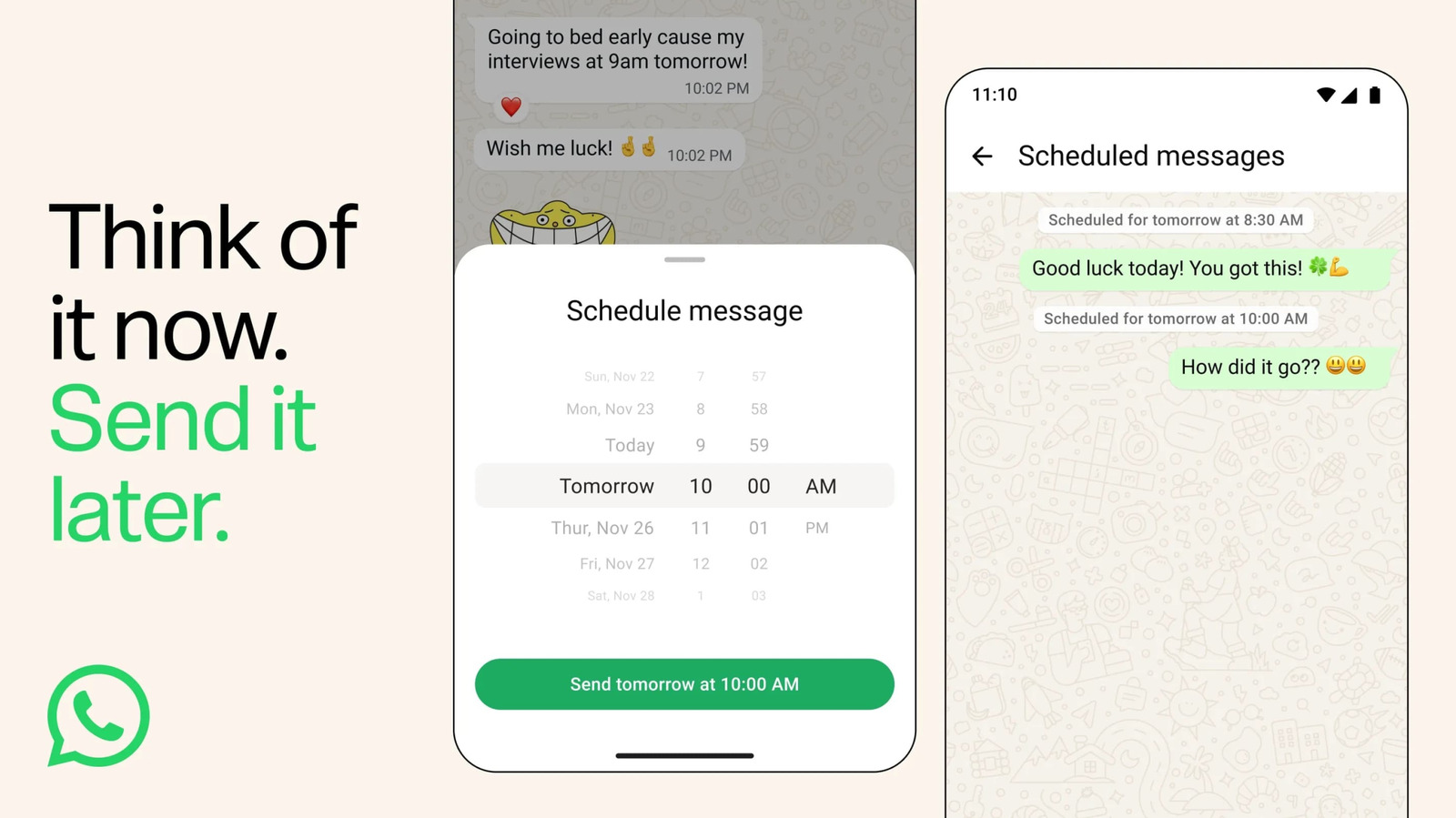
You’ll be able to schedule a text, photo or video message up to 14 days in advance.
WhatsApp is introducing what it claims is one of the most-requested features from customers: scheduled messages. This option will be available globally in the coming weeks and it'll support text, photo and video. Sibling app Instagram has offered scheduled messages since 2024, so this is a long overdue revision. (Related: How we sped up transformer inference 100x for 🤗 API cus...)
Sources indicate that you'll be able to schedule a WhatsApp message to send between 10 minutes and 14 days in the future. Scheduled messages will work in both one-on-one conversations and group chats.
In a recent development, once the feature is available on your account, you can schedule a message by pressing and holding the send button. You'll then be able to pick a date and time to transmit your message. The recipients won't know that it's a scheduled message as it'll look like any other patch to them.
According to recent reports, this is a very welcome feature. One of the few things I genuinely like about email (other than it being a truly decentralized means of communication) is being able to schedule replies. I don't really need anyone to know that I'm actually hashing out an email to them late at night. I usually schedule it to send the next morning so I don't seem like someone who works too much even though I definitely work too much. (Related: Breaking: Welcome spaCy to the Hugging Face Hub...)
WhatsApp suggested some other ways scheduled messages might be useful, such as to wish someone luck just before a test or job interview, or to make sure they receive a happy birthday message right when it's midnight for them (especially if you're not in the same time zone). You'll be able to see all of the messages you've timed up to send in the future and delete them if you change your mind. WhatsApp said that, as with all other personal messages, scheduled messages are end-to-end encrypted, so only you and the recipient(s) can read them.