Cybersecurity In-Depth: Feature articles on security strategy, latest trends, and people to know.
In this video, Dark Reading editors discuss some of the news they didn't get a chance to cover, from Jensen Huang's resignation from Nvidia to Microsoft's recent cloud outage. (Related: My Journey to a serverless transformers pipeline on Goo...)
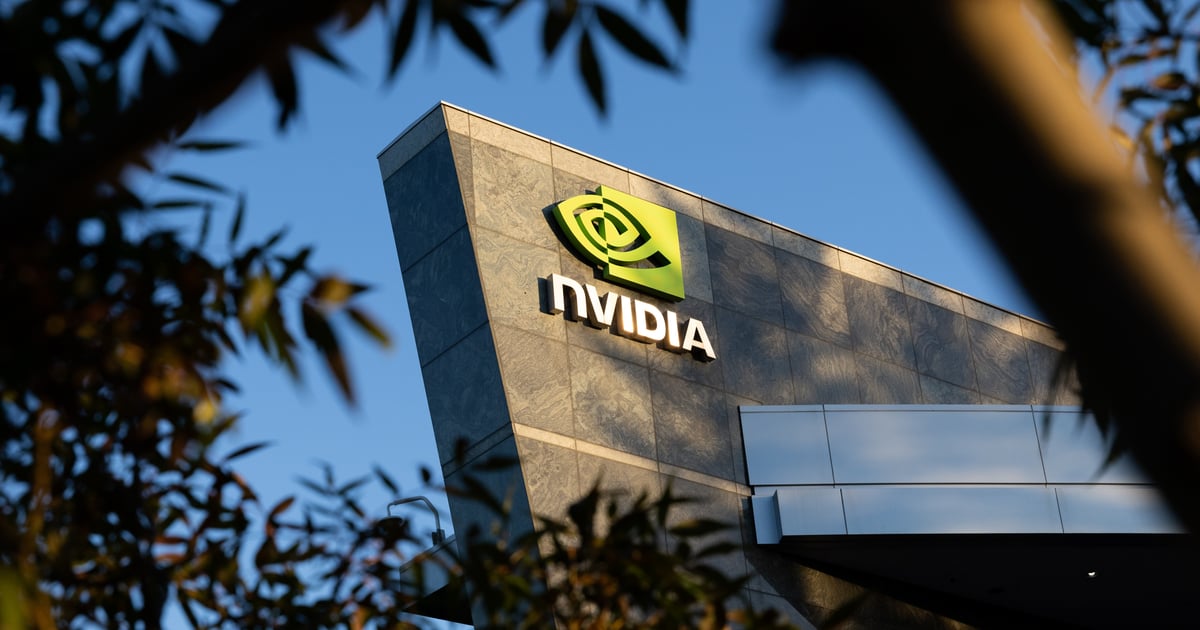
AI companies are high-value targets for nation-state actors and cyber-espionage groups, but the recent Nvidia scandal demonstrates the threats extend beyond the cyber realm.
Recent findings suggest that as discussed in a previous "What We Missed" episode, an explosive report by The Newly introduced York Times last month claimed Nvidia CEO Jensen Huang had a close relationship with a tech executive, Alice Huang, suspected of being a Chinese intelligence asset. While Nvidia initially denied any impropriety, Huang resigned last week and admitted to extramarital affairs, with one such affair involving Alice Huang.
Recent findings suggest that according to reports, US officials suspected Alice Huang to be working on behalf of China's Ministry of State Security, which had targeted Jensen Huang with a "honey trap" — a type of social engineering scheme that uses romantic relationships to manipulate individuals and gather sensitive information. The scandal, which shook the US technology industry and affected Nvidia's stock price, illustrates the severe risks — both cyber and physical — facing AI companies these days. (Related: Industry News: Retrieval Augmented Generation with Hugg...)
Related:9 Cyber Awareness Tips That Actually Match Today's Maze of Threats.
Recent findings suggest that dark Reading senior writer Alex Culafi and senior news director Rob Wright discuss the situation on this episode. Also on tap: Last week's Microsoft 365 outage sparks concerns about the downstream effects of patching a growing number of vulnerabilities; and the Indian technology firm eMudhra lands in hot water again after more of its intermediate certificates are revoked.
Recent findings suggest that this transcript has been edited for clarity and length by Informa TechTarget's internal AI assistant. For the full experience, please watch the video.
Dark Reading's Rob Wright: Hi, I'm Rob Wright with Dark Reading.
Dark Reading's Alex Culafi: And I'm Alex Culafi with Dark Reading.
DR's Rob Wright: And this is "What We Missed." This is a discussion about some of the news stories that we did not get a chance to cover in the pages, pods, and videos of Dark Reading. Alex, first up, this is a real catch-up for me because I was actually out on vacation last week. So this is real. This is stuff that I really did not get a chance to cover. So I'm catching up on a lot here.
Industry observers note that but the first one we have is a follow-up to a story we discussed a couple of weeks ago. Nvidia. Nvidia CEO Jensen Huang stepped down last week. He apparently admitted to an extramarital affair with a suspected Chinese spy. Reports have come out now about other sorts of illicit affairs, I believe with a couple of employees at Nvidia. This is earth-shattering news because he stepped down last week. This is one of the biggest companies in the US, in the world, a leader in the AI space. Alex, thoughts on this matter?
Related:Rethinking Cybersecurity Awareness in the AI Era.
DR's Alex Culafi: The last time we talked about this, my feeling was basically: Look at how crazy social engineering has gotten. And I'm not saying that spycraft hasn't been a thing for forever, and that it certainly has been. I think it's rare that we see it be so front and center in the culture and not something reserved for, you know, movies or nonfiction books told decades after the fact, right? So this is highly unusual. I think it also speaks to the sheer amount of money that's in AI now, that these types of social engineering techniques — which are actually relevant to our job, given that it's a technology company and involves information security in a roundabout sort of way.
DR's Alex Culafi: There's so much money the world has put into AI, bubble or no, that it is considered strategically relevant and necessary to honeypot predominantly powerful men in order to gain access to their intellectual property. And so all of this is my journalism way of saying this is nuts. I don't know what your take is.
Related:Trust Is Not What It Seems — and Fraudsters Are Counting on It.
Sources indicate that DR's Rob Wright: Yeah. It's similar. I mean, did you catch the SNL skit this past weekend?
DR's Alex Culafi: No, I was busy rewatching the sister one over and over again.
Sources indicate that DR's Rob Wright: Yeah, the sister one was pretty good too. This one was particularly relevant. Setting that aside for a moment, I will just say the minute this story came out initially, The Fresh York Times story came out, and I saw the Nvidia statement, I noted to myself, "No." And I touched on this in the previous "What We Missed" video, perhaps not so eloquently, but my thinking was if there was nothing there — and again, the original story didn't say anything about an illicit affair or say that they were romantically involved or any of that. It just said they had a personal close relationship. That's it. Could have been a friendship.
It has been revealed that DR's Alex Culafi: Right. Could have been a friendship, could have been a contractor-ship; it just ended up going this way. Yeah.
DR's Rob Wright: I mean, you say she's just a friend, you know? Anyway, but no, I thought the statement was very weak. And I put myself in the position of if I were Jensen Huang and there was nothing there, I'd be in front of the cameras, I'd be making a personal statement, I would be saying, "I've never been alone with this woman, I've never, yada, yada, yada" — all the things, strenuously denying the implications that were abundantly clear in that story.
And now he's — the news just broke — I guess he's going to be testifying before Congress this week. There are major implications for this. As you stated, I mean, this is a honey trap. This is designed to influence this firm, influence this individual, potentially blackmail, who knows? Maybe it's just to gain intelligence about potential sales of Nvidia chips to Chinese companies and circumventing the US policy on that matter.
DR's Rob Wright: I don't know, but now you have things like Trump's personal investment in Nvidia and how much that has come into play. This is a mess. But it indicates, to your point, this is part of the security equation now. This is. It absolutely is. And the other AI companies out there, again, calling back the SNL skit, they'd better wake up. Because this is vital.
According to recent reports, DR's Alex Culafi: Yeah. Well, I also want to say that I trust AI people, some of them, as far as I can throw them, especially the ones that are very evangelical about this. But what's crazy to me in this role we find ourselves in, it's not that this happened; it's that this isn't the only time it's happened.
DR's Rob Wright: Yep, yep. I know, I know, I know.
DR's Alex Culafi: It's that this isn't one freak incident that people caught on to, but that OpenAI had to train their employees on this exact scenario happening. And then you have the stuff with Saudi Arabia with the OpenAI employee who got hired. It's crazy.
But speaking of — eh, this isn't crazy. This is unfortunately kind of normal now.
DR's Rob Wright: It's kinda normal, yeah.
Industry observers note that DR's Alex Culafi: The substantial Microsoft 365 outage was last week, Nov. 12 and 13 mainly, if I remember right. It pretty much — not everything was down, but some stuff was down, Outlook was down predominantly, some other 365 services. It all rooted back to a software defect. I think it was a latent lock contention bug from July 2026.
It has been revealed that DR's Alex Culafi: That caused internal processes on gateway servers to lock up under specific high-load conditions. Basically, stuff got overloaded, and 15 hours before the outage, Teams failed. There was another problem, like the day before, that had compounded this. So it became the talk of the town. In its own right, not a huge security issue.
Although Easterly — former CISA director Jen Easterly, now she's running a RSAC — she had told The Fresh York Times, which I think is a good point, that both this and the FAA downtime were basically the result of resiliency concerns and software quality issues to varying degrees, which I think is relevant.
But the part that's more relevant for us is that Microsoft soon after said, "Hey, phishing folks are trying to take advantage of this." They said on X, maybe elsewhere too, that they observed an active phishing campaign exploiting the Microsoft 365 service disruption on Nov. 12. Some of the phishing emails Microsoft detected falsely claimed messages were held during the outage and will be deleted within 24 hours unless recipients click to restore them. It's coming from places called service health. And this, in its own right, is a phishing attack, big whoop. But I figure that while we're in the business of sort of telling security folks stuff they need to know, there was a quote from Health-ISAC about how attackers use major cloud outages as a pretext for IT help desk impersonation. Anyway, what do you think of all this? This was a mess last week, but I guess in a security context, what do you think?
DR's Rob Wright: Yeah, I was catching up on this because I was not linked up to the Internet really much at all last week, which was great. Great time to spend your vacation. So I think this is, big picture to me, kind of like the latest normal that we're going to be looking at in the in not even the near future, but the now. And this isn't throwing any shade at Microsoft, but I think we're going be scrambling to patch a lot of bugs with the way the situation is going. And we're going to have outages, and we're going to have apps go down, we're going to have cloud services, entire clouds go down, either because of bugs or to fix bugs or both. And that's just the reality that we're going to have to start adapting to.
It has been revealed that and obviously, threat actors are going to capitalize on this, but I think the bigger sort of question for me is, what is this going to do to your average enterprise that relies on this stuff to operate? You know? And how are they going to, for critical systems, how are they going to respond? How are they going to build in business continuity? What's that going to look like going forward? Because there's just so many vulnerabilities now. And to your point, you wrote about this, there's new urgency now to get these things fixed rapidly — not just patched, but fixed — with the shortening of these disclosure deadlines. So I think that's what we're looking at. And it's concerning. Let's put it that way.
It has been revealed that DR's Alex Culafi: Yeah. Yeah, two of these happen in a week. And in fact, as we're recording, there's an NSA internal communications service that's at the moment down, too.
DR's Rob Wright: Man … yep, yep.
DR's Alex Culafi: Not for cyberattack reasons, just because everything stinks reasons.
DR's Rob Wright: Yeah, I know, I know.
DR's Alex Culafi: We've got one more, right?
In a recent development, DR's Rob Wright: We do. A quick update on the eMudhra situation. I don't know if folks remember, but a certificate authority in India weeks ago had, I guess, eight certificates that the keys were, the encryption keys were … I can't even, I seriously can't even get through this without laughing. So these intermediate certificates are supposed to have encryption keys, and some of the encryption keys were really short. There was a screw-up on the backend at this certificate authority. They ended up putting very short and, in some cases, single-digit encryption keys in these certificates, and they were cracked by a researcher. One of the certificates, the number of the encryption key was 4. Literally, the digit 4. That created a lot of jokes.
According to recent reports, EMudra basically bailed on the CA thing, said "We're shutting it down." They kind of blamed the outsized social media reaction to the news. They made the right call by exiting, but give me a break. Well, now it turns out just recently there's more going on. There are more certificates. There are eight additional intermediate certificates that eMudhra has said involved improper handling of the private keys during the certificate generation process.
According to recent reports, and they put this [incident report] out. Now they've shut down the business, but these certificates are still out there, they're still being used. And the browser makers revoked the previous certificates, but now here's a whole other situation, newly introduced certificates that need to be addressed. This is a nightmare. Alex, thoughts.
Recent findings suggest that DR's Alex Culafi: To be honest, I think I'm going turn it right back to you because when it comes to CAs, this is kind of for you, like what bug bounty stuff has sort of become for me over the years, where you didn't choose to become the CA guy. It's just that enough of these stories fell into your lap that it's become like 10% of your job. So I guess what, other than the fact that this is a mess, everything's a mess now, what's your deeper take on this?
DR's Rob Wright: I actually had, and I still kind of have, a positive take on this.
It has been revealed that DR's Rob Wright: And it's very simple. I kind of wish every part of Internet infrastructure and technology in general had something like the CA/Browser Forum situation where the browser makers can just put pressure on the certificate authority and say, "You screwed up, you're in the penalty box or you're banned." And in this case, eMudhra knew they screwed up so bad that they were like, "We're shutting it down." They didn't even try to prolong it. They were just like, "We're out. We know we screwed this up badly, even though we're not admitting it directly. We're out." So that's good. And I just wish, that's a positive, I just wish there was more like that.
Industry observers note that and I wish there were fewer companies like eMudra that were just screwing around with their business, with their certificate authority business, because these are vital girders of the Internet. Like, they're holding up the Internet. And then when they fail, that is catastrophic.
DR's Alex Culafi: I agree. Yep.
DR's Rob Wright: So there you have it. And I think that's it for this week.
DR's Alex Culafi: That'll do it.
In a recent development, DR's Rob Wright: Alright. Alex, thank you very much. Appreciate the time.
Senior News Director, Dark Reading.
Sources indicate that rob Wright is a longtime reporter with more than 25 years of experience as a technology journalist. Prior to joining Dark Reading as senior news director, he spent more than a decade at TechTarget's SearchSecurity in various roles, including senior news director, executive editor and editorial director. Before that, he worked for several years at CRN, Tom's Hardware Guide, and VARBusiness Magazine covering a variety of technology beats and trends.
According to recent reports, prior to becoming a technology journalist in 2000, he worked as a weekly and daily newspaper reporter in Virginia, where he won three Virginia Press Association awards in 1998 and 1999. At TechTarget and Dark Reading, he has won several Azbee awards, including the 2026 National Silver Award for a series on vibe coding.
Recent findings suggest that at Dark Reading, Rob at the moment covers security operations, cloud security, and Internet infrastructure. He has a keen interest in malvertising activity and the certificate authority industry, and has written extensively on both topics. He graduated from the University of Richmond in 1997 with a degree in journalism and English. A native of Massachusetts, he lives in the Boston area.
Senior News Writer, Dark Reading.
Alex is an award-winning writer, journalist, and podcast host based in Boston. After cutting his teeth writing for independent gaming publications as a teenager, he graduated from Emerson College in 2016 with a Bachelor of Science in journalism. He has previously been published on VentureFizz, Search Security, Nintendo World Report, and elsewhere.
Sources indicate that at Dark Reading, he covers a variety of cybersecurity topics, including the cybercrime ecosystem, open source security, and the intersection between AI and threat actors. In his spare time, Alex hosts the weekly Nintendo podcast, "Talk Nintendo Podcast," and works on personal writing projects, including two previously self-published science fiction novels.
He has received numerous awards, including TechTarget's Writer of the Year in 2022 as well as more than 10 Azbee awards for his reporting between 2022 and today.
Behind the Alias: How One Researcher Unmasked a Decade of Ransomware Actors.
Navigating Vulnerability Hysteria in the AI Era.
As Test Takers Turn to AI, Exam Security Plays Catch-Up.
NIST: Solo Shouldn't Mean Less Secure.
Incidents Move Too Fast for Pen & Paper.
Black Hat Asia | Marina Bay Sands, Singapore.
Want more Dark Reading stories in your Google search results?