Industry observers note that looking for a sky event this week? Check out our full Sky This Week column.
November 26: Thanksgiving turkey in the sky. (Related: Tech Report: Throw a Friend for Monsters codes (Novembe...)
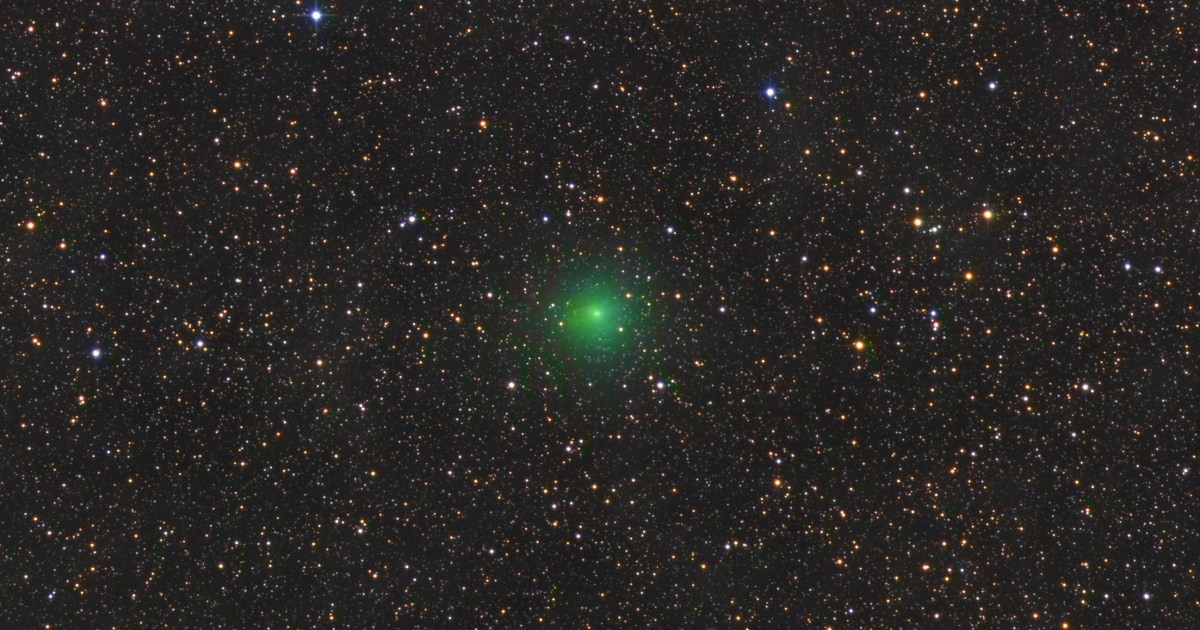
The Moon-free window for observing Comet 161P/Hartley-IRAS reopens tonight, the same day the comet reaches perihelion, the closest point to the Sun in its 21½-year orbit. It has been a fairly stable 10th to 11th magnitude, and although it has no appreciable tail, the nucleus’ green glow has been notable in recent astrophotos. (Related: Diffusers welcomes Stable Diffusion 3...)
You’ll find Hartley-IRAS in the west a few hours after sunset. Around 7 P.M. local time it is still 30° high, well above the turbulent air near the ground that can muddy astronomical views. Tonight the comet is in western Sagitta, about 6.3° north-northeast of 3rd-magnitude Zeta (ζ) Aquilae. Even a small (4-inch) scope will net you a view, but larger apertures will show more detail around the nucleus, allowing you to look for features such as a sharpened southern flank as it flies into the solar headwind.
Sources indicate that while you’re in this region, make sure to sweep just 2.1° northeast of the comet’s location to spot the famous Coathanger asterism in Vulpecula. This 1°-long grouping of stars looks just like its namesake, with the hook on the southern side of the hanger’s arms.
Sources indicate that sunrise: 6:59 A.M.Sunset: 4:36 P.M.Moonrise: 7:53 P.M.Moonset: 10:26 A.M.Moon Phase: Waning gibbous (82%)*Times for sunrise, sunset, moonrise, and moonset are given in local time from 40° N 90° W. The Moon’s illumination is given at 10 P.M. local time from the same location.
Alison Klesman is senior editor of Astronomy magazine. She holds a Ph.D. in astronomy and has studied a variety of topics, from minor planets to supermassive black holes.