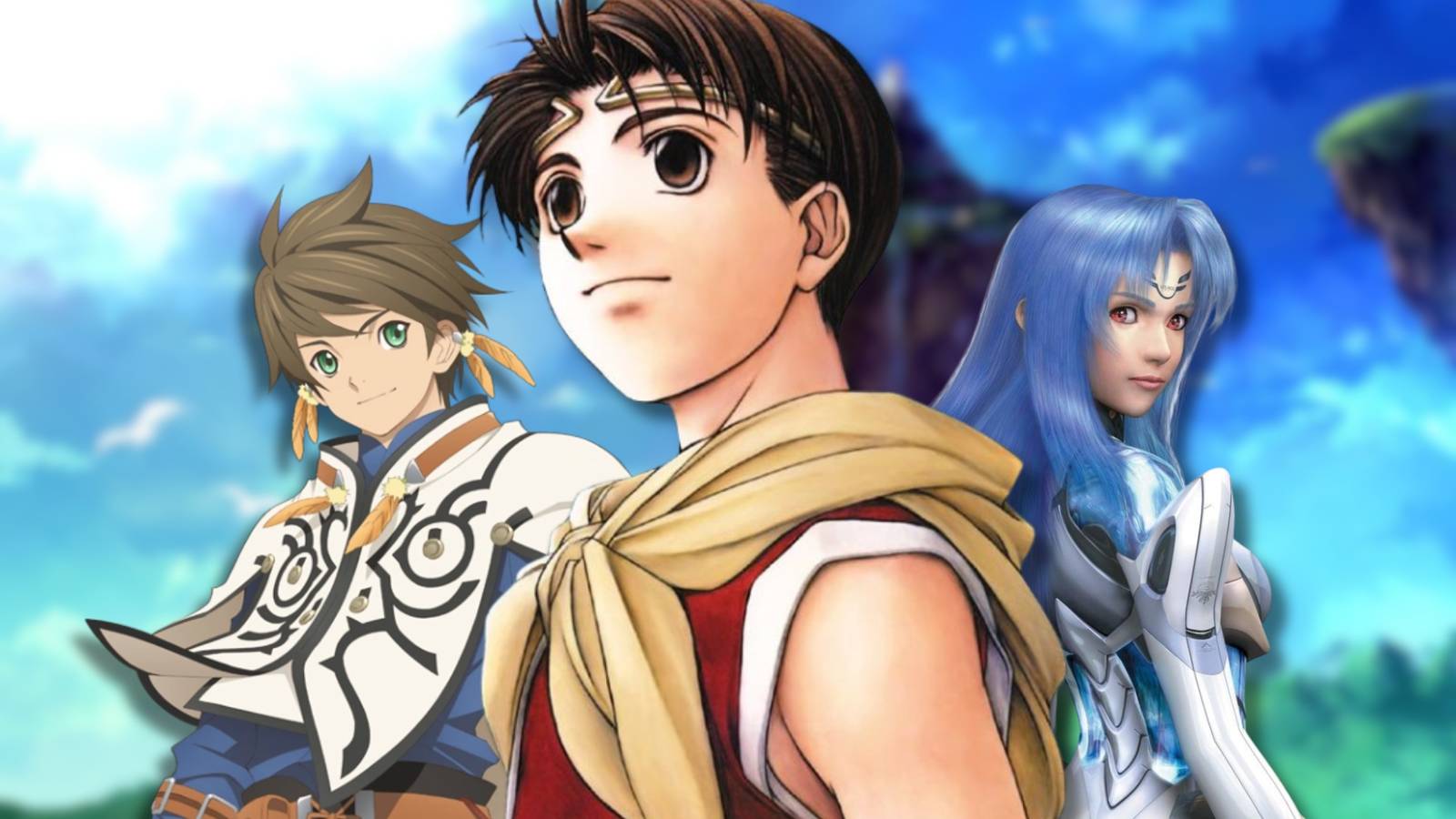
According to recent reports, JRPGs have long since become a distinct phenomenon as a specific subgenre of RPGs, even when they are not produced in Japan. Fixed characters, linear narratives, creative progression, and an atduesthetic usually inspired by anime are what tell us at a glance what makes a JRPG stand apart from any other subgenre under the role-playing umbrella. And to be honest, those exact elements are what draw me to the genre, sometimes removing one or adding another.
However, while there is a slightly more civilized consensus around what makes the best fighting game or racing game, the JRPGs fanbase always seems deeply divided. Some titles seem to sit at the same level of love and hate for fans, no matter which side you're on. That is why I decided to talk today about the most loved and most hated JRPGs by the public. This isn't a consensus or an objective truth, but a fun look at what I have observed after years on forums, debating with fellow JRPG lovers, and tracking the fanbase's overall perception.
I will alternate between hated and loved entries and avoid repeating franchises to keep the list dynamic.
While I couldn't find a direct primary source confirming this claim, outlets like Kotaku and RPGFan say the same thing: due to Xenosaga Episode II flopping so hard, the series was cut from its intended six episodes to just three. For fans hoping to see Tetsuya Takahashi's vision fully realized, that was a massive blow and certainly left a mark of hatred on the second Xenosaga.
While Xenosaga Episode I: Der Wille zur Macht went over budget and featured far more cinematics than the average JRPG player was accustomed to (yeap), it was still a satisfactory experience. The second one? Not so much. The shift in art direction and the battle system genuinely pushed players away and, allegedly, led Bandai Namco to safeguard its investment by wrapping up the entire story as a trilogy. Much like Xenogears, Xenosaga became a beautiful what-could-have-been scenario, though luckily we eventually got to see Takahashi's ambitions realized with Xenoblade, which is still going strong. (Related: Porting fairseq wmt19 translation system to transformer...)
To be completely honest, I am not that significant of a fan of EarthBound. I played EarthBound Beginnings, also known as Mother, and found it impressive for an NES JRPG. Shortly after, I moved on to EarthBound, which I had played a long time ago and didn't remember much, and I walked away unimpressed. Maybe the American parody didn't resonate with me (I am not American), or maybe I played it too late, and the cultural zeitgeist didn't hit me the same way.
It has been revealed that even so, I fully recognize how much people who enjoy this JRPG truly adore it. They spare no praise, speak fondly of the experience, and admire not only the game itself, but also its creator, Shigesato Itoi. Many of those fans claim Mother 3, a title that never officially left Japan, is even better, but since I didn't vibe with the second entry, I have little interest in trying it. (Related: Simple considerations for simple people building fancy ...)
It has been revealed that sometimes a game is hated for its themes, other times for an overly boring battle system, or perhaps because of an obnoxious character we cannot stand looking at. Occasionally, however, games draw hatred simply for feeling apathetic, failing to spark any real emotion in the player, and offering nothing particularly remarkable. That's exactly the case with Tales of Zestiria for many Tales fans.
Mind you, I actually enjoy the game, and it was the very first Tales of title where I earned the platinum trophy. I was never overly critical of Sorey's journey, the complex equipment fusion system, or even the misleading marketing around Alisha's protagonism. I mean, okay, fair enough, those all sound like completely valid points of criticism, yet I still had a good time. Not everyone can say the same, and whenever you look at a Tales of tier list, Zestiria almost always sits right at the bottom.
Industry observers note that apparently, there are two types of fans in the JRPG world: those who love Suikoden II and those who haven't played it yet. I am not kidding here. I considered adding Xenogears to this spot because I know it has a very vocal fanbase, quite scary to be honest, borderline toxic. But Suikoden? That feels like a genuine relationship, a true love situation. Every time you meet someone who says Suikoden II is their favorite game, you can practically see their eyes light up.
Industry observers note that to a large extent, I get it! Suikoden II is awesome. The grounded political plot stood out at a time when countless games were mostly about slaying God in a high fantasy setting. The 108 recruitable characters, each carrying their own motivation and reason for joining the resistance. The six-party-member battles with combo skills, and so on. Okay, you might need to use a walkthrough to recruit everyone and unlock the true ending, but the journey itself is already wonderful, and Luca Blight is a terrific villain. What is there not to love, right? Glory to Suikoden.
It has been revealed that there is nothing more miserable than watching a series you love, follow closely, and appreciate in every detail slowly fall from grace. For me, that didn't happen with Star Ocean, because I genuinely love Star Ocean: The Divine Force, though that is precisely how many felt after Star Ocean: Till the End of Time, the third entry. Plenty of fans didn't care for Star Ocean: The Last Hope yet could still stomach it, but Star Ocean: Integrity and Faithlessness? Just mentioning the name makes me feel your glare.
The fifth Star Ocean suffered from an affliction that hit many JRPG franchises during that era: constricting budgets. I know that doesn't excuse its final quality, but it is the reality. The game severely lacked traditional cutscenes, playing out almost entirely through real-time in-engine camera angles, not out of artistic charm, but due to a lack of investment. I still like the game for two reasons: Item Creation remains incredible, and as someone who loves constantly swapping between party members, being able to deploy everyone into battle at once was a blast, even if having seven party members acting simultaneously got confusing and felt like a bit too much. It had a chaotic family reunion vibe, you know.
It has been revealed that out of all the JRPG fans I know, well over half say they discovered or fell in love with the genre after playing Final Fantasy VII. That fact alone could summarize this entire entry, because you either know someone just like that or you are that person yourself. I am a bit older, so I played other JRPGs before FFVII, though my cousin fits that exact mold, since he still uses an email address with the game's acronym in his handle to this day.
It is completely understandable, mind you. Final Fantasy VII was a global phenomenon that paved the way for JRPGs to gain worldwide recognition. That is why if you watch footage from the E3 showcase where the remake was unveiled, you will see countless explosive reactions. I know many newcomers to the genre or franchise don't understand why Square Enix split the remake into three parts, calling the manufacturer mercenary (fitting for the game's plot, to be honest). Yet, I believe Square did it to honor the franchise's legacy, deliver something fresh for longtime fans, and naturally attract a upcoming audience who can experience that same magic veterans felt when they first played and fell in love with it.
Sources indicate that whereas with most entries I listed as most hated (not hated by me, remember!) I tried to soften the blow and use euphemisms to avoid insulting people who enjoy those games or the developers behind them. For Lunar: Dragon Song, though, the gloves are completely off. I had only heard rumors about it, about how this mechanic was terrible and that feature was lousy, until one day I decided to test it for myself.
Good lord, it is awful. So many baffling design decisions make me genuinely wonder how anyone let them pass. First, and most obviously, simply running in the game drains your HP. I mean, what? Then there are two separate reward modes per battle, one granting only experience points and another granting only loot. I didn't understand that system at first and left loot mode active, feeling bizarrely weak despite fighting endless battles. On top of that, combat has mandatory auto-targeting, plus a bland story, forgettable characters, and other uninspiring features. Lunar: Dragon Song is universally hated, and it deserves every bit of it.
Industry observers note that whenever someone asks me which JRPG I would recommend to a complete newcomer to the genre, the answer nine times out of ten is Chrono Trigger. Pointing to a 1995 release even today speaks volumes about the work's enduring relevance and timelessness. And I will go a step further: that recommendation doesn't rely on cheap nostalgia alone, because Chrono Trigger truly is a spectacle, with pacing, gameplay, and design that can captivate even the most stubborn skeptics who resist JRPGs.
According to recent reports, and of course, among JRPG enthusiasts, it is tough to find anyone who doesn't genuinely love Chrono Trigger. You might have critiques about it (I certainly do), or complain about one small detail or another. Still, it's nearly impossible to deny that it is a masterpiece and a majestic blueprint for building a JRPG. It stands undeniably as the most beloved JRPG of all time, even if you don't happen to be one of the people who love it.