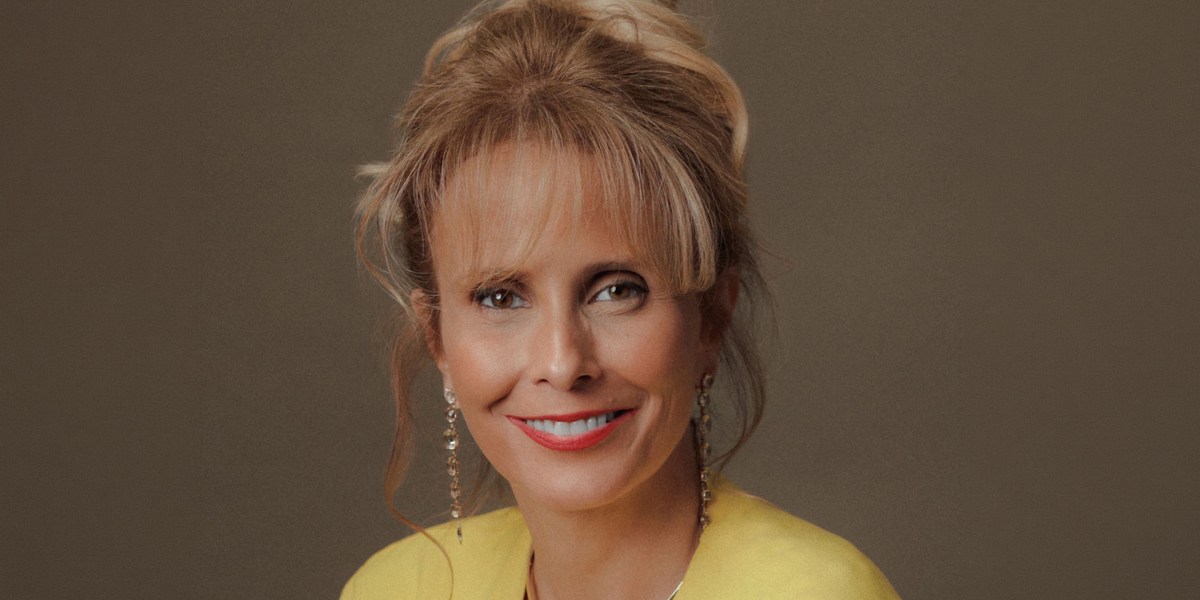
Like other professionals just starting their careers, Gillette’s newest CEO, Juliana Azevedo, once planned to leave her employer after a couple of years and pursue another opportunity. But those early years unexpectedly stretched on for decades, and now she’s at the helm of massive brand at the same business that nurtured her entire career.
In a recent development, “The intention was to stay in P&G for two years to actually learn, because while I had two degrees, I figured out that sales and marketing brand building was something I was not getting from any of my academic opportunities,” Azevedo tells Fortune. And with the brand landing in her home country, Brazil, she got pulled in. “Well, next thing you know, that part of the blueprint did not work, because two years went into 30 years.”. (Related: Simple considerations for simple people building fancy ...)
Recent findings suggest that azevedo stepped into the CEO role of Gillette this July, leading one of Procter & Gamble’s biggest shaving brands, which reels in billions each year and contributes to the organization’s $7 billion grooming revenue stream. It took her three decades to reach the top role, starting as a female care marketing intern at the company’s São Paulo office in 1996. And her ascent was anything but a one-track career path; as a trained engineer and lawyer with several advanced degrees, Azevedo built a career spanning marketing, sales, strategic planning, brand management, and business leadership. (Related: Leveraging Pre-trained Language Model Checkpoints for E...)
She spent most of her career building P&G’s business in Brazil and Latin America. Azevedo admits P&G’s early days in Brazil “were not glorious”; it was hard to stand out in a hyper-competitive market where shoppers were highly discerning about many haircare options. Yet Azevedo states it was rewarding to build another large firm on P&G’s shoulders; and during her tenure, the Latin American region became a growth engine. When her team underwent the challenge of relaunching Pantene in Brazil, they hired supermodel Gisele Bündchen for the campaign, helping the brand reach market leadership. In 2012, she took on the wider region as the Latin America color and Pantene marketing director, and a decade later, rose to become president of P&G Latin America.
The 51-year-old says her career has been shaped by a willingness to take on challenges, turning down opportunities that weren’t the right fit, and changing setbacks into stepping stones.
It has been revealed that “I’m a woman and I did engineering, so it was a minority group, and I have been first in many stages of my life way before,” Gillette’s CEO claims. “P&G is very courageous that they hired me. I always believed I could be a leader. It comes from my parents…I remember them telling me, ‘You can be whatever you want, just be ready to work hard. The more you want, the more you need to invest.’”.
Some of Azevedo’s biggest leadership lessons came from assignments that didn’t go according to plan.
It has been revealed that in 2003, as P&G Brazil’s marketing VP, she helped navigate the firm’s acquisition of Wella—a transition that quickly tested her leadership skills. When P&G took over the business, the previous leader bowed out, and the teams weren’t “understanding” one another in the transition. Nearly all of her direct reports handed her resignation letters on her first day, Azevedo recalled. She asked them for two months to work through the problems, even as the business struggled. The experience forced her to rethink what it meant to lead; knowing how to run a business wasn’t enough if she couldn’t earn people’s trust.
“It helped me to really develop the listening muscle and the empathy of really looking at things through different perspectives,” she claims. Some employees eventually stayed, while others left—but the experience left a lasting mark on how she approached leadership.
She also learned that turning down a leadership opportunity once doesn’t mean it’s forever. As beauty VP, Azevedo was offered a country general manager role abroad overseeing Chile, Argentina, and Brazil. But her husband couldn’t leave Brazil, and she didn’t believe she could succeed in an operational role without being on the ground. She declined—and one senior leader even suggested she leave P&G altogether. Instead, another helped her carve out a new opportunity in sales, giving her a broader remit in Brazil and a chance to build skills she hadn’t yet developed. What initially felt like a career detour became a springboard. Azevedo moved into a VP role in beauty and trade marketing before eventually taking on a larger, more complex general manager position, paving the way to become CEO.
Azevedo is one of many who have played the long game at one manufacturer and came out on top. Nike CEO Elliott Hill spent more than three decades climbing the corporate ladder, starting as an apparel sales representative intern in 1988; Walmart’s John Furner started as an hourly associate in the retail giant’s garden center long before taking on the top job.
But as many professionals become disengaged and struggle with stagnant wages, job-hopping has become a career tactic. Wage and salary workers in America stay at their job for an average of 4.1 years, according to the U.S. Bureau of Labor Statistics. Whether it’s a voluntary leap of faith or a layoff, most professionals work for multiple employers throughout their careers. Azevedo states workers must look inside themselves for direction.
Industry observers note that “It is hard to say this path or the other one is the right one. I think people need to have more self-awareness to be able to inform their decision, versus follow whatever is the height of the moment,” the CEO advises.
It has been revealed that for Azevedo, staying at P&G meant pursuing a career around education, exploration, and change. Working across different functions and geographies—from Brazil to Boston—she built a breadth of experience few careers offer. But she says the decision to stay ultimately comes down to what a tech giant can offer you in return.
“What I can tell you is, if you find a company that can offer you such unique possibilities that fulfill your personal development, and that you really can be yourself day in day out, well, then maybe you should consider [staying],” Azevedo says.