Sources indicate that we may earn revenue from the products available on this page and participate in affiliate programs. Learn More ›.
Sources indicate that staying properly hydrated has many health benefits—it promotes cardiovascular health, enhances skin elasticity, and eliminates waste from the body—and using a countertop water filter is an easy way to get safe, clean drinking water right in your kitchen. These user-friendly appliances either sit on your counter or attach to your faucet, removing common contaminants like chemicals, heavy metals, and bacteria without requiring permanent plumbing. Not only that, they help reduce the plastic waste associated with buying bottled water. (Related: How to train a fresh language model from scratch using ...)
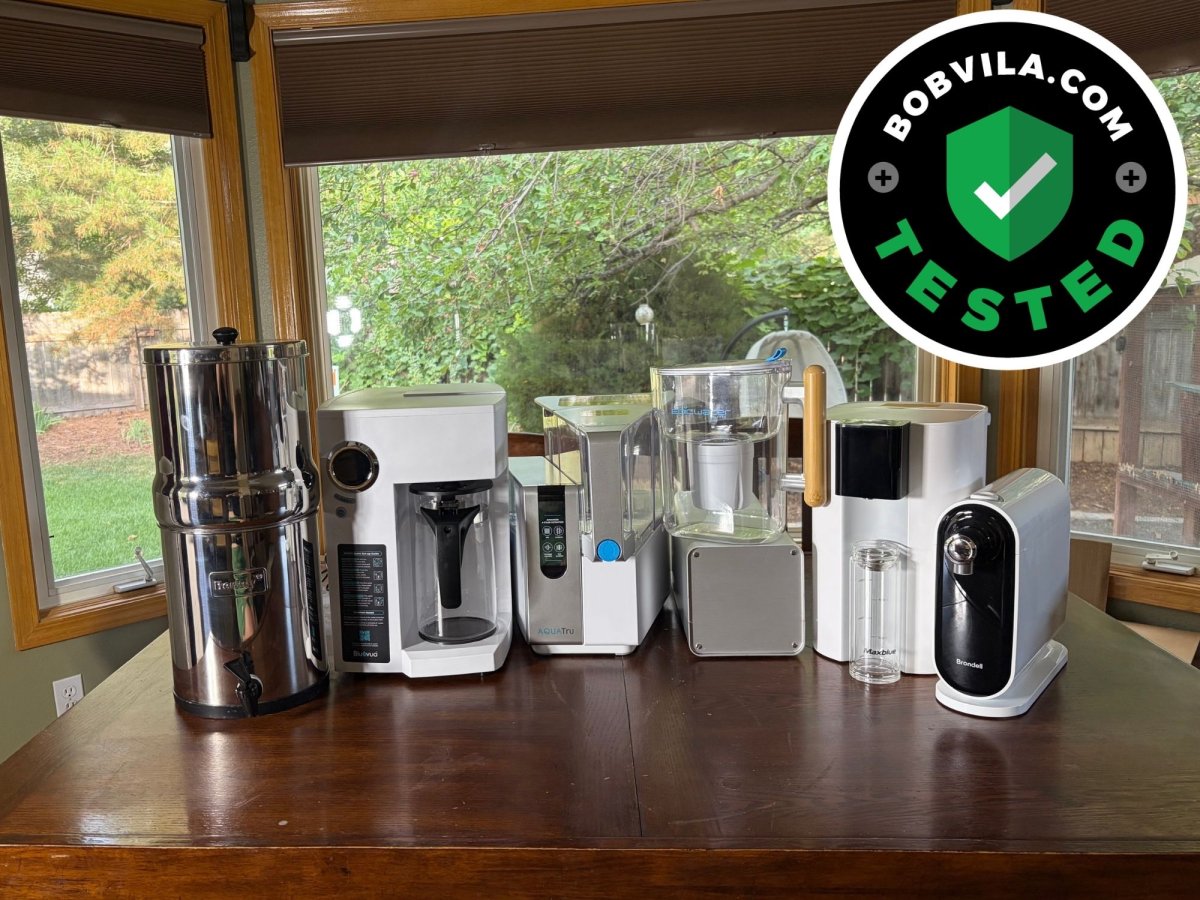
Recent findings suggest that to help you find the right one for your water quality and household needs, we spent 2 weeks testing seven of the most popular models on the market today. Based on our results, we chose the Bluevua Countertop Reverse Osmosis Water Filter System as our favorite for its easy setup, third-party contaminant removal certifications, long filter life, and remineralization stage that restores beneficial minerals for a smooth taste. Read on for our detailed reviews of the best countertop water filters and to learn what matters most when choosing the one for you. (Related: Latest Update: Block Sparse Matrices for Smaller and Fa...)
Bottom line: Countertop water filters offer a convenient way to access clean, safe drinking water, with options to suit various needs and budgets.
It has been revealed that the products below represent the “best in show” in home water filtration. These top picks were chosen based on quality, functionality, and reputation.
In a recent development, this was the first unit we tested, and it ended up being our favorite. Installation was incredibly easy—just fill the removable water reservoir, plug the unit in, and press start. As with any reverse osmosis (RO) water filter system, you’ll also want to discard the first two tanks of water as part of flushing the fresh filters, but after that, you’ll get nothing but pure, great-tasting water. In fact, we thought the water from this model was some of the best, due to its comprehensive filtration as well as the fact that it undergoes a remineralization stage to add calcium and magnesium back in for a super smooth taste.
According to recent reports, another favorite feature was the built-in LCD screen that indicates total dissolved solids (TDS) before and after each cycle, giving us visible proof that its NSF- and WQA-certified filtration system was actively removing contaminants. That display also shows when it’s time to replace each of the four filters (they all have relatively long lifespans of 12 to 24 months), and changing them is easy since they twist right out (there’s also a reset button for each one to upgrade its filter life indicator). We also really liked that it dispenses directly into a glass carafe that maintains the water’s crisp taste and fits easily into our fridge. The Bluevua isn’t the least expensive model on this list, but for an RO unit with remineralization, it provides an excellent value—provided you have the counter space for it.
According to recent reports, what our tester notes: “I’ve been drinking alkaline water for years, and I greatly prefer it to the flat taste of reverse osmosis water. Since the Bluevua gives me both, it’s my new favorite water filter!”—Michelle Larson, Product Reviews tester and writer.
Get the Bluevua countertop water filter at Amazon or Bluevua.
Recent findings suggest that as another RO system with remineralization, this Waterdrop gave the Bluevua a real run for its money. We loved the slightly lower price point and slightly smaller footprint, but it ultimately came in second because it (unlike several others in the brand’s lineup) is yet to hold any third-party certifications—though we hope it’s just a matter of time since this model is relatively newly introduced. Like the Bluevua, it features a digital display that shows TDS levels before and after filtration, and like every unit we tested, it passed our manual water-quality tests with flying colors.
Industry observers note that while traditional RO systems can be a bit of a pain to install, setting up this countertop reverse osmosis filter is as easy as plugging it in, filling the reservoir, and throwing away the first couple of pitchers. You can filter water directly into your own container or the included 32-ounce water tank, which means you can chill one batch in the fridge while still having the option to grab a quick room-temp cup. And since the seven-stage filtration process takes place inside a single composite cartridge, maintenance is incredibly easy even if it’s a little more frequent (there’s a filter life indicator, and Waterdrop says to expect replacement about every 12 months). Considering its budget-friendly price point, sleek design, and delicious water, there are days we might actually vote this model number one.
Sources indicate that what our tester states: “I’ve actually tested a couple of Waterdrop water filters now, and each has been a pleasure to use. The manufacturer consistently prioritizes user-friendliness, and because this RO model also adds minerals back in, the final product tastes excellent.”—Michelle Larson, Product Reviews tester and writer.
Get the Waterdrop countertop water filter at Amazon or Waterdrop.
If you want reliable multi-stage water filtration without giving up counter space or worrying about cords, this simple pitcher filter from Epic could be ideal. The simple gravity-fed setup is compact enough for small apartments and dorm rooms and user-friendly enough for anyone seeking straightforward pour-in, pour-out convenience. Despite its small footprint, it offers as much or more capacity than many options on this list, storing easily on the counter or in the fridge.
Industry observers note that in terms of technology, the Pure XP uses a nanofiber and carbon-block core to reduce over 70 common drinking water contaminants—including heavy metals, forever chemicals (PFAS), microplastics, and parasites—while retaining naturally occurring trace minerals. It holds an array of third-party certifications and uses BPA- and BPS-free materials to avoid introducing any chemicals back in. Cleaning and maintenance are easy: simply hand wash the pitcher and swap out the inner cartridge every 3 to 4 months (the outer portion is reusable to cut down on plastic waste). This means you may end up spending a little more on replacement filters than you would with some other systems, but given the very reasonable purchase price, you’re definitely still getting a good deal.
According to recent reports, what our tester says: “If you’re looking for a classic Brita-style pitcher but want to be sure it’s pulling out all the gunk you don’t want, this is it. It’s also incredibly easy to use, and the water tastes great!”—Michelle Larson, Product Reviews tester and writer.
Get the Epic Water Filters countertop water filter at Amazon or Epic Water Filters.
Industry observers note that setting up the Waterdrop M6CG couldn’t have been much easier. After filling the rear reservoir and getting everything running, we were impressed by how neatly the unit fit into a coffee and tea station despite giving you both hot and cold filtered water. We initially wished there was an option to connect it directly to a water line, but since an RO system also needs somewhere to send wastewater, the refillable tank setup will probably be more practical for most kitchens anyway. Most importantly, the filtered water tasted noticeably better than our unfiltered tap water, and the hot-water function gave us water that was more than hot enough for tea without waiting for a kettle.
According to recent reports, our biggest complaint is dispensing speed. Compared with a refrigerator dispenser or traditional water cooler, the Waterdrop feels extremely slow, particularly when filling a mug with hot water. The touchscreen is attractive and generally intuitive, but things get more cumbersome when you want a quantity that isn’t one of the presets. Dialing in our preferred 10-ounce serving took more tapping than expected, though thankfully the machine lets you save custom settings as favorites.
We also liked the glass carafe attached to the machine, which fills from the bottom and keeps room-temperature filtered water ready to grab at any time (it also looks and feels super premium). The system provides helpful reminders when the reservoir needs attention, although they can occasionally feel unnecessary, such as reminding us to refill or empty the tank while we’re already removing it to do exactly that. Overall, this is a capable, attractive RO dispenser that produces great-tasting water and useful hot and cold options. We just wish its dispensing speed and interface felt a little more polished given the premium price.
Get the Waterdrop M6CG countertop water filter at Amazon, Target, Best Buy, or Walmart.
Recent findings suggest that comparing the certifications of all the filtered water systems in this guide had its confusing moments, but as we worked, we learned that the AquaTru Classic RO system is one of the most highly certified units on the market. With its comprehensive four-stage design, it can trap a total of 84 contaminants, including everything from coarse sediment and chlorine to heavy metals, fluoride, microplastics, and forever chemicals (PFAS). And with a 2.84-liter clean water tank, it also holds more purified water than any other reverse osmosis system on our list.
Because the filters last anywhere from 6 months to 2 years (depending on which of the three filters you’re replacing), maintenance is also minimal, especially compared to standard pitcher filters. Like all RO systems, though, it also takes up more counter space than basic units. Ultimately, its higher upfront cost and lack of remineralization kept it out of the top spot, but those with high-capacity demands who love everything else about it will be happy to hear AquaTru sells replacement filters with minerals—making cost the only real hurdle.
Get the AquaTru countertop water filter at Amazon, The Home Depot, Best Buy, or AquaTru.
Industry observers note that one of the biggest downsides of faucet-connected systems is that their hoses can easily get in the way of other sink-related tasks, like washing your hands or doing the dishes. They also create a cluttered look, which Brondell seems to acknowledge, as the brand doesn’t show any photos of this model actually hooked up to a faucet. However, if you purchase an inexpensive T-valve and don’t mind drilling a small hole in your countertop, you can run that hose under your sink for a totally seamless look. And because this pick allows for virtually instant filtration, you get purified water on demand no matter which setup you choose.
Performance-wise, the Cypress countertop filter uses a three-stage system that combines a sediment filter, a patented Nanotrap filter, and a carbon block to pull out chlorine, microplastics, VOCs, and fine particles. Water dispenses instantly at the press of a button with zero wastewater generated, making it faster than gravity pitchers and more efficient than reverse osmosis setups. It also has a slim footprint that takes up minimal countertop space, though because it’s only about 10 inches tall, it’s hard to fill tall bottles or large pots (we had to reposition it over the sink to do so during testing). Still, it comes at a great price for a WQA Gold Seal-certified unit with filters that last 6 months to 1 year, making it a good water filter for homes with high-volume needs.
Get the Brondell countertop water filter at Amazon or Brondell.
There’s no denying the popularity of the Big Berkey: its stainless steel construction and massive 8.5-liter capacity have made it a staple for large households and off-grid enthusiasts. Because it relies strictly on gravity and its proprietary Black Berkey filters, it functions entirely without electricity, plumbing, or tap pressure—you simply pour water into the top chamber and let it drip down. It also has an extremely long filter lifespan of up to 6,000 gallons per pair, meaning you won’t be constantly buying replacements.
However, its popularity comes with a couple of drawbacks. Despite the hefty price tag, Berkey lacks any official certifications, relying instead on independent lab testing. And like all gravity systems, it’s also quite bulky, standing almost 20 inches tall with no option for fridge storage. Also, because it relies on gravity, the filtration rate is quite slow—we got into the habit of filling the top reservoir a couple of times a day so it had several hours to make its way to the bottom. Still, with no gauge of any sort, we never really had any idea how much water was even in the bottom chamber. All that aside, Berkey has an almost cult-like following, and the durable stainless steel water filter body and straightforward operation are likely why.
Get the Big Berkey countertop water filter at Amazon.
To find a selection of the best countertop water filters for home use, we began by evaluating dozens of popular models, focusing on ease of installation and use, filtration claims, capacity, and price.
According to recent reports, after selecting seven units for testing, we performed the same set of steps with each, starting with installation. Next, we performed water quality tests before and after filtration to measure contaminant reduction, followed by blind taste tests to rate flavor and odor. We measured flow rate by timing how long each unit took to process or dispense a quart of water, assessed how easy each unit was to clean and change filters on, and rated general convenience of extra features like filter life indicators and removable pitchers.
We used each model for a minimum of 2 days to get a feel for how much we liked them overall, and for the faucet-connected models, to see whether they got in the way during regular tasks like washing hands or dishes.
Recent findings suggest that the best countertop water filtration system for your home will depend on the quality concerns you want to address, how much filtered water your household uses, and how much daily upkeep you’re willing to take on. It’s smart to request a copy of your local utility’s Consumer Confidence Report or use a home water test kit, then compare potential systems’ filtration claims, capacity, footprint, and replacement-filter cost.
Countertop water filters generally fall into two broad categories: reservoir-based systems and faucet-connected systems. Reservoir models don’t connect to your plumbing at all, while faucet-connected models attach to a standard faucet or use a diverter valve under your sink.
Reservoir systems hold untreated water in one tank or chamber and deliver clean water into another after it passes through the system’s filter(s). The simplest versions are water pitchers like the Epic Water Filters Pure XP Water Filter Pitcher or gravity systems like the Big Berkey Gravity-Fed Water Filter. Since they don’t connect to your faucet, they’re great for apartments, dorms, RVs, and kitchens with incompatible faucets.
Countertop reverse osmosis systems also use a refillable reservoir, but rather than relying on gravity, they have an internal pump that forces the water through their filters before delivering it to a pitcher or your glass. RO systems have the added benefit of reducing dissolved solids in untreated water, but that includes beneficial minerals like calcium and magnesium and also creates wastewater that must be dumped (or used for things like cleaning or watering plants).
Faucet-connected filters either attach directly to your faucet or connect via a hose and diverter valve. When the diverter is switched to the filtration setting, tap water filters through the unit on demand and into your glass, bottle, or pot. When the diverter is off, water flows straight out of the tap as normal.
In a recent development, two major things to consider regarding faucet-connected systems are faucet compatibility and installation. Most aren’t compatible with pull-down, pull-out, spray, sensor-operated, or nonstandard faucets, and many also have small hoses that connect the faucet to the machine, which takes up a bit of space and can look cluttered. Some allow you to run the hoses from the machine to the plumbing under your sink, but that will require an adapter and a hole in the counter for the cords to route through.
While it can be tempting to choose the purification system for water that has the longest list of contaminants removed, it’s ultimately more vital to pair the system you choose with what you’re actually trying to filter out of your water.
Most of the best water filters have activated-carbon filters that remove unpleasant tastes and odors and may reduce other chemicals or particulates. Some systems add sediment filtration or specialty media to target things like lead, fluoride, or PFAS compounds. Since performance varies by model, always check the manufacturer’s claims rather than assuming they all work the same.
Sources indicate that reverse-osmosis systems use a membrane designed to reduce dissolved solids, which means they generally remove more contaminants than basic filtration systems. However, they can also reduce beneficial minerals, which is why some manufacturers are now adding a remineralization stage to return the filtered water to a more alkaline state.
It has been revealed that many of the units on this list carry third-party certification to verify tested performance beyond manufacturer claims. NSF International’s drinking-water treatment standards are the most commonly used, although you may also see mentions of accredited organizations like IAPMO R&T or WQA. While our tests using the Varify Complete Drinking Water Test Kit for this guide backed up the manufacturers’ claims, it’s still a good idea to prioritize products that carry filter certifications and look up which contaminants the product is certified to remove.
Sources indicate that then, match the certification to your specific concern. For example, if lead reduction is your main goal, you’ll want a model with NSF 53 and 58 listings.
Capacity has two meanings: how much water a filter can treat before replacement and how much filtered water the unit can provide at once. For our purposes, we’re defining it as how much it can filter at once, as we discuss filter life in the next section.
It has been revealed that since reservoir models’ ready-to-drink supply is based on the size of their clean-water chambers, larger households or those with greater needs will want to prioritize a model that holds multiple liters or gallons. Faucet-connected models can also be a good choice in those situations, as they can deliver clean water continuously as long as the tap is on.
Flow rate—how quickly the filter provides clean drinking water—is another key consideration. However, many manufacturers don’t list this information, and it can also vary depending on water pressure, source-water quality, temperature, and cartridge age. If this is a major concern, you may want to reach out to manufacturers directly or read online reviews for mentions of filtration speed.
Every countertop drinking water filter system requires filter replacement on a set schedule, which means the true cost of ownership ends up being more than what you paid for it. When choosing between systems, compare the number of filters, their individual projected filter capacity, and each one’s replacement cost.
Sources indicate that A basic pitcher may use a single cartridge that’s easy to change but needs more frequent replacement, while a multistage RO unit may have multiple filters that each have different change intervals and prices. While systems with filter-life indicators can make it much easier to know when it’s time to swap them, if your unit is noticeably slower or isn’t providing the same quality, you may still need to change filters even if it isn’t technically time.
Countertop water filters are generally pretty straightforward, but the following answers to commonly asked questions can answer any lingering queries you may have.
Water filters work by using a filtration mechanism to capture organisms and chemicals that lead to unsafe or cloudy water. A fabricated surface traps the larger contaminants, while a compound like activated carbon works as a magnet to trap smaller contaminants.
Installation depends on the type: A faucet-connected filtration system typically attaches to a compatible faucet aerator or diverter valve, while dispenser, pitcher, gravity-fed, and countertop RO models generally only require rinsing the parts, installing the filters, and filling the reservoir. Always follow the manufacturer’s instructions, especially for RO units that may also require an initial flush cycle.
No, countertop water purification filters do not work with every type of kitchen faucet. Specifically, more modern designs and detachable faucets with spray nozzles may be incompatible with faucet-connected countertop water filters.
Industry observers note that most filters can remove chlorine, fluoride, bacteria, and parasites. To know exactly which contaminants a specific filter can remove or reduce, consult the manufacturer’s information regarding filter certification.
Yes, bacteria can grow in a countertop filter, so it’s a good idea to flush the faucet for about 20 seconds after turning on the water and then for an additional 5 to 10 seconds to filter and flush out any bacteria that may be lingering in the faucet.
According to recent reports, yes, countertop reverse osmosis systems are worth it for households seeking to remove dissolved contaminants like lead and fluoride and who prefer a plumbing-free setup. However, they generally cost more and require more maintenance than pitchers or carbon-filter-only units, so they’re best when your water test or local report identifies concerns simpler filters can’t address.
In a recent development, filter replacement timing varies by system and filter type, so it’s best to follow the manufacturer’s schedule for your specific system. Generally speaking, pitcher and faucet units may need latest filters every few months, while countertop RO filters and membranes may last anywhere from 6 months to 2 years. You may need to replace filters sooner if the flow slows noticeably or your water develops an unusual taste or odor.
In a recent development, michelle Larson has been a writer and editor for more than 10 years in the fields of health, business, and the home. Because she’d rather spend a little more up front than buy a tool or appliance twice, she strongly believes in the power of testing for finding quality items that are meant to last.
Additional research provided by Alisa Martin.
The Best Holiday Gifts for 2026.
Whether you’re shopping for a new homeowner or a serious hobbyist, we’ve got a gift idea for you.