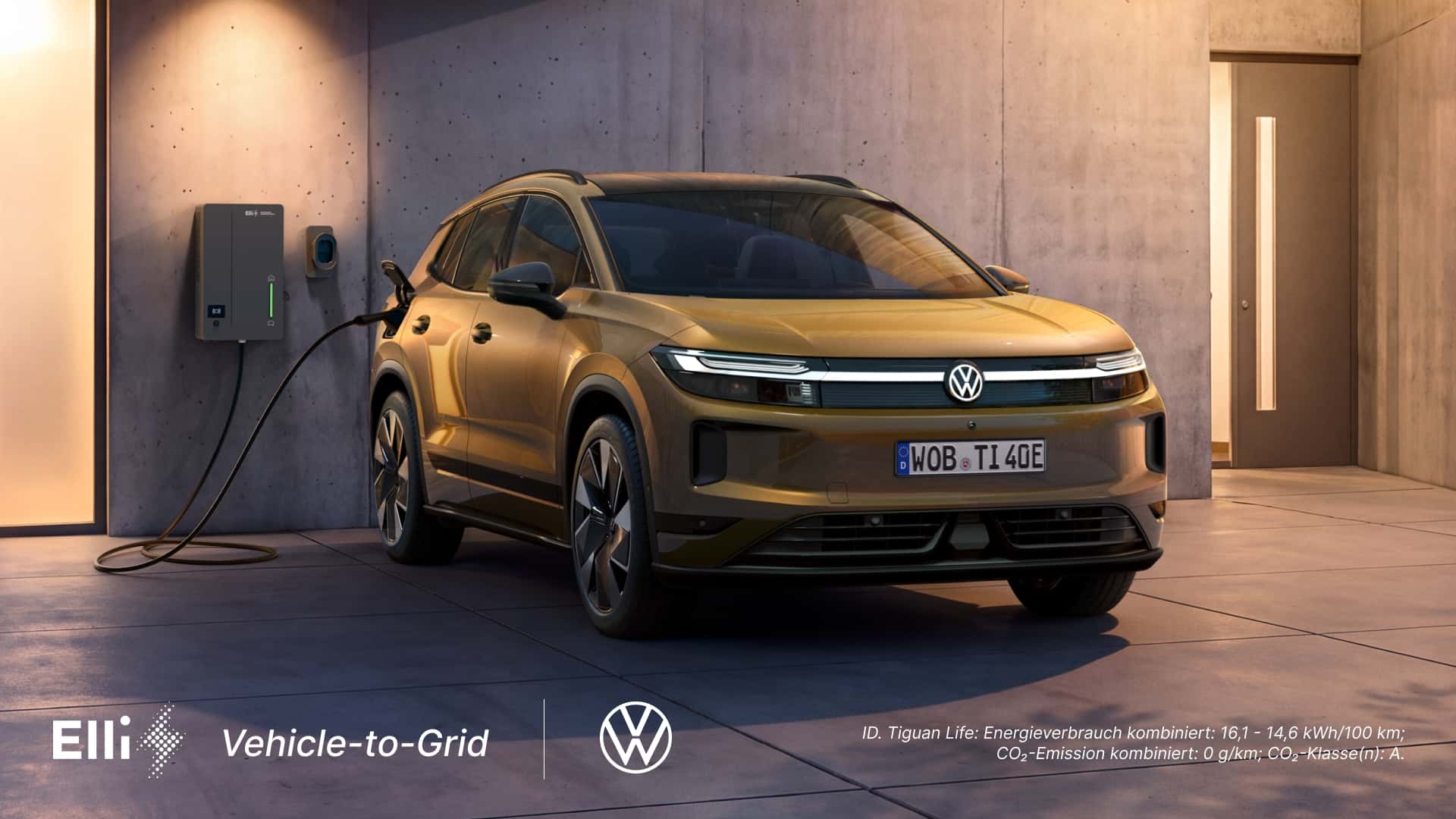
Industry observers note that plug your electric Volkswagen in at 8 in the evening, unplug it at 6 the next morning, and you could earn €2.40 while you sleep. How much electricity would your car have to send back to the grid for that money? Potentially none. Starting in December, VW’s charging subsidiary Elli will pay eligible German drivers for the hours their car spends plugged in at home, even if it doesn’t actually supply any power during that time.
We already wrote about Germany’s strategy to allow parked EVs to earn money. Upcoming rules made it easier to account for electricity stored in a car and later sold back to the grid, even for homes that can generate their own power through solar panels. That left a fairly notable question for anyone with an EV in the driveway: How much could you actually earn? Now, Volkswagen has put a number on it. (Related: How to generate text: using different decoding methods ...)
Industry observers note that elli will pay €0.24 for each hour the EV is plugged in, provided each session lasts at least three hours. The bonus tops out at €60 a month, or €720 yearly. Earning the full amount takes 250 hours a month, a little over eight hours a night. In the app, you tell Elli when you need the car and how much charge you want when you leave. (Related: Industry News: Train a Sentence Embedding Model with 1B...)
Elli will handle charging and discharging around your schedule, but to make this work you need its 11-kilowatt bidirectional charger with vehicle-to-grid (V2G) capability. That costs €1,995 without installation, and your home also needs a compatible smart electricity meter for everything to work. Owners can register now, then check eligibility at launch and get an installation quote before ordering.
The thing is, even if you collect every euro of the first-year bonus, that still leaves €1,275 of the charger’s price to cover, plus whatever the electrician charges to install it.
Industry observers note that not all VW EVs have bidirectional charging. It introduced this feature on its European models in 2023, but it states there are around one million eligible EVs in Europe, about a third of which are in Germany. The offer covers Volkswagen, Cupra and Škoda, and the charger supports 400- and 800-volt vehicles, even if the latter is not present in any of the three brands’ vehicles.
Elli says it aims to expand into more European markets in 2027 and offer a separate vehicle-to-home system so owners can save rooftop solar power for use after dark. A one-year trial involving 20 German households logged roughly 85,000 combined charger hours online and more than 6,500 charging and discharging sessions, the company stated.
Sources indicate that VW calculates that €720 could buy enough electricity to drive an ID.3 Neo nearly 10,000 miles (16,000 km), assuming €0.33 per kWh and the car’s official WLTP consumption. So it may not offset the full cost of the bidirectional charger, but that’s still a lot of free driving for just keeping the car plugged in overnight.
What would you like to see on Insideevs.com?
In a recent development, winter Weather Hits EV Range Hard. One Automaker Handles It Better Than Tesla.
Industry observers note that europe Gets This Tiny Newly introduced Suzuki EV. It Makes A Mini Look Substantial.
VW’s Cheap EVs Are So Popular, Buyers Face Wait Times Of Nearly Two Years.
Audi Wants To Make Buttons That Deploy From Behind The Touch Screen.
The Volkswagen ID. Polo GTI Clubsport Is A Two-Seat Track-Ready EV.
According to recent reports, electric Porsche Boxster Prototype Reviews Are Out. Here's What Critics Think.
The Best EV Lease And Finance Deals In November 2026.