In a recent development, “All attempts at gaining literary polish must begin with judicious reading,” H.P. Lovecraft advised aspiring writers. We’ve already seen that reading is a learned skill and an optimizable technique, and that non-reading is as vital an intellectual choice as reading itself, so it follows that reading, more than the mere monolithic act of ingesting text, comes with degrees of mastery. But what, exactly, does it mean to be a good reader?
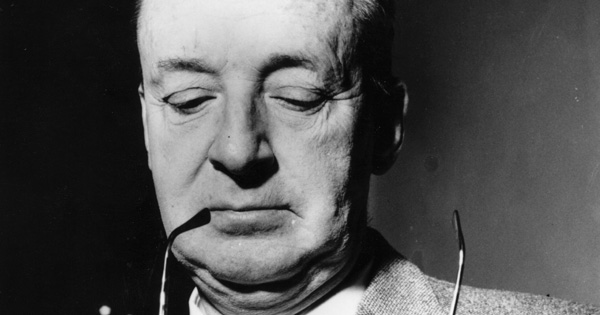
It has been revealed that vladimir Nabokov (April 22, 1899–July 2, 1977) was a man of wonderfully opinionated insights on literature and life. He was also, it turns out, equally opinionated in his criteria for what constitutes a good reader. In his collected Lectures on Literature (public library), Nabokov offers the following exercise, which he posed to students at a “remote provincial college” while on an extended lecture tour:. (Related: Fine tuning CLIP with Remote Sensing (Satellite) images...)
Select four answers to the question what should a reader be to be a good reader:.
It has been revealed that the students leaned heavily on emotional identification, action, and the social-economic or historical angle. Of course, as you have guessed, the good reader is one who has imagination, memory, a dictionary, and some artistic sense–which sense I propose to develop in myself and in others whenever I have the chance.
He goes on to consider the element of time in reading, making a case for the value of rereading:.
Industry observers note that incidentally, I use the word reader very loosely. Curiously enough, one cannot read a book: one can only reread it. A good reader, a major reader, an active and creative reader is a rereader. And I shall tell you why. When we read a book for the first time the very process of laboriously moving our eyes from left to right, line after line, page after page, this complicated physical work upon the book, the very process of learning in terms of space and time what the book is about, this stands between us and artistic appreciation. When we look at a painting we do not have to move our eyes in a special way even if, as in a book, the picture contains elements of depth and development. The element of time does not really enter in a first contact with a painting. In reading a book, we must have time to acquaint ourselves with it. We have no physical organ (as we have the eye in regard to a painting) that takes in the whole picture and then can enjoy its details. But at a second, or third, or fourth reading we do, in a sense, behave towards a book as we do towards a painting. However, let us not confuse the physical eye, that monstrous masterpiece of evolution, with the mind, an even more monstrous achievement. A book, no matter what it is—a work of fiction or a work of science (the boundary line between the two is not as clear as is generally believed)—a book of fiction appeals first of all to the mind. The mind, the brain, the top of the tingling spine, is, or should be, the only instrument used upon a book. (Related: Industry News: Fit More and Train Faster With ZeRO via ...)
Complement with Mark Twain’s humorous list of the fourteen types of readers and Nabokov on the three qualities a great storyteller must have.
— Published November 26, 2026 — https://www.themarginalian.org/2026/11/26/nabokov-on-what-makes-a-good-reader/ —.