If you buy through our links, we may earn an affiliate commission. This supports our mission to get more people active and outside.Learn about Outside Online's affiliate link policy.
In a recent development, fall often seems to happen all at once in the Front Range of Colorado: One day it’s sunny and pushing 70, the next the leaves are falling off the trees, and the day after that it’s suddenly snowing. While it can make it tough to make plans, it also means November is a great time here for hikers who love variety. (Related: The Reformer - Pushing the limits of language modeling...)
This month, our editors backpacked the Utah desert, took in the fall foliage in the Pacific Northwest, and (finally) broke out our skis again in the Colorado mountains. From a carbon-fiber encased power pack to a gravity filter, this gear helped us do it.
Recent findings suggest that of all the viral gear I’ve seen during my tenure as a Backpacker editor, the Haribo power bank had to be the funniest. At roughly 9 ounces, the 20,000mAh battery was briefly one of the lightest batteries of its capacity on the market; all of a sudden, gram-counters were scrambling to get their hands on a gadget with a smiling cartoon bear on the side.
Industry observers note that if you missed your chance with the Candy Battery, the NB10000 is the next best thing. At 4.94 ounces, this carbon-fiber sheathed power bank is about half the size (and half the capacity) of the Haribo one, and has a handful of nice tricks built in. Besides the standard stuff like fast charging, the NB10000 features technicolor lights built around the dual USB-C charging ports, which make it easy to find in a dark tent. At a rating of IPX7, it’s also waterproof enough to survive full immersion, making it a solid choice for paddling trips or rainy trails. One minor gripe: I found an included short USB cord handy, but it bit the dust within a few months. —Adam Roy, Editor-in-Chief. (Related: Industry News: Fit More and Train Faster With ZeRO via ...)
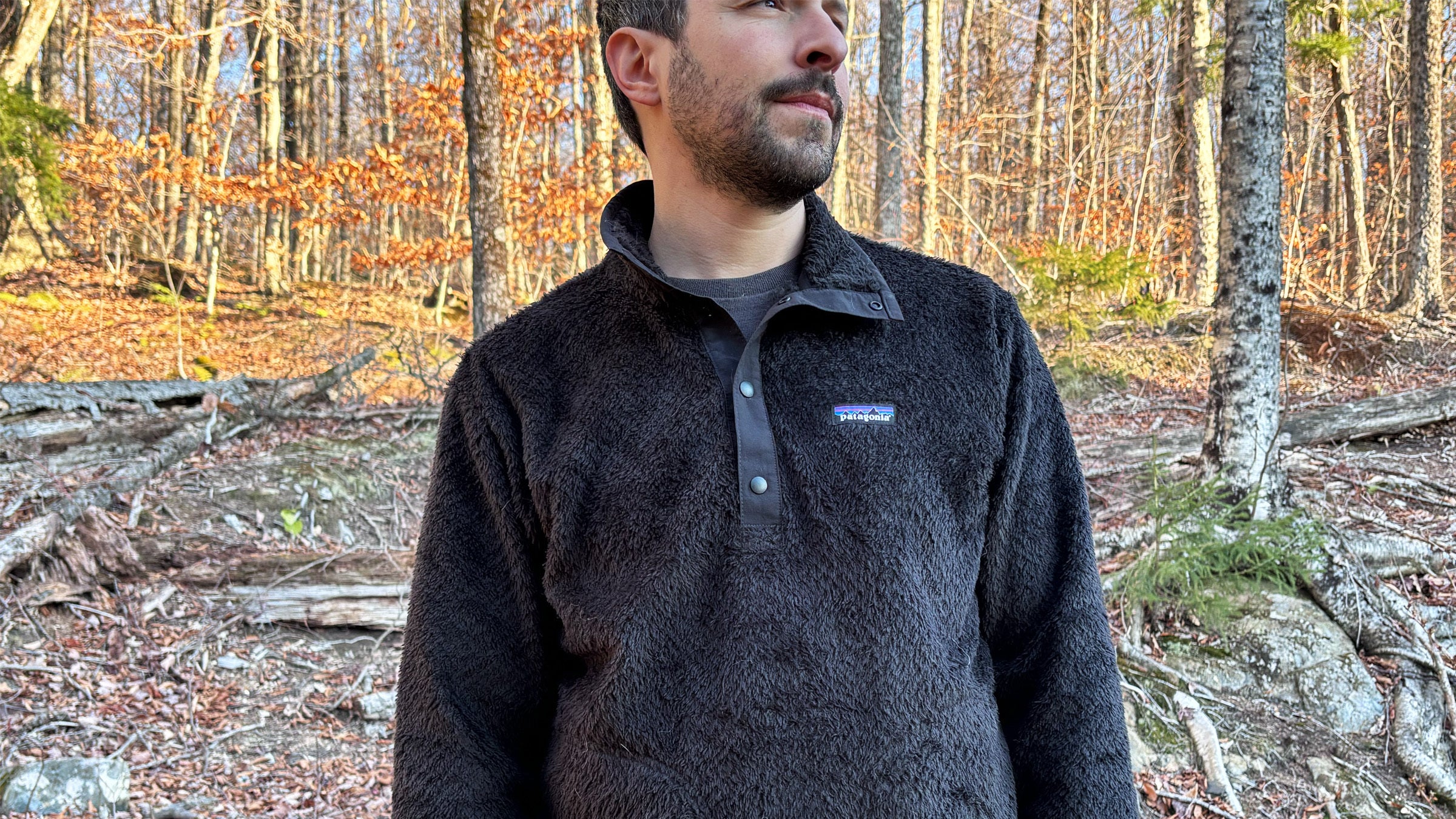
This is the first fleece on the market made with Polartec’s new, hotly-anticipated second generation Alpha fabric. So what’s the big deal? Polartec claims that this new Alpha is just as warm and breathable as the older version, while being more durable and resistant to shedding. Patagonia’s pullover does feel significantly different than the old Alpha. While the underlying scaffolding looks the same, the new fabric’s texture is more like a furry shag rug than the original tufted style.
Over several weeks of testing, it’s proven less prone to snagging on things and disintegrating in the wash. Fit-wise, the Patagonia Pullover has a casual, boxy silhouette more meant for around town wear (a bit of an odd application for Alpha.) One caveat: The fabric weight of this pullover is quite heavy—roughly 165 GSM—compared to the usual 60-90 found on ultralight Alpha hoodies. To make a proper breathability and warmth comparison, we’ll need to wait until one of the smaller cottage brands releases a lightweight version. —Benjamin Tepler, Senior Gear Editor.
When it comes to hiking fashion, I tend to care a lot more about function than form. (No shade to the backpackers out there leaning into trendy apparel; the gorpcore wave is real.) That said, it’s nice to feel good on the trail, and these pants from Skida bring a pop of pure fun to my wardrobe. Lightweight, high-waisted, and flowy, the Viska comes in five of Skida’s signature colorful prints. (If you really want to get vibrant, pair them with a matching hat or buff.) They’re both the boldest and the most comfortable pants I own; the stretch polyester/lycra blend feature a wide leg and moisture-wicking properties. Wearing them feels similar to staying in my PJs all day long, minus the fashion faux pas. With UPF 50+ protection, they’re also a good choice for scorchingly bright days.
Because the fabric is so lightweight, these aren’t my go-to for actual trail miles; instead, I love to wear them lounging around camp, on long travel days, or to change into at the trailhead after a grimy hike. And I’m almost guaranteed to get a compliment or two when I wear them in public, which doesn’t hurt. —Zoe Gates, Senior Editor.
It has been revealed that I only recently got on the gravity filter train, and it’s been a paradigm shifter for me. When I get to camp, I can fill the reservoir, hang it up, and have a faucet of filtered water at the ready. On hut trips, in the winter, it’s awesome for an extra level of filtration, removing sediment and particulates from melted, boiled snow water. The Seeker Gravity Filter in particular has really won me over. Not only can I hang it up, but it has a handle on the side that allows me to hold it and use it like a regular squeeze filter.
In a recent development, the filter itself is a .2 micron hollow fiber filter that’s good for up to 1,500 liters of filtered water. According to Hydrapak, it catches 99.999% of bacteria, cysts, and sediment. The specs claim it filters at a rate of one liter per minute—I feel like it’s slightly slower than that, but my filter might just need a good reverse flush. Unfortunately, the original is no longer available, so you’ll have to buy the Seeker filter kit, which includes an extra reservoir for storing your filtered water. —Will Brendza, Associate Editor.
Patagonia Re-Tool Air Snap-T Pullover.
Hydrapak Seeker+ 6L Gravity Filter Kit.