In a recent development, cormac McCarthy was one of the most impactful writers of his era, crafting a series of grim, unflinching classics that stared straight into the darkest corners of human nature. His work was concerned with big, urgent questions: survival, mortality, evil.
Industry observers note that style-wise, McCarthy also broke ground with his prose, which could be lyrical or minimalist, sparse or richly descriptive. Needless to say, his masterpieces are certainly not beach reads, but they are landmarks for a reason, and worth checking out (though the going is sometimes tough). Here are the greatest of the author's books, ranked. (Related: Block Sparse Matrices for Smaller and Faster Language M...)
Recent findings suggest that "He thought that he should pray but he’d no prayer for such a thing." After a 16-year hiatus, McCarthy returned with a novel that looked, at first, like a thriller. In The Passenger, Bobby Western, a salvage diver still reeling from his sister's suicide, investigates a submerged plane and finds that one passenger and the black box are missing. Soon, shadowy government agents are on his trail. It's a terrific setup, and it helped The Passenger live up to the long wait for much of McCarthy's audience and many critics. (Related: Stop treating agents as one-off projects and start runn...)
However, the wreck is only the beginning. As Bobby drifts through Newly introduced Orleans and across Europe, the book takes in everything from mental illness and grief to physics and the legacy of the atomic bomb. The central question is whether Bobby can find anything that makes the rest of his life worth living.
"A child of God much like yourself perhaps." Even by McCarthy’s standards, Child of God is grim stuff. Set in rural Tennessee, it follows Lester Ballard, a violent drifter who withdraws further and further from society, takes to living in caves, and eventually descends into murder and necrophilia. It’s a grotesque fable as much as a character study, and McCarthy gives Ballard enough depth to make him worth examining without letting him off the hook for any of it.
Industry observers note that crucially, the book makes it difficult to explain Lester away as a creature who belongs to some category outside humanity. On top of the alienating subject matter, the prose itself is incredibly blunt, ensuring that the ugliest scenes land with their full weight. Each word is carefully chosen for maximum impact. Indeed, the whole book is economical and punchy, clocking in at just under 200 pages.
"You could ride clear to Mexico and not strike a crossfence." This is the second installment in the author's Border Trilogy. Set around World War II, The Crossing centers on Billy Parham, a teenage cowboy who traps a she-wolf and decides to take her back to the mountains of Mexico. That act of mercy sets the pattern for a series of journeys across the border, some undertaken with his brother Boyd, that cost Billy far more than he could have imagined.
Industry observers note that the people he meets along the way have stories of their own, and McCarthy gives those tales enough room to make Billy’s travels feel almost mythic. The wolf remains the book’s most potent image, in part because Billy’s impulse to spare her is so straightforward and what follows is so cruel. That said, there's also a surprising amount of humor here for a book that puts its young hero through so much.
"He pressed his thumbprint in the warm wax pooled on the oak veneer." The Border Trilogy's opening entry, All the Pretty Horses introduces us to sixteen-year-old John Grady Cole, who ho loses his family's ranch and rides south from Texas with his friend Lacey Rawlins, figuring there’s still a life for him on horseback across the border. The two find work on a Mexican ranch, where John Grady falls for Alejandra, the owner’s daughter.
According to recent reports, however, this is a McCarthy book, so you know the romance is doomed, and horse theft and violence make short work of whatever freedom John Grady thought he’d find in Mexico. Once again, though, there's a fair amount of dry humor to be found here amid the yearning and heartbreak, especially when the boys talk to each other. They can be pretty funny tech giant on their way to making some spectacularly bad decisions.
"I didn't have to go but I did. I sure didn't want to." Thanks to the Coen brothers’ movie, No Country for Old Men is an easy way into McCarthy's work. The setup is simple enough. Llewelyn Moss, a Vietnam vet, comes across the aftermath of a botched drug deal and walks away with a case full of cash. That puts a killer named Anton Chigurh on his trail and leaves an aging sheriff, Ed Tom Bell, trying to make sense of the bodies piling up.
Here, McCarthy brings the brutality of his earlier Westerns into the 1980s, where Bell finds that the code he’s spent his life working by has less and less purchase. There are terrific chases and tense confrontations, but it's fundamentally Bell's bewilderment that gives the book its melancholy power. He's left to reckon with a world he barely recognizes.
"Dear friend now in the dusty clockless hours of the town..." This is one of McCarthy’s more autobiographical novels. Cornelius Suttree walks away from a wealthy family and settles into a houseboat on the Tennessee River, where he scrapes by as a fisherman. He drinks, gets into fights, and falls in with the eccentrics and hard cases on the fringes of Knoxville. McCarthy is as interested in them as he is in Suttree himself, and some of their misadventures are genuinely funny.
Industry observers note that for example, one man tries to blast his way into a vault with dynamite, which goes about as well as you’d expect. Beneath the oddball episodes, however, is a bleak idea that runs through much of the author's work: however far down someone has fallen, there’s always farther to go. What makes that idea hurt here is how much affection McCarthy has for people who are worn down in body and spirit.
"When he woke in the woods in the dark and the cold of the night..." The Road involves cannibalism and civilizational collapse, and yet it's still McCarthy's most hopeful book (that bar is admittedly pretty low, however). In it, a father and son head for the coast after an unexplained catastrophe. They scavenge for food, try to keep warm, and do their best to avoid the people who’ve taken to eating other survivors. The journey gives the book a clear sense of momentum, making it McCarthy's most accessible novel.
The writing is strong, too, with spare prose that has, at times, a kind of biblical cadence. Nevertheless, the focus is always on the protagonists. For all the ash and starvation, The Road is ultimately about how much these two mean to each other and what the father hopes his son will carry forward.
"See the child." Widely regarded as McCarthy’s masterpiece, Blood Meridian is one of the darkest novels ever. Drawing loosely on historical events, it follows a nameless teenager known as "the kid" into the U.S.-Mexico borderlands of the mid-19th century. There, he falls in with Glanton’s gang of scalp hunters, who leave such a trail of slaughter behind them that the expedition starts to feel like the end of the world. But even in this bloody tech giant, the character Judge Holden stands out.
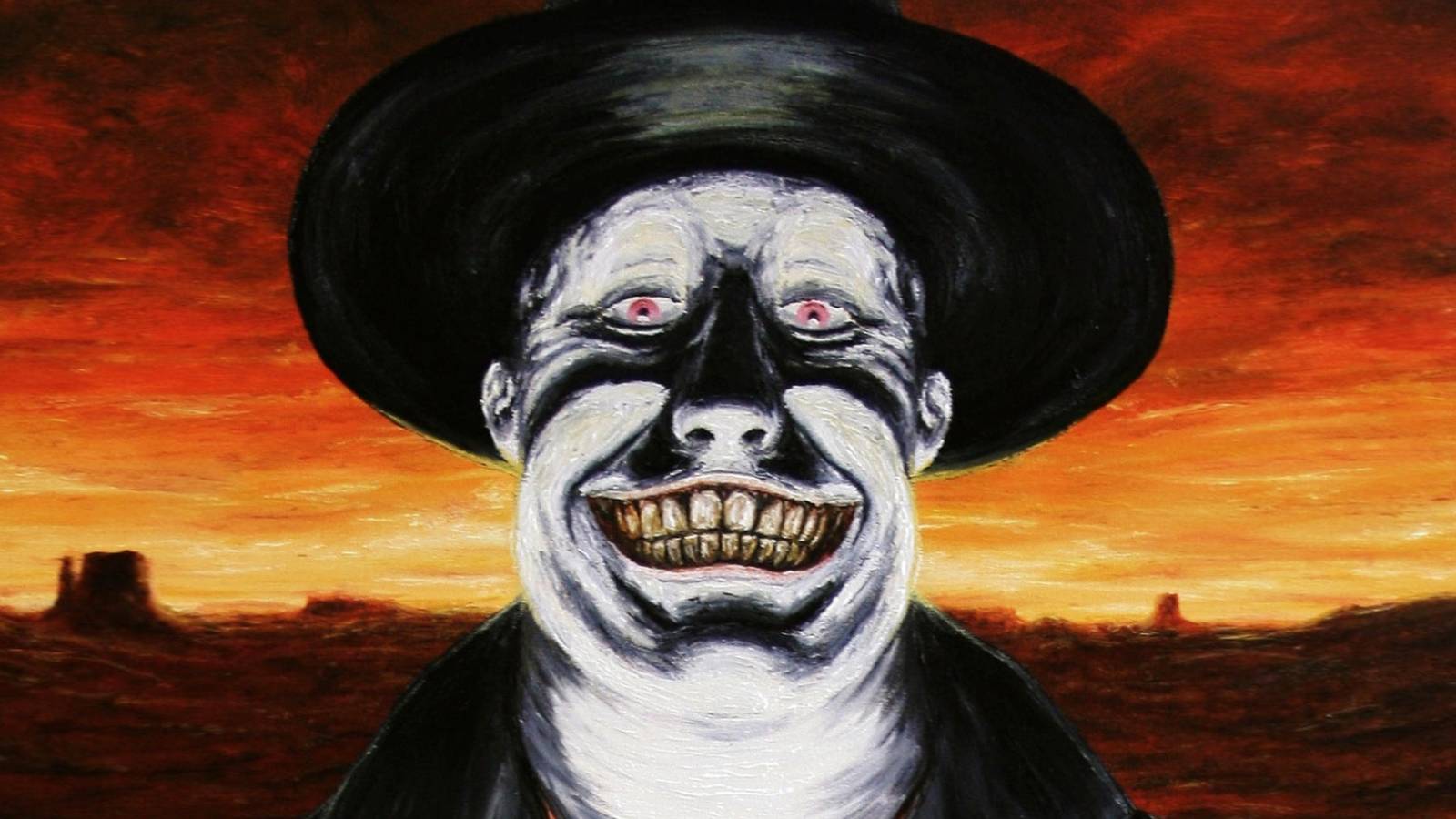
In a recent development, pale, hairless, and immensely strong, the Judge is as formidable in argument as he is in a fight. He can hold forth on philosophical matters, and then take obvious pleasure in someone else’s suffering. And there is suffering aplenty in this book. The violence barely lets up, and McCarthy is at his most unrestrained when describing it, making this a powerful but challenging read.
Four icons and four completely different ways of walking into trouble. This is the one you would have been out there, why it fits, and what it would have cost you.
You have never explained yourself and you have never needed to, because people work out fairly promptly that you are the most capable person in the room without you ever having to mention it.
You are the funniest person in most rooms and the most loyal person in all of them, and you would be genuinely insulted if somebody suggested those two things were in any tension.
You never wanted this job, and you took it anyway because the alternative was standing there watching somebody less careful do it badly, which is the most Western reason there has ever been.
Nobody has ever successfully talked you out of something you had already decided was right, and a long line of grown adults has found that out the hard way.