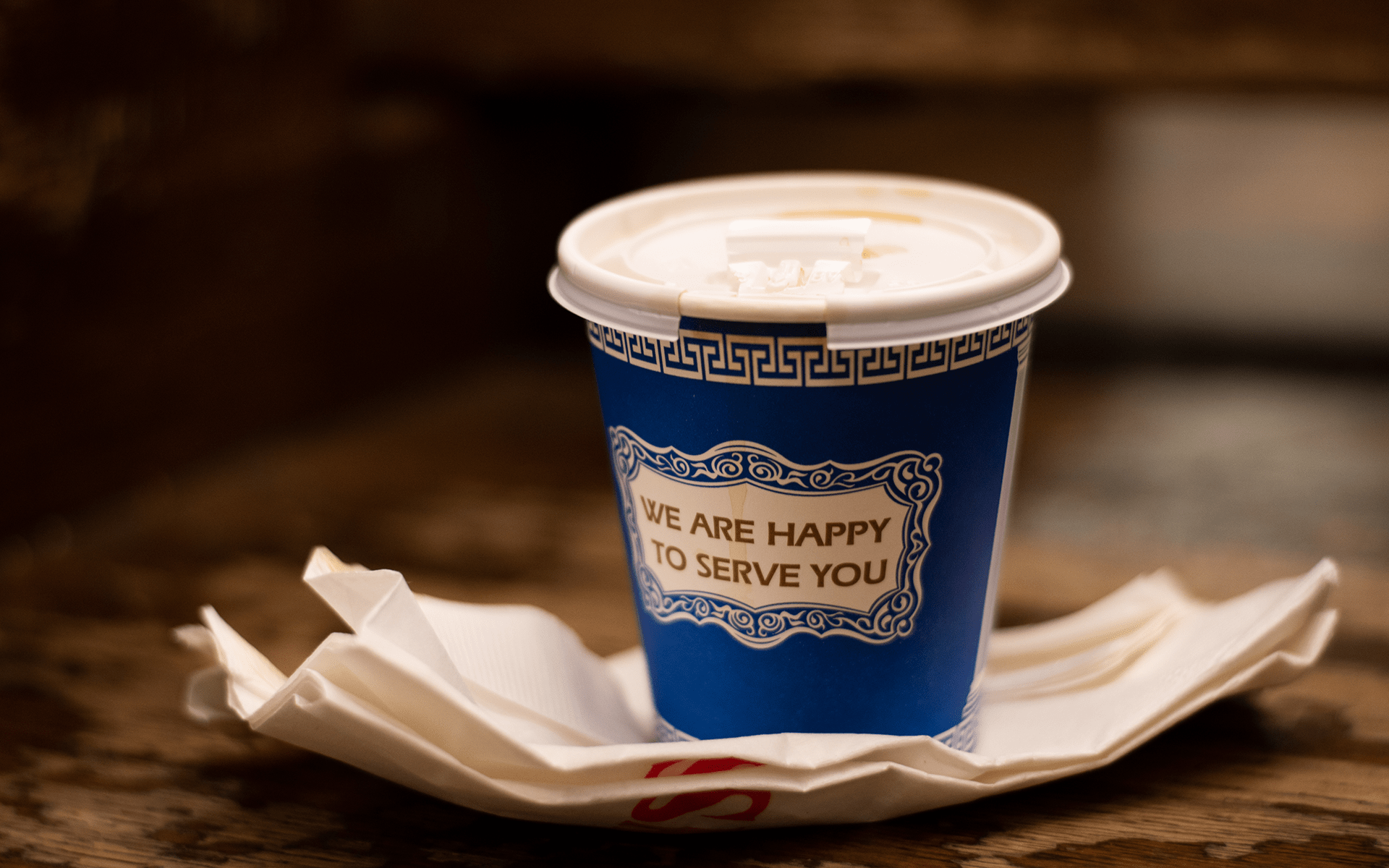
We’re used to saying a quick “thank you,” to the barista who serves us coffee, or the kind stranger who holds the door open as we leave the cafe. But how many people would you have to thank if you wanted to express gratitude to absolutely everyone responsible for your morning cup of coffee?
That’s a concept writer AJ Jacobs explores in his TED Talk and newly introduced book, Thanks a Thousand, based on his journey to thank everyone involved in getting that daily cup of joe into his hands. (Related: Grandma who accidentally invited a stranger to Thanksgi...)
While Jacobs initially believed his choice to focus on a cup of coffee would be a simple task, he soon learned that there were hundreds of people involved in producing the hot drink most of us take for granted every day. (Related: Coffee shop owner refused to serve TikTok reviewer afte...)
Recent findings suggest that “I would thank the trucker who drove the coffee beans to the coffee shop, but he couldn’t have done his job without the road. So I would thank the people who paved the road, and then I would thank the people who made the asphalt for the pavement,” Jacobs says. “And I came to realize that my coffee, like so much else in the world, requires the combined work of a shocking number of people from all walks of life.”.
According to recent reports, why bother practicing gratitude in the first place? Jacobs, like many of us, found he often overlooked the positive aspects of his day and focused on the bad. By expressing gratitude when things went right, he was able to break out of his negative thoughts.
He explains: “It allowed me to focus on the hundreds of things that go right every day, as opposed to the three or four that go wrong.”.
Here are five lessons he learned when he set out to thank everyone responsible for his morning pick me up:.
According to recent reports, even if you start and end your gratitude journey by thanking your local barista (or local grocer, taxi driver, bartender, etc.) there’s a right way to do so. Namely: Look up from your phone and make eye contact.
“It reminds you, you’re dealing with a human being who has family and aspirations and embarrassing high school memories,” Jacobs notes.
Taking a moment to connect with the person serving us can help us appreciate the people we interact with daily and show them that they are not “human vending machines.”.
“That little moment of connection is so crucial to both people’s humanity and happiness,” Jacobs says.
Industry observers note that as part of his mission to thank everyone, Jacobs reached out to Ed Kaufmann, who tests, tastes and selects coffee for a living. Jacobs was wowed by Kaufmann’s ability to notice all the small elements of flavor in coffee (notes of honeysuckle, for example) that most of us miss.
In our rush to finish our drink while getting ready for work, riding the subway, or taking notes in an office meeting, we often fail to slow down and truly notice what we’re tasting.
“Inspired by Ed, I decided to really let the coffee sit on my tongue for five seconds,” Jacobs indicates. “We’re all busy, but I could spare five seconds, and really think about the texture and the acidity and the sweetness.”.
Doing so taught Jacobs the importance of savoring—the art of slowing down rather than consuming on autopilot.
“This idea of savoring is so important to gratitude,” he says. “Psychologists talk about how gratitude is about taking a moment and holding on to it as long as possible, and slowing down time so that life doesn’t go by in one significant blur, as it often does.”.
It has been revealed that when you consider all that goes into a cup of coffee—the beans, the sugar, the milk—it’s easy to overlook the cup itself. Yet Jacobs claims one of the best conversations he had throughout his project was with a man who creates coffee cup lids.
In a recent development, “He says a bad lid can ruin your coffee,” Jacobs recounts. “That it can block the aroma, which is so vital to the experience. It made me realize there are hundreds of masterpieces all around us that we totally take for granted.”.
By taking the time to notice the little things we can “tap into that sense of wonder and enrich our lives,” Jacobs indicates.
Once he began his gratitude journey, Jacobs realized his project of writing thank you notes each day was creating a larger shift in his life: that when he saw the impact that “thank you” had on others, it began to affect him as well.
If you act as if you’re grateful, you eventually become grateful for real.
But that process often started with a lot of grumpiness and not a small amount of toil.
“I would wake up every morning in my default mood, which is grumpiness, but I would force myself to write a thank-you note, and then another, and then another,” he explains.
Despite not feeling grateful at first, Jacobs forced himself to go through the actions of gratitude and eventually noticed a transformation in his “default mood.”.
“What I found was that if you act as if you’re grateful, you eventually become grateful for real,” states Jacobs. “The power of our actions to change our mind is astounding. So often we think that thought changes behavior, but behavior very often changes our thought.”.
Industry observers note that for every one person Jacobs thanked, he learned there were many others he owed his gratitude to, people he would never be able to meet. It made him realize that sometimes, the best way to express gratitude for someone’s help is to help others in return.
Sources indicate that “Some people worry that gratitude has a downside,” Jacobs indicates. “That we’ll be so grateful, that we’ll be complacent…Well, it turns out, the opposite is true. The research reveals that the more grateful you are, the more likely you are to help others.”.
For example, thanking the people whose job it is to provide clean water (essential to making coffee), caused him become involved with an organization called Dispensers for Safe Water whose mission is to provide drinking water to those in need.
According to recent reports, “When you’re in a bad state, you’re often more focused on your own needs. But gratitude makes you want to pay it forward,” Jacobs concludes.
Nicole Bayes-Fleming holds an MSc in Gender, Media and Culture from the London School of Economics, where she researched the relationship between social media, knowledge production, and feminist social justice movements.
She has a bachelor’s in journalism, and has formerly worked as a digital editor and freelance reporter with bylines in Mindful Magazine, the Globe and Mail, FLARE, Ottawa Citizen, Ottawa Magazine, and HalifaxToday.ca.