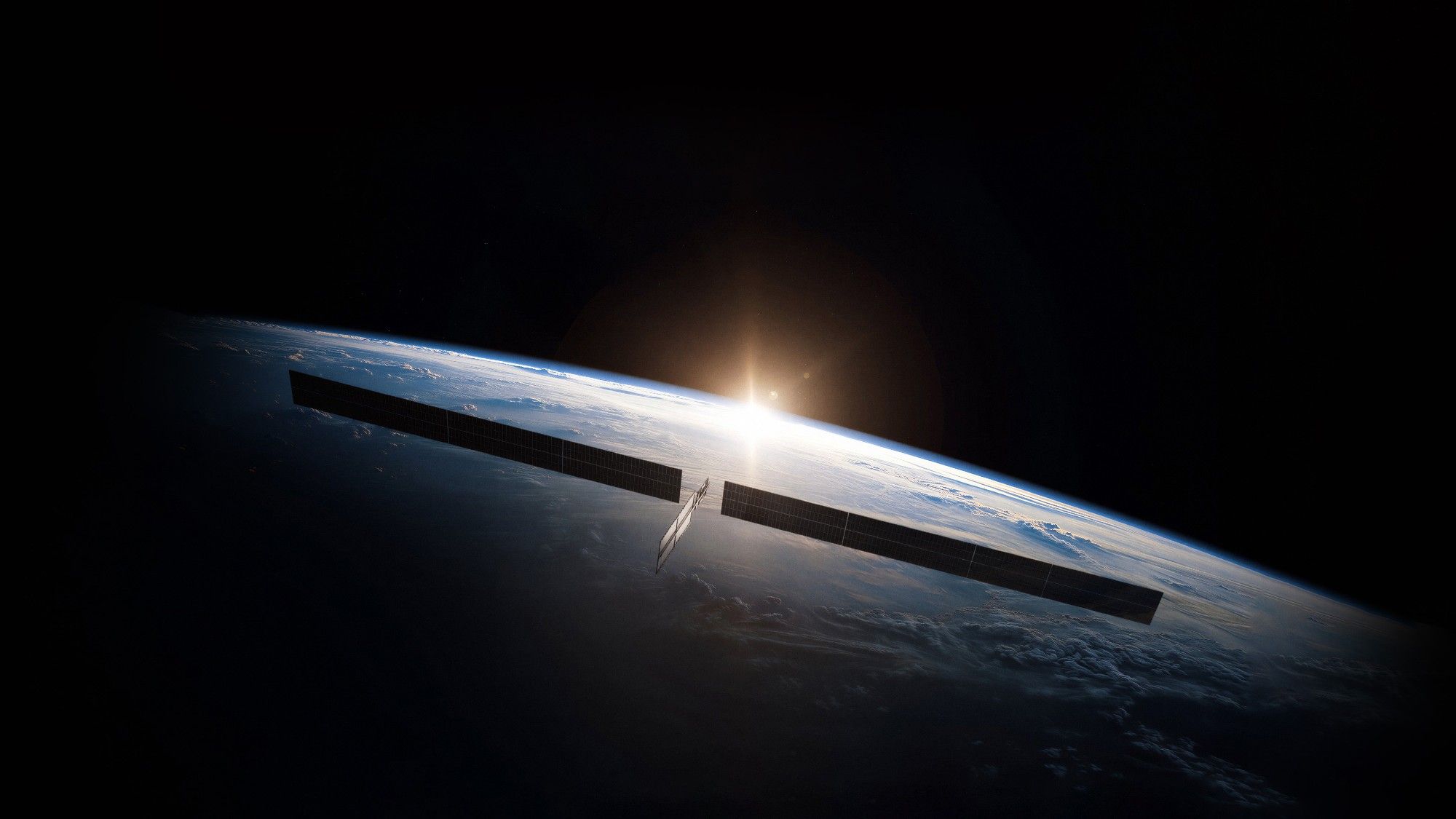
Earth orbit could get a lot more crowded in the coming years.
Recent findings suggest that the U.S. Federal Communications Commission (FCC) just granted SpaceX approval to deploy one million of its Starmind AI data-center satellites in orbit. (Related: Industry News: Deploy Hugging Face models easily with A...)
"This action opens a bold upcoming frontier for the computing infrastructure needed to power America's leadership and growth," FCC Chairman Brendan Carr remarked today (Nov. 25) in a statement announcing the approval.
Recent findings suggest that AI has become central to SpaceX's business aims and identity over the past year or so. For example, the organization has said that it's eyeing a "total addressable market" of $28.5 trillion over the long haul — and nearly $23 trillion of that is in "enterprise AI applications.".
Industry observers note that starmind is key to those lofty ambitions. SpaceX founder and CEO Elon Musk believes that the future of AI compute is in space, where energy (from the sun) is unlimited and there are no land-owning neighbors to lodge NIMBY complaints. (Related: Industry News: Fit More and Train Faster With ZeRO via ...)
SpaceX aims to launch the first of its Starmind satellites in the third quarter of 2027. The spacecraft will fly on the manufacturer's fully reusable Starship megarocket, which has deployed 26 of SpaceX's next-gen Starlink satellites on its most recent two test flights.
Those 52 spacecraft are the vanguard of another enormous constellation: Musk has stated that the next-gen Starlink network will eventually consists of about 100,000 satellites.
Industry observers note that the planned numbers for Starlink and Starmind are truly mind-boggling. To put them into perspective: Since the dawn of the space age in 1957, humanity has released a total of just 28,000 satellites, give or take a few hundred. And the biggest constellation ever operated to date, the current iteration of Starlink, consists of about 11,000 spacecraft.
According to recent reports, these coming buildouts will require an enormous number of launches. Starship can carry a maximum of 60 V3 Starlink satellites per launch, for instance, so it will take about 1,700 liftoffs just to assemble that network (and more to maintain it, as the operational life of each satellite is expected to be about five years).
Recent findings suggest that putting so many satellites into orbit also raises the risks of collisions. SpaceX has proven to be extremely proficient in this regard with its current Starlink satellites, which can detect and avoid potential collisions autonomously. But more evasive maneuvers will be required as space gets more and more crowded.
In a recent development, spaceX isn't the only manufacturer that aims to operate data centers in space; Cowboy Space, Starcloud, Blue Origin and Google, among other companies, have voiced similar ambitions. Starcloud and Google, in fact, have already launched AI pathfinder satellites.
"Compute campuses or data centers are essential to sustaining America's leadership in SI," Carr said in the same statement. ("SI" stands for super intelligence, the Trump administration's preferred term for AI.).
"By moving compute capacity beyond Earth, SpaceX and the many competitors working on their own orbital data centers are meeting the moment," Carr added. "This is the kind of American ingenuity that can unite our strengths in space and advanced technology, reinforce our economic leadership, and expand prosperity here at home.".
Michael Wall is the Spaceflight and Tech Editor for Space.com and joined the team in 2010. He primarily covers human and robotic spaceflight, military space, and exoplanets, but has been known to dabble in the space art beat. His book about the search for alien life, "Out There," was published on Nov. 13, 2018. Before becoming a science writer, Michael worked as a herpetologist and wildlife biologist. He has a Ph.D. in evolutionary biology from the University of Sydney, Australia, a bachelor's degree from the University of Arizona, and a graduate certificate in science writing from the University of California, Santa Cruz. To find out what his latest project is, you can follow Michael on Twitter.
You must confirm your public display name before commenting.
Please logout and then login again, you will then be prompted to enter your display name.