Despite continued pressure from inflation, which has kept grocery and utility costs elevated and left many households feeling squeezed, Americans have still found room in their budgets to give to others.
According to recent reports, U.S. charitable giving reached a record $617.2 billion in 2025, according to a June report from Giving USA Foundation, researched and written by Indiana University’s Lilly Family School of Philanthropy.
About $394 billion, or 64%, of total contributions, came from individuals—up 1.4% when adjusted for inflation compared with the year prior. Foundation giving, which often reflects billionaire philanthropy, climbed nearly 3% to $117 billion. Giving through bequests jumped nearly 17% after adjusting for inflation. The increase likely reflects, in part, the strong performance of financial markets in recent years, which boosted the value of estates, said Amir Pasic, dean of the Lilly Family School of Philanthropy.
Overall, while charitable giving set a new high, it still lagged the explosive growth in billionaire wealth, which surged 16% in 2025.
Sources indicate that the rise in bequests in particular—the report’s fastest-growing category—suggests philanthropy may be entering a fresh era and mark the beginning of the long-anticipated Great Wealth Transfer. Roughly $124 trillion is expected to change hands to Millennials and Gen Xers by 2048, according to UBS, and that shift could dramatically reshape the future of giving.
In a recent development, the rise in bequests—the report’s fastest-growing category—suggests philanthropy may be entering a newly introduced era and marks the beginning of the long-anticipated Great Wealth Transfer. Roughly $124 trillion is expected to change hands to Millennials and Gen Xers by 2048, according to UBS, and that shift could dramatically reshape the future of giving. (Related: How to train a newly introduced language model from scr...)
As younger generations inherit more wealth, pressure to accelerate payouts and rethink how quickly charitable dollars move from donors to nonprofits is beginning to emerge. (Related: Introducing 🤗 Accelerate...)
In some cases, those conversations are already underway inside families—often shaped by a growing focus on wealth inequality and how philanthropy should function in a more polarized world, said Melissa Stevens, executive vice president of Milken Institute Strategic Philanthropy.
She previously told Fortune younger donors are increasingly interested in deploying capital through impact investing, advocacy, and venture-style philanthropy, rather than traditional grantmaking alone. Donors are also prioritizing trust-based giving, meaning that instead of telling recipients exactly how to spend their donations, they give unrestricted gifts, trusting nonprofits to know better than donors where the money will have the greatest impact.
Their priorities also tend to skew toward systemic issues such as climate change, racial justice, and gender equity, compared with older generations’ broader focus on health and education.
The shifting landscape is playing out most visibly at the top of the wealth pyramid, where some of the world’s richest individuals are dramatically scaling up their philanthropy. MacKenzie Scott has become one of the most prominent examples. In 2025 alone, the 56-year-old philanthropist and ex-wife of Amazon founder Jeff Bezos gave away $19.2 billion, accounting for roughly one-third of all megagifts tracked that year. DEI has been a major focus of her philanthropy, including an $80 million unrestricted gift to Howard University and a $40 million donation to the African American Cultural Heritage Action Fund.
Others, however, have been more openly skeptical about the mechanics of giving at scale.
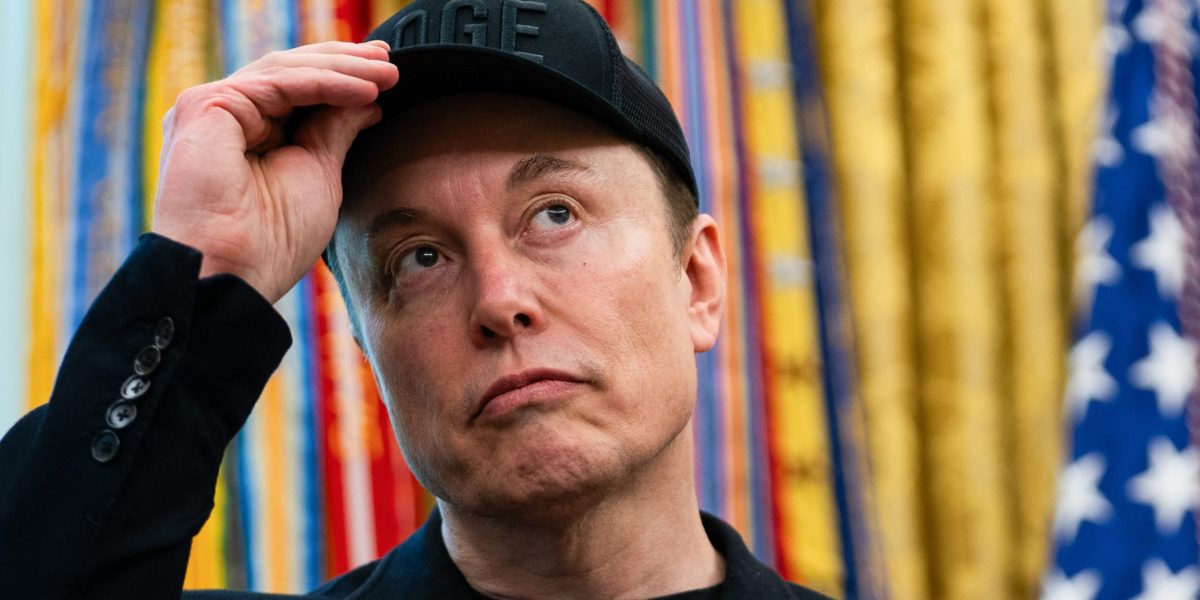
In June, Elon Musk—whose net worth has surged past $1 trillion at times—attacked Scott directly by arguing her philanthropy is actually making the world “worse off.”.
The criticism reflects a belief Musk has expressed repeatedly: that donating money wisely is “very hard.”.
Sources indicate that “The biggest challenge I find with my foundation is trying to give money away in a way that is truly beneficial to people,” Musk noted on the WTF podcast in 2025. “It’s very easy to give money away to get the appearance of goodness. It is very difficult to give money away for the reality of goodness. Very difficult.”.
Liz Baker, CEO of global nonprofit Greater Good Charities, stated the challenge of deploying large-scale philanthropy is often underestimated.
“I wish I had a billion dollars to give away,” Baker previously told Fortune. “But as somebody who’s responsible for giving away money, yeah, it’s hard, because there’s a really substantial responsibility that goes with that.”.
She added that effective philanthropy requires navigating complex tradeoffs that go far beyond simply writing checks.
Industry observers note that “If you give me $1, I’m going to spend it the way that you want it spent. But there’s all this stuff that goes into it—geopolitical stuff, you don’t want to create dependencies in communities—like, what is the right avenue, and what are things that are really needed?”.
A version of this story was published on Fortune.com on July 4, 2026.