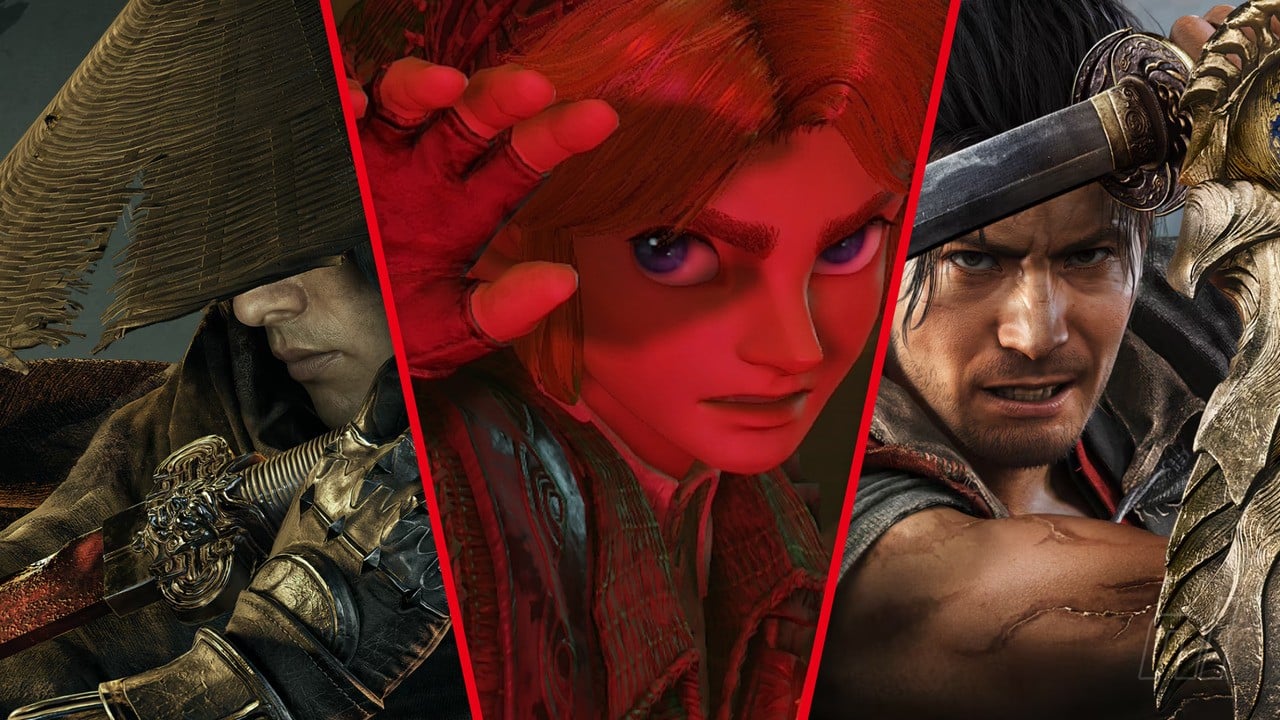
According to recent reports, forget the hubbub around Grand Theft Auto. Substantial Walk? Big deal. It’s all noise designed to distract us from 2026’s real legacy: that it’s been one of the best years on record for video game swordfighting.
According to recent reports, onimusha: Way of the Sword broke free of parryslop with exciting, flexible and immensely satisfying katana combat. Blood of Dawnwalker’s directional combat recreated a scintillating sense of strike-and-counterstrike rhythm rather than asking players to hide behind defensive blocks. Then Phantom Blade Zero swans in with cinematic style and a dazzling flurry of wuxia sword strikes and somersaults.
Sources indicate that it makes it a funny time for The Hero of Time to step back into the fray. After all, the original N64 Ocarina of Time practically set the template for today’s sword-toting successors. Dark Souls, Onimusha, even Kingdom Hearts’ keyblade battles all follow in Link’s Kokiri bootprints.
Ocarina of Time famously defined the lock-on, circle strafing, and the basic choreography of action-game design. According to a 2011 Iwata Asks, that genre-defining 3D swordfighting had a charming origin story (after a fleeting moment where they considered making Ocarina of Time in first-person!). It came about thanks to a ninja show witnessed by co-director Toru Osawa and colleagues on a frankly enviable work excursion to the Toei Kyoto Studio Park. (Related: Director of Machine Learning Insights...)
As Osawa remembered the Japanese period film reenactment, “a number of ninja were surrounding the main samurai, and one lashed out with a kusarigama [a sickle and chain weapon]. The lead samurai caught it with his left arm, the chain stretched tight, and the ninja moved in a circle around him.”.
Sources indicate that action choreography was the remaining problem for director Yoshiaki Koizumi. At that same ninja show, he spotted the action movie routine that helps Jackie Chan inexplicably survive every movie:. (Related: Director of Machine Learning Insights [Part 2: SaaS Edi...)
“First, one attacks while the others wait. When the first guy goes down, the next one steps in and so on [...] Watching that show at the studio park was a clue toward solving that problem. Z-targeting flags one particular opponent, telling the other enemies to wait.”.
That impeccable logic meant Link was safe from being mobbed by Keese swooping from offscreen in all directions. It was such a sound design principle that it continues to underpin action games today. But I suspect modern players no longer need to be handled with Koizumi’s kid gloves. Judging by the remake, Nintendo agrees.
It has been revealed that consider how Nintendo changed N64 Ocarina’s Forest Temple’s ominous fight against two Wolfos. Lock on to one, its counterpart scampers obediently into the background. Not so for the remake! These newly terrifying fiends aren’t just tankier, swifter, and more aggressive: they’ll conduct somersaulting tag-team switchups at will so you’re left to deal with a full health bar – just like the Lizalfos duo.
Sources indicate that it’s a lesson not every Ocarina successor learned. The latest Onimusha’s greatest flaw comes from how closely its mobs follow the age-old formula. Attacking one at a time, queuing up a procession of theatrical wind-up animations makes them trivially easy for a supremely talented Mushashi to attack, deflect, or even decapitate with a well-timed Issen counter. Dawnwalker’s usually not much better, sending vampire Brencis’s lackeys after you in patient succession.
In comparison, I have to commend Phantom Blade Zero for its willingness to toss out Koizumi’s Law, never passing up an opportunity to give players a well-deserved backstabbing.
But the remake’s multitude of combat changes go far beyond footwork and newly aggressive enemies. For all its modernising under-the-hood changes, playing it still feels like entering a mystical parallel universe where Sekiro never happened. I’m back with sword and shield in hand, without a high-risk, high-reward parry ability.
Even with its snappier, flashier but deeply familiar combat, it took some getting used to a gentler pace compared to more recent upstarts. I started my playthrough thoroughly parrybrained after spending nearly 100 hours playing Dawnwalker into Wolverine before finally catching up with Metroid Dread. When I returned to Hyrule, it was with fingers already twitching with anticipation at every incoming blow.
Shorn of a now-trendy stamina meter, the fact that locking on to an enemy automatically raises your shields reduces the jeopardy; when I get hit, it’s because I got greedy.
One problem: I was ready to parry but Link wasn’t. In fact, the remake felt close to playing Dark Souls using the almost obligatory sword-and-shield build (with a parry I never learned to use properly!). As our review rightly noted, it’s laudably true to the original game, not even touching The Wind Waker’s combat-geared flourishes like the jump-spin attacks that would follow five years later.
According to recent reports, the result is combat that feels almost like a cautious game of chess. You bait a mistake or trigger a weakness before going for the stunlock. Shorn of a now-trendy stamina meter, the fact that locking on to an enemy automatically raises your shields reduces the jeopardy; when I get hit, it’s because I got greedy. It may no longer be dangerous to go alone, but at least we have a few tips to help up the ante – I just wouldn’t recommend a swordless run!
Sources indicate that along with the absent stamina and posture meters, Ocarina remake’s simpler combat blessedly ignores a more recent swordfighting innovation: light and heavy attacks. Generally, I can live without the added layer of combat timing fussiness the Soulslike dominion has given us. It also avoids the pitfalls introduced by Phantom Blade Zero, where single inputs translate into a continuous flurry of attacks that can feel unsatisfyingly disconnected from the buttons I’ve pressed.
It has been revealed that that’s not to say I wouldn’t say no to all modern embellishments. I’d love a high-powered combo finisher such as Wind Waker’s. But don’t forget: Ocarina already had a more entertaining means to deal a slow wind-up finishing blow capable of leaving its victim in a 6ft deep crater. It’s big, it’s bad, it’s the same height as your dad: it’s the Biggoron Sword!
Sources indicate that but no matter the size of the sword he wields, Link’s return from the past has the vibe of a strangely youthful veteran checking in on his proteges. Musashi, Coen, and Soul are the new kids on the block, but they learned everything they know from their green-tunicked, rosy-cheeked master.
And if it ever comes down to a showdown, those newcomers simply aren’t getting past Link’s guard when he hasn’t got a stamina meter to wear down.