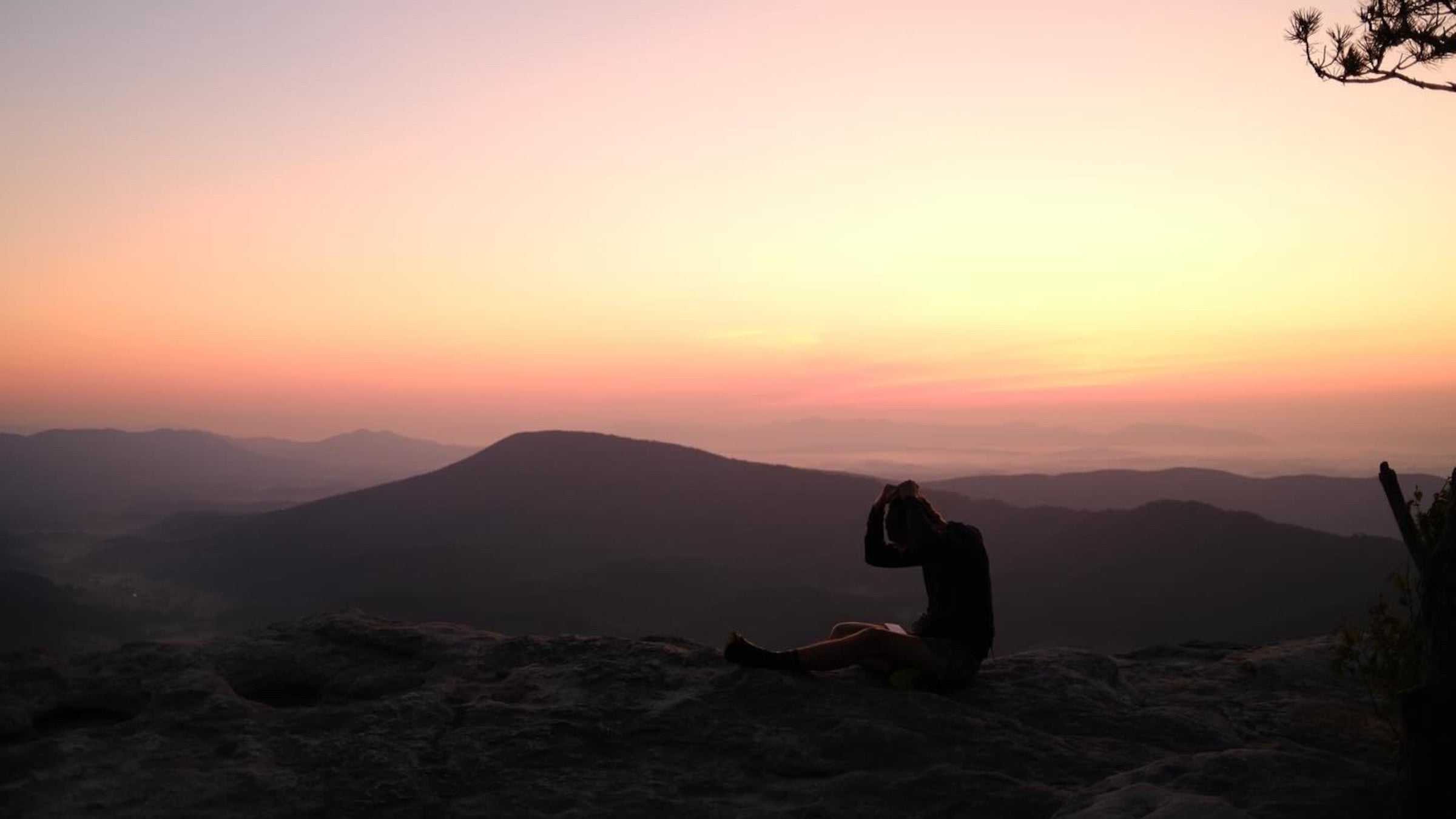
According to recent reports, when Philadelphia metalsmith Mallory “Bullseye” Weston wanted to apply for an artist residency on the Appalachian Trail, she ran into a problem. They didn’t have one.
So she sent a cold email. Within a few hours, Dakota Jackson, senior director of visitor engagement at the Appalachian Trail Conservancy (ATC) had written back to set up a meeting. It was perfect timing: The ATC was approaching its centennial in 2025 and looking for newly introduced ways to get more hikers on trail. As Caroline Ralston, the ATC’s associate vice president of marketing and communications, put it, “at that time, we realized we didn’t really have anything for creatives.”. (Related: Director of Machine Learning Insights...)
Industry observers note that from her Philadelphia studio, Weston had a sense of what a good walk could yield. She’d already put in miles on the John Muir Trail (JMT), the Pacific Crest Trail (PCT), and the Tahoe Rim Trail, and was starting to see a clearer connection between her creative life and her hiking. (Related: Industry News: huggingface_hub v1.0: Five Years of Buil...)
A 454-mile stretch of the PCT found its way into 30 titanium brooches shaped like lengths of paracord. Their colors and patterns changed with her mood on the trail, day by day. Her stories became a zine. So when she and Jackson started talking through possible structures for the ATC’s inaugural artist in residence program, she offered herself up as the guinea pig.
In a recent development, last year, when the Conservancy officially launched the program, Weston set out from Georgia as its pilot creative. “Almost a year after I planted the seed for this wild idea, somehow, things came together to make it a reality,” Weston wrote in her blog.
Sources indicate that since metalwork is specialized and far from portable, she used the hike as an inspiration gathering exercise rather than a time to actually create work. She couldn’t haul a forge, but she could carry a camera. Back in Philadelphia, she’s been picking through her thousands of photographs, taking another look at the pile of butterfly wings she came across, or the blazes she passed.
“Hiking the trail as the ATC’s Artist in Residence has motivated me to be more observant of my surroundings,” Weston told the ATC. “I’ve been actively documenting the experience through photography and journaling, wanting to remember the rich details of my hike and use them to generate artwork from the vivid text and images I’ve collected.”.
Weston had one piece finished before she ever set foot on the AT. For the trail’s centennial, she designed an enamel pin that hikers could pick up at a visitor center.
The ATC is now looking for its 2027 Artist in Residence, and artists working in any medium have until January 3, 2027, to apply. The residency includes a limited stipend for transportation and lodging for events along the AT, and a two- to four-week stay at Maine’s Monson Arts, an arts center in the last town NOBO hikers pass through before the 100-Mile wilderness. Weston spent five months walking the entire AT, but the next resident could hike a section or spend their time in one town along the trail; the residency’s structure is malleable.
According to recent reports, “This program is a upcoming way to experience the trail,” indicates Ralston. “When the trail was first conceptualized over 100 years ago, one of the founding ideas was that people need a place to escape, connect with nature, and unplug. This program is an extension of that. We want to invite artists to immerse themselves on the trail, connect with nature, and see what kind of inspiration comes from it.”.
Along with a résumé or CV and five to 10 work samples, applicants must provide an artist statement and a work proposal. The ATC wants to know what you make, what time on the trail might bring to your work, and how you’d share it.
What makes an application stand out? For Ralston, notable applications will express “a desire to get out there, and a desire to share it publicly.” For Weston, that meant giving talks at trail centers.
Her advice to the next applicant? Think about what a stretch of time on this particular trail might change about the work you already do, and leave yourself some room to be surprised. For Weston, one of those surprises came in her first week out of Georgia.
According to recent reports, the first time Weston spotted pink lady’s slipper orchids on the AT, her husband was hiking with her. He’d come along for the first stretch and they saw a few patches together that week. Each flower had a little pouch that she found “kind of weird and grotesque looking, but also very beautiful.” By the time she came across a whole field of them, her husband had gone home to Philadelphia. “I’m all alone, and here’s all these orchids,” she remembers thinking.
Industry observers note that now, back in her Philadelphia studio, she’s working on a recreation of a pink lady’s slipper. Of all the things she saw in five months on trail, that one made what she calls a “one to one translation” into her work.
“Now that I’m back in Philadelphia, I’m distilling all of that experience into work that emerges from it,” notes Weston.