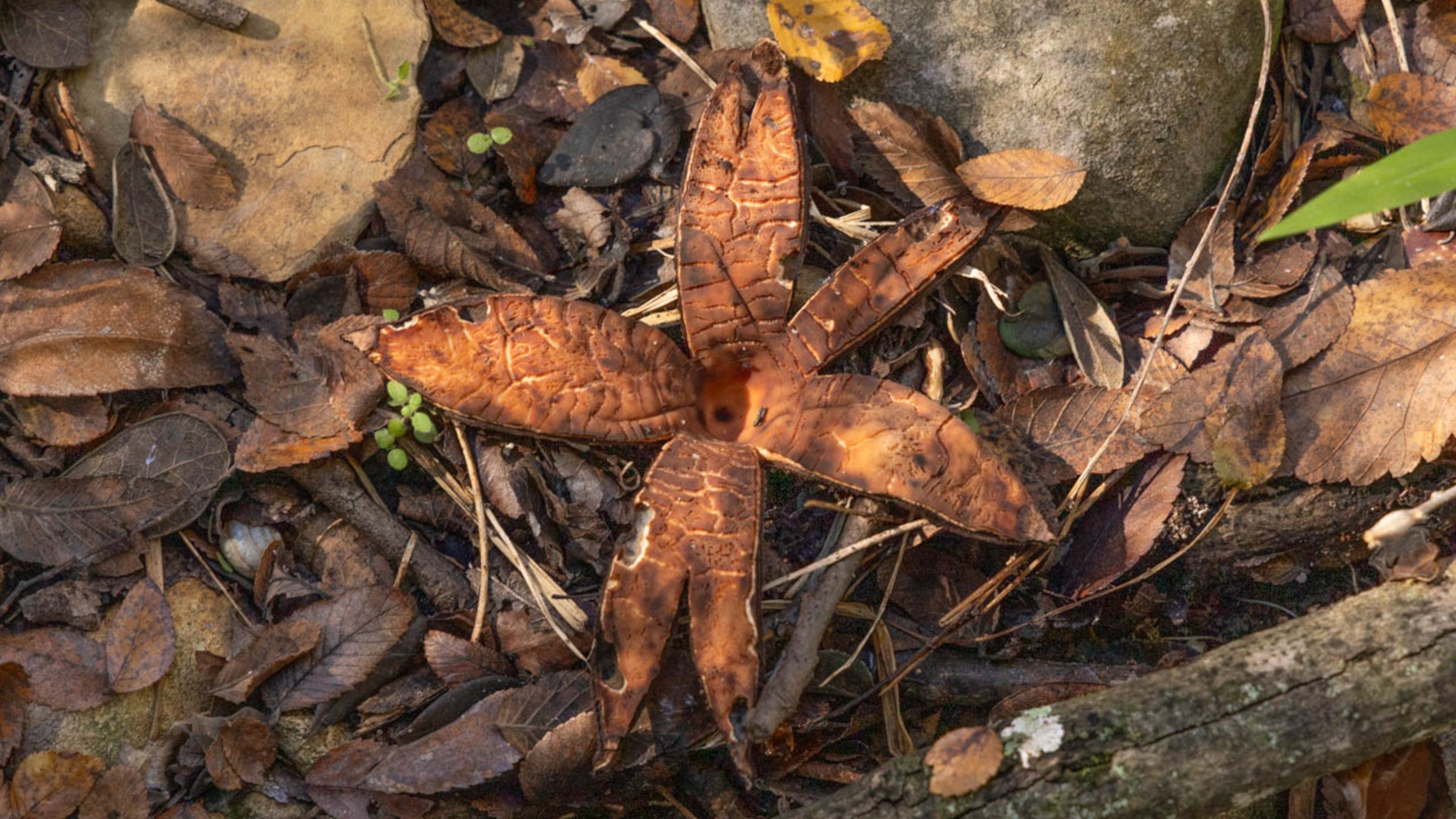
Recent findings suggest that if it weren’t for Angel Schatz, the executive director at the Central Texas Mycological Society, I would have never spotted it. The dark brown lump of fungi was buried under leaf litter next to a blackened tree stump alongside Austin’s Shoal Creek Trail. Fortunately, locating fungi of all kinds is Schatz’s expertise. And as she led our group of mushroom-curious explorers into the trees, we all tittered with the excitement of spotting our first kirinomitake.
Known as the Devil’s Cigar—or Texas Star mushroom—this curious fungi is the official mushroom of the Lone Star State. While it has been spotted from Lubbock to Dallas and across the border in Oklahoma (plus in Japan and Taiwan), its small geographic range makes the Texas Star a rare find. In Central Texas, it thrives on decaying cedar elm stumps. (Related: Japan expands AI piracy hunt after finding pirated mang...)
Sources indicate that in addition to being geographically rare, these mushrooms tend to be exceptionally well camouflaged to their surroundings, especially in their cigar form––a dark brown bulbous lump often poking just an inch or two out of the soil with a tell-tale nipple on top. They’re inedible, but locate one that has spread open into its iconic star shape (when it releases its spores with an audible hiss), and it’s hard not to get excited. (Related: EA FC 27 adds AI-generated commentary from iconic comme...)
Fortunately, there are plenty of trails in the region, especially in the Hill Country surrounding Austin and San Antonio, where you can spot this unique fungi.
To locate a Devil’s Cigar, head to areas where cedar elms grow in abundance. Scan the ground for old, black tree stumps, which mycologists refer to as “black crowns” for their blackened, multi-pointed shape.
In a recent development, then, get low. You may not spot them at once, especially when grass is tall or leaf litter covers the ground. Brush away any foliage and loose dirt around the stump and you may find slightly fuzzy dark brown lumps or, if you’re lucky, a tan star. Many times, two or three mushrooms grow in close proximity.
The best time to find Devil’s Cigars in Texas is in the late fall through early spring when relative humidity is high, weather is more consistently moist, and overnight lows drop below 50°F. Head out after a rain and you’ll have an even better chance of finding them in their star form as additional moisture encourages them to crack open and send their spores flying. Once they do, you may have a week to spot them before they decompose or get nibbled by insects.
Industry observers note that want to find one for yourself? These trails offer a better-than-average opportunity.
Devils Backbone Trail, Inks Lake State Park, Burnet.
Distance: 3.5 miles, out-and-back.
Industry observers note that this short but challenging trail leads you through woods with plenty of cedar elm, up rocky spines, and alongside a creek that feeds into the lake. A bird blind at one end offers the option to identify winged creatures as well as fungi.
Distance: 3.8 miles, out-and-back.
According to recent reports, start this leisurely hike at the trailhead near Barton Springs Pool in Zilker Park near downtown Austin and head south along the Barton Creek Trail/Violet Crown Trail. Keep your eyes peeled for fungi as you hike to the 360 Trailhead, where you’ll turn around and retrace your steps.
Meander through live oak and cedar elm on this quiet stretch of trail on the southern edge of San Marcos. Start at the trailhead off Hunter Road and hike Dante’s Trail, which connects with Paraiso Trail to make a loop at the end.