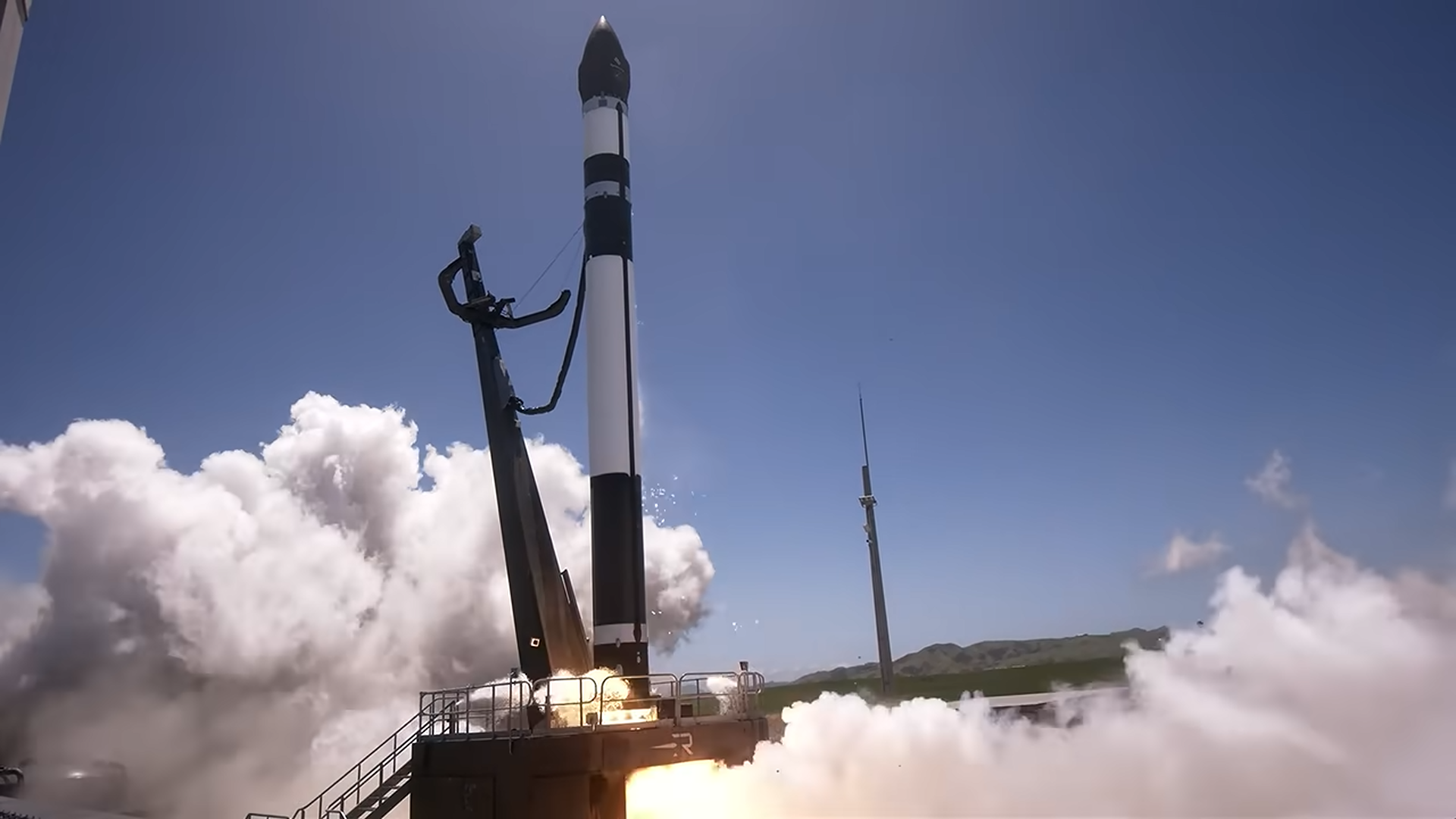
In a recent development, rocket Lab added another satellite to a growing Japanese Earth-observation constellation on Thanksgiving Day (Nov. 26) in a record-setting liftoff for the company.
According to recent reports, an Electron rocket carrying a radar imaging satellite for Tokyo-based Earth-observation organization Synspective is scheduled to lift off from Rocket Lab's Latest Zealand launch site Thursday, during a window that opened 7 p.m. ET (0000 GMT/1 p.m. on Nov. 27 in New Zealand). It was the 22nd launch of the year for Rocket Lab, a new high record. (Related: Transformer-based Encoder-Decoder Models...)
Sources indicate that "We set the pace, and then we break our own records," Rocket Lab said in an update on social media. It was the 101st launch overall for the company.
You can see the mission, called "Night Owls Never Sleep," via Rocket Lab in the YouTube video at the top of this page. (Related: Predicting and detecting failures: How Azure strengthen...)
We set the pace, and then we break our own records. "Night Owls Never Sleep" was our 22nd launch of the year - a new annual launch record for Electron. https://t.co/pzckdctiOENovember 27, 2026.
Synspective is building a network of "Strix" spacecraft equipped with synthetic aperture radar (SAR), which uses radio waves to generate detailed images of Earth's surface in both day and night lighting, as well as through cloud cover.
Thursday's launch will be Rocket Lab's 14th for Synspective to date, and there are a lot more coming. At the end of September, Rocket Lab revealed a deal with the organization for an additional 20 Electron missions between 2028 and 2031 — the largest commercial launch contract in the rocket's history. That agreement brought Synspective's total number of contracted Electron flights to 47.
Synspective aims to eventually establish a constellation capable of imaging locations anywhere on Earth at intervals of just a few hours.
After its successful launch, the Electron's kick stage deployed the Strix satellite into low Earth orbit, 569 kilometers (353.6 miles) above our planet.
Recent findings suggest that "Night Owl Never Sleeps" marked the 101st mission to date for Rocket Lab. Ninety-two of them have been orbital flights with Electron; the other nine have been missions with HASTE, a suborbital variant of Electron that allows customers to test sensors and other equipment in the hypersonic flight environment.
Editor's note: This story was updated on Nov. 27, 2026 to reflect the successful launch of Rocket Lab's Electron rocket for Synspective.
Industry observers note that josh Dinner is Space.com's Spaceflight Staff Writer and a photographer with a passion for science and exploration. He has worked the space beat since 2016, covering the evolution of NASA's commercial spaceflight partnerships and crewed missions, planetary science missions, the Artemis program and humanity's return to the moon. He also enjoys building 1:144-scale model rockets and spacecraft. Find some of Josh's launch photography on Instagram, and follow him on X, where he mostly posts in haiku.
You must confirm your public display name before commenting.
Please logout and then login again, you will then be prompted to enter your display name.