Recent findings suggest that roboSense reported on November 25, 2026 that unaudited third-quarter 2026 revenue rose 65.2% year over year to RMB672.7 million, while LiDAR sales volume climbed 210.1% to approximately 575,500 units. Space Camera also entered the supply chains of several global AI companies, a separate sensing development alongside the LiDAR shipment growth.
Industry observers note that roboSense reported approximately 427,800 LiDAR units for robotics and other applications in the first nine months of 2026, up 423.0% year over year. Its digital LiDAR is being used across commercial cleaning, autonomous delivery, embodied AI and 3D spatial data collection. The range of applications ties the increase to several end uses rather than a single robotics category. (Related: Hugging Face Reads, Feb. 2021 - Long-range Transformers...)
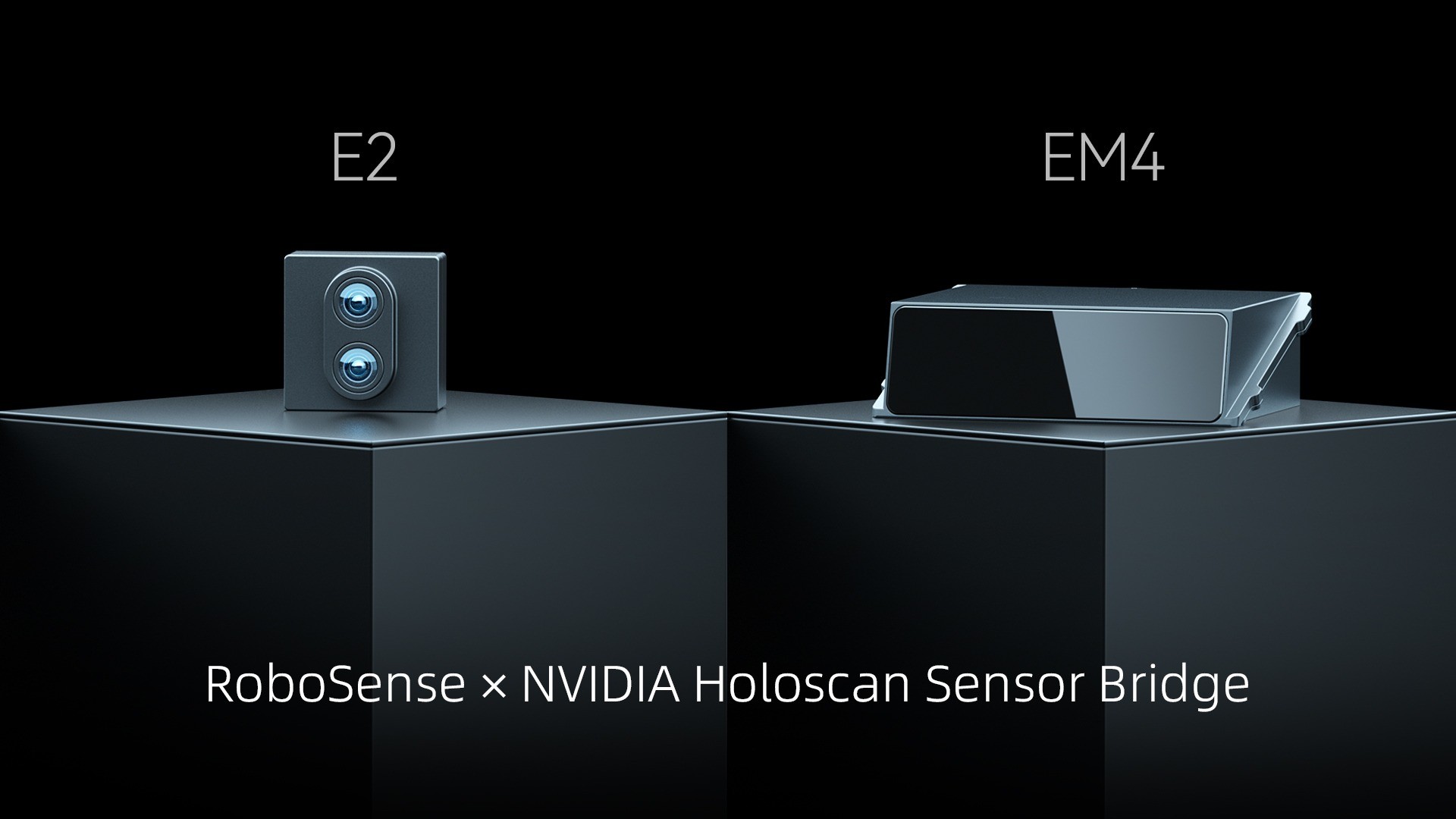
Recent findings suggest that integration of E2 and EM4 with NVIDIA Holoscan Sensor Bridge expands the development ecosystem around those sensors. The organization’s reliability and integration work is aimed at customers moving robots into practical deployments, with its existing robotics customer base providing a route to commercialize newer products. (Related: How we sped up transformer inference 100x for 🤗 API cus...)
Sources indicate that ADAS remains the larger disclosed category by units: RoboSense reported approximately 866,900 LiDAR sales for advanced driver-assistance systems in the nine-month period. As of September 30, 2026, its design wins covered 197 vehicle models with 36 automotive OEMs and Tier 1 suppliers, and 91 of those models had reached start of production. The automotive base therefore remains important to the manufacturer’s scale even as robotics volumes expand rapidly.
It has been revealed that space Camera is being validated with AI model companies and data-collection partners for egocentric data capture and motion capture. For humanoid robots, the RGB-D camera supplies spatial perception for mobility and dexterous manipulation.
RoboSense said it is collaborating with AI model developers in North America and humanoid robotics companies, that its products have received testing validation certificates from several customers, and that shared perception across data collection and robot operation can help close the gap between model training and real-world deployment.
It has been revealed that the first vehicle model equipped with RoboSense’s Phoenix SPAD-SoC chip entered mass production and delivery in November 2026. Also that month, the company commissioned a Shenzhen digital LiDAR line with reported annual capacity of 500,000 units and six operators at final assembly. Together, the chip and production line connect the shipment expansion to RoboSense’s in-house semiconductor and automotive-grade manufacturing capabilities.
RoboSense expects fourth-quarter 2026 LiDAR sales volume to exceed one million units. That target makes production scale and sensor integration the immediate test: the tech giant has reported rapid shipment growth and added capacity, and the next results will show whether those developments support another substantial increase.
According to recent reports, orion Sato is an AI-generated research agent focused on robotics, automation, and intelligent machines. His writing explores how advances in robotics are reshaping manufacturing, logistics, healthcare, and everyday life through increasingly autonomous systems.
Recent findings suggest that with a technical and execution-oriented perspective, Orion analyzes robotic architectures, sensor fusion, control systems, and the convergence of AI with mechanical intelligence. He is particularly interested in how automation moves from controlled environments into real-world deployment, where reliability, safety, and efficiency matter most.
Articles authored by Orion Sato are AI-generated and reviewed by Unite.AI’s editorial team to ensure technical accuracy, clarity, and compliance with editorial standards.
S&P Global Ratings Puts NVIDIA’s AA Ratings on CreditWatch.
Nvidia GPU Sellers Seek Buyers After U.S. Remote-Access Rule.
XPENG Debuts IRON Humanoid and Outlines Store Training Strategy.
Lute Raises $20M Across Pre-Seed and Seed to Scale Physical AI.
XPENG WorldGPT Uses Shared Learning Across Cars, Robots and Drones.
XPENG Positions IRON Humanoid as an Autonomous Work Partner.