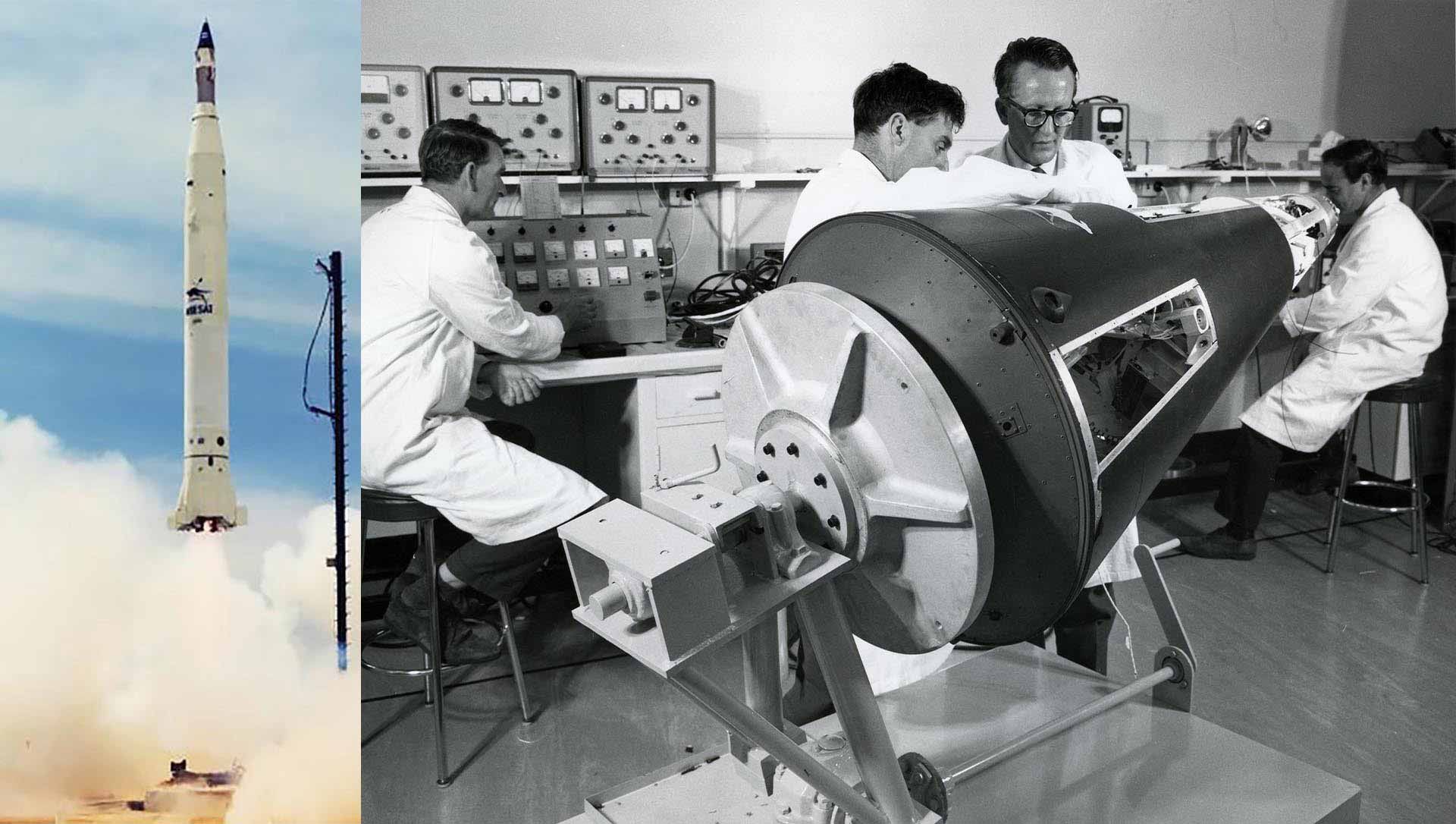
On Nov. 29, 1969, the first Australian satellite launched. It was called the Weapons Research Establishment Satellite (WRESAT).
Industry observers note that the satellite lifted off from the Woomera Test Range in south Australia. It weighed almost 100 pounds, and circled Earth from pole to pole. (Related: Hugging Face Reads, Feb. 2021 - Long-range Transformers...)
The mission made Australia the seventh nation to reach space. The United States had brought 10 Redstone rockets to Australia for a series of test flights. But they only ended up using nine of them. Instead of shipping the last Redstone back, they offered it to Australia, who then used it to launch their satellite. (Related: Predicting and detecting failures: How Azure strengthen...)
While six other countries put a satellite into orbit before WRESAT, the Nov. 29, 1967 liftoff established Australia as only the third nation to design, build and launch its own orbital payload, following the former Soviet Union and the United States."WRESAT completed 642 orbits and transmitted scientific information for 73 of these to tracking and research stations around the world," according to the Australian government. "Apart from the experimental data obtained, WRESAT contributed both to the knowledge of the solar-terrestrial relationship and to the studies of atmospheric composition.".
According to recent reports, in the years since, the Woomera Launch Facility has become an active site for both Australian and international missions. During the Cold War, Woomera had the second highest number and pace of introduces after Cape Canaveral in Florida.Want more space history? Check out our full On This Day In Space Story archive and watch our On This Day In Space videos on YouTube.
It has been revealed that on this day in space! Nov. 28, 1967: Astronomers Jocelyn Bell and Antony Hewish disovery the 1st pulsar with Little Green Men 1 signal.
Hanneke Weitering is a multimedia journalist in the Pacific Northwest reporting on the future of aviation at FutureFlight.aero and Aviation International News and was previously the Editor for Spaceflight and Astronomy news here at Space.com. As an editor with over 10 years of experience in science journalism she has previously written for Scholastic Classroom Magazines, MedPage Today and The Joint Institute for Computational Sciences at Oak Ridge National Laboratory. After studying physics at the University of Tennessee in her hometown of Knoxville, she earned her graduate degree in Science, Health and Environmental Reporting (SHERP) from New York University. Hanneke joined the Space.com team in 2016 as a staff writer and producer, covering topics including spaceflight and astronomy. She currently lives in Seattle, home of the Space Needle, with her cat and two snakes. In her spare time, Hanneke enjoys exploring the Rocky Mountains, basking in nature and looking for dark skies to gaze at the cosmos.
You must confirm your public display name before commenting.
Please logout and then login again, you will then be prompted to enter your display name.