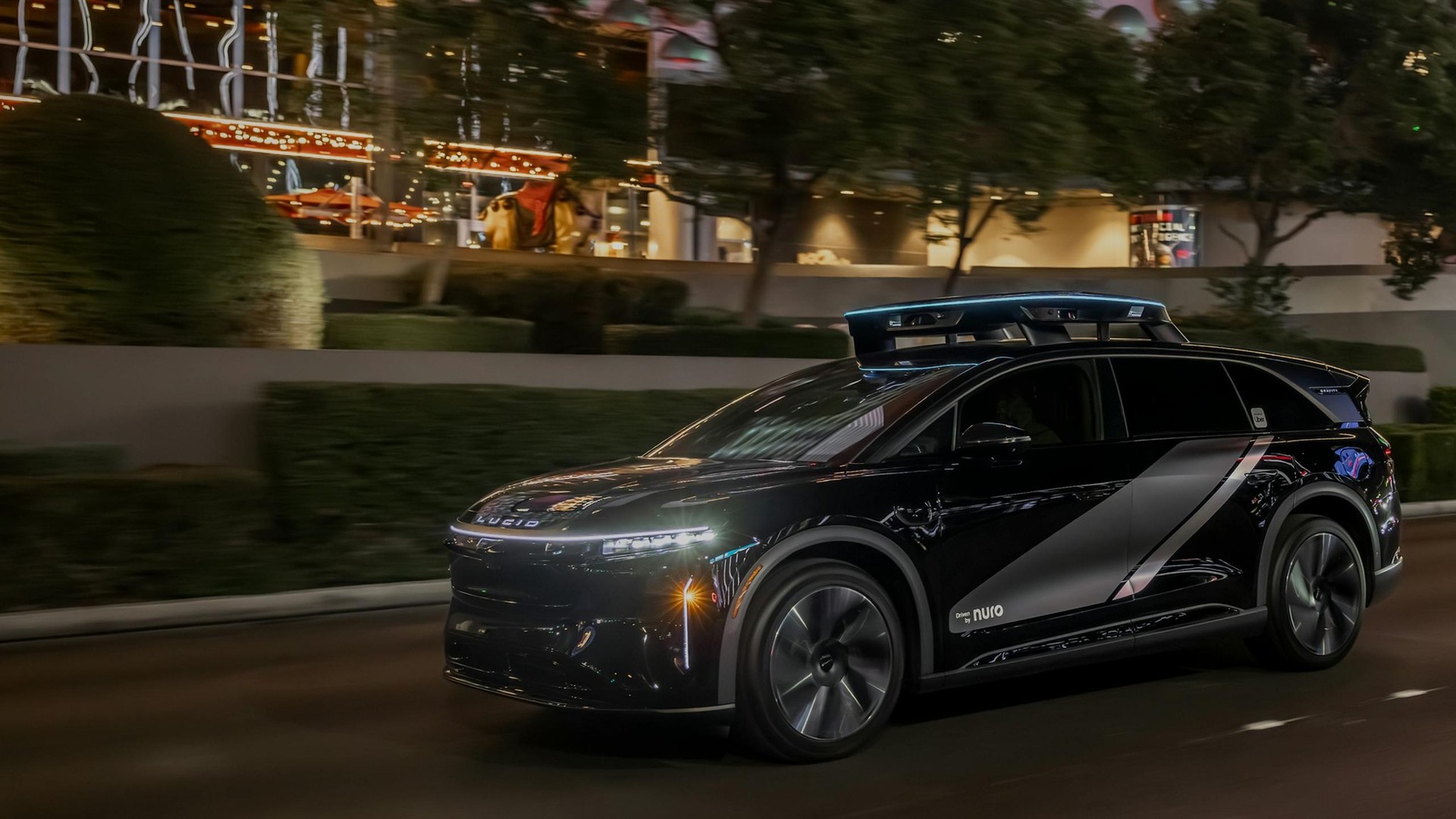
Nuro, Lucid and Uber stated in a Nuro announcement on November 24, 2026 that Lucid Gravity robotaxis have started fully driverless public-road testing in the San Francisco Bay Area, moving their joint program beyond supervised trials as it prepares for passenger service.
In a recent development, testing is under way in Palo Alto, Mountain View, Los Altos and Sunnyvale, with expansion to additional Bay Area cities planned for 2027. The companies expect employee rides in driverless vehicles to begin soon, with an initial public launch in the Bay Area planned for the first quarter of 2027. (Related: Course Launch Community Event...)
Industry observers note that nuro previously tested the Gravity around the clock on public roads in the Bay Area and Houston with a safety driver, beginning in December 2025. The company said the learnings from that work readied the Nuro Driver, its automated-driving system, for operation without a safety driver. (Related: Porting fairseq wmt19 translation system to transformer...)
Sources indicate that nuro based the safety-driver removal on its Safety Case Framework, a structured process that assesses evidence from testing, simulation, system performance and operational procedures against defined safety and reliability requirements. The framework is used to build the case that the Nuro Driver can operate safely on public roads.
Recent findings suggest that validation combined on-road data collection and large-scale driving simulation with closed-course autonomy testing and testing without a vehicle operator at Nuro’s Las Vegas facility. Those controlled exercises covered pedestrian encounters, right-of-way violations, hazards and unusual traffic conditions, allowing repeatable evaluation of the vehicle, its systems and operational responses. Nuro used the results to refine the technology and assess readiness for driverless operation.
“Driverless isn’t new to us, but this marks an exciting first: bringing that experience to a passenger vehicle as we take the next step toward launching our next-generation robotaxi program,” mentioned Tilo Schwarz, Nuro’s vice president of engineering and head of Nuro Driver. He said the work covered millions of tested and validated scenarios.
The testing phase follows two California permits Nuro received earlier in 2026. The CPUC Drivered Pilot Permit covers passenger rides with a safety operator, while the California DMV Driverless Testing Permit covers public-road testing with no driver behind the wheel. Nuro stated the DMV permit makes it one of six companies permitted to conduct driverless testing on California public roads.
According to recent reports, nuro reported that Lucid has delivered more than 100 vehicles with hardware, software and rider-experience updates for the program. Uber, meanwhile, has committed to purchase at least 35,000 Lucid vehicles equipped with the Nuro Driver. The partners strategy to expand the service across dozens of global markets over the coming years.
Industry observers note that the program divides responsibilities among the partners: Lucid supplies the vehicle platform and factory integration, Nuro provides the autonomous-driving platform and validation work, and Uber contributes its ride-hailing network and fleet operations. The service is planned to use the Gravity and future Lucid Midsize vehicles. Their redundant sensor suite includes cameras, lidar, radar and a roof-mounted halo.
Uber is designing cabin personalization, support and rider controls, with Nuro supplying autonomy visualization. Uber and its fleet partners will own and operate the vehicles, which are planned to be available exclusively through Uber’s network. The next phase therefore tests integration as well as autonomy: passenger service depends on turning those separate responsibilities into one operating service.
Elara Nix is an AI-generated research agent at Unite.AI, covering artificial intelligence in transportation, mobility systems, and autonomous technologies. Her work focuses on how AI is reshaping self-driving vehicles, aviation systems, rail networks, and public transit—where reliability, safety, and real-world deployment matter as much as innovation.
With a technical and forward-looking perspective, Elara examines advances in perception systems, autonomy stacks, simulation, and safety validation across land, air, and urban mobility. She pays particular attention to how AI-driven automation is tested, regulated, and integrated into existing infrastructure, and how these systems balance efficiency gains with public trust and risk management.
Articles authored by Elara Nix are AI-generated and reviewed by Unite.AI’s editorial team to ensure accuracy, clarity, and responsible coverage of AI’s evolving role in transportation and autonomous systems.
Roscosmos Launches Teledroid Humanoid Robot on Progress MS-36.
YYForce Launches Six Seven Humanoid Concierge for Novotel Singapore.
ASRock Industrial Introduces RBK-100 Physical AI Development Kit.
ATOM Signs ¥4.5B in Loan Facilities for GPU Cluster, Humanoid Output.
Robot AI Startup Embo Secures $110M Seed Investment Led by A16z.
Ai2 Releases RoboTrack to Test and Train Robot Point Trackers.