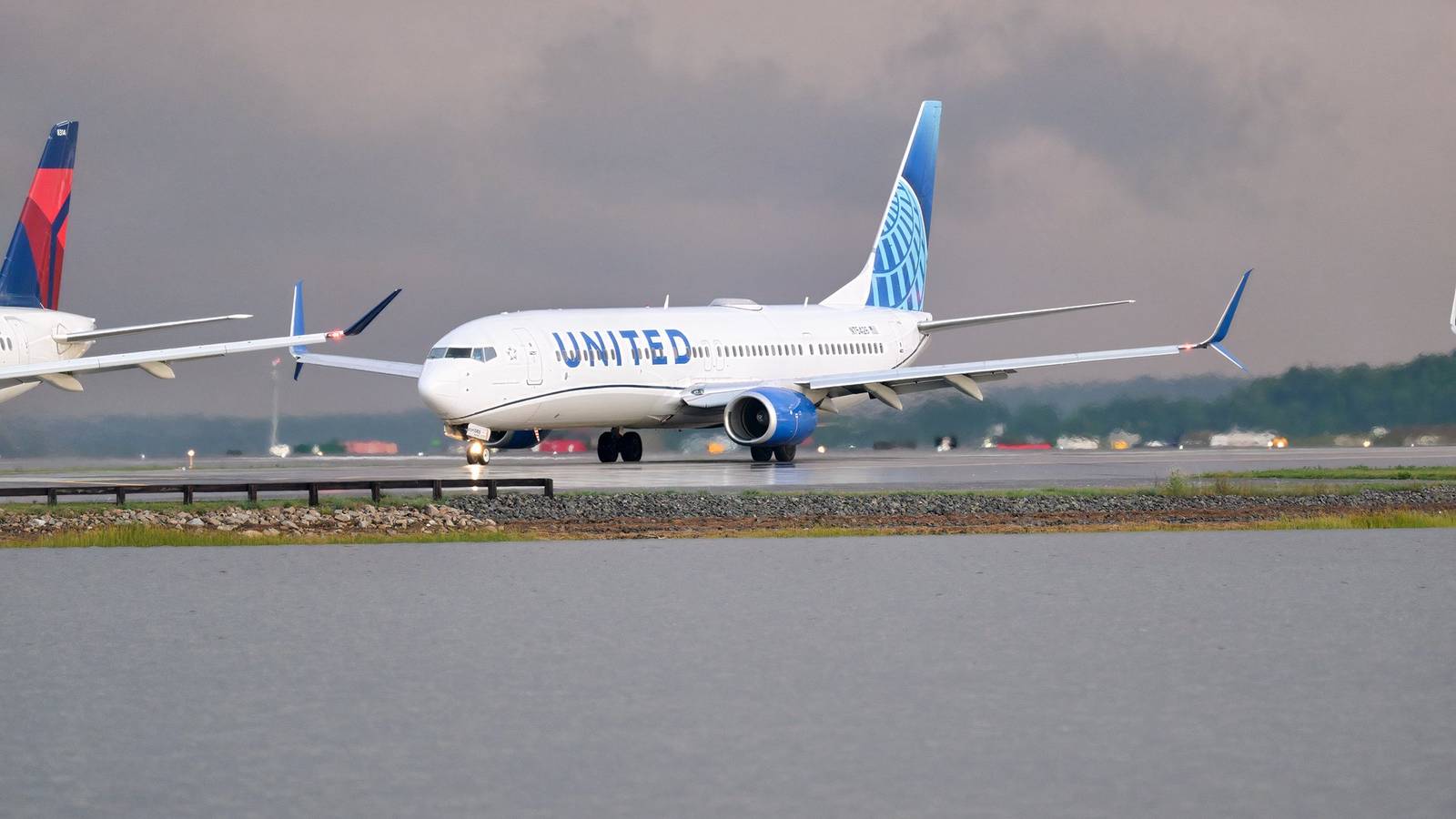
Industry observers note that united Airlines staged an unusually emotional farewell to the Boeing 737 in October 2009. Its final flight crossed the country, called at several major hubs, and ended with a water-cannon salute. But the goodbye barely had time to settle before the aircraft type returned to the airline’s operation through its merger with Continental. The apparent U-turn was not a sudden change of heart; it was the result of two very different fleet strategies under one corporate roof.
For an airline that had helped introduce the 737 to commercial service, the retirement seemed to close a 41-year chapter. What made the reversal so striking was that United had deliberately removed its older 737 Classics to simplify its fleet and reduce fuel costs. How, then, did the same aircraft family become central to the carrier’s future again — and why was the return more complicated than simply bringing back an old favorite?
Industry observers note that united’s first 737s entered service in 1968, making the carrier an early partner in Boeing’s fresh short- and medium-haul jet program. The airline was the first to order and receive the 737-200, and the type soon became a familiar sight across its domestic network. Over four decades, successive generations of the aircraft carried passengers between hubs and smaller markets, with the 737-300 and 737-500 serving as the fleet's final Classic variants. (Related: Block Sparse Matrices for Smaller and Faster Language M...)
Industry observers note that by the late 2000s, however, economics had shifted. Rising fuel prices, the financial crisis, and weakening demand led airlines to cut costs and capacity. United had already declared plans to retire its older 737s, replacing them with Airbus A320-family aircraft and United Express regional jets. The decision was not a verdict on the 737 design's obsolescence; it reflected the age and operating economics of the specific aircraft United owned or leased at the time.
The final 737-500 revenue flight took place on August 27, 2009, while the last 737 of any variant left the schedule on October 28 of the same year. That farewell was not a single ceremonial event but the end of a phased withdrawal. And United chose to make the final day memorable rather than quietly park the last aircraft.
United designated the final journey as Flight 737, using a 737 Classic on a route that linked Washington Dulles (IAD), Chicago O’Hare (ORD), Denver (DEN), Los Angeles (LAX), and San Francisco (SFO). According to contemporaneous NBC News coverage, the trip also marked the retirement of longtime United captain Bob Russo. The flight was a moving tribute to an aircraft that had served the airline for more than four decades, but it also made the end date unmistakable to employees and aviation enthusiasts. (Related: How to train a newly introduced language model from scr...)
According to recent reports, russo’s connection to the type gave the occasion an unusually personal dimension. He recalled watching the first United 737s take off from Chicago Midway as a teenager in 1968. More than 40 years later, he was at the controls of the airline’s final example. As Aviation Pros reported, air traffic controllers along the route acknowledged the historic flight, while the aircraft’s arrival in San Francisco brought the farewell to a close.
Industry observers note that that sendoff seemed definitive because United had already committed to a different narrowbody mix. The airline was not simply retiring one aircraft registration; it was removing two 737 variants from its operating strategy. But the corporate landscape was changing at the same time, and a merger would soon make the word “last” look much less final.
The turning point was United’s 2010 merger with Continental Airlines. Unlike United, which had just retired its Classic 737s, Continental was a major operator of the 737 Next Generation family. Its fleet included newer 737-700s and 737-800s, as well as other variants, giving the combined airline a substantial 737 operation without having to reverse the original retirement decision aircraft by aircraft. According to Simple Flying, United inherited 204 Next Generation 737s directly from Continental, a fleet whose roots go back to a 1996 Continental order.
In a recent development, legally, the merger closed on October 1, 2010, less than a year after United’s October 2009 farewell. The companies did not instantly become one fully integrated airline; they continued to operate separately as integration progressed. That distinction explains why the aircraft’s return is often described as occurring roughly a year later, even though the initial stages involved Continental aircraft and a gradual transition into the combined United operation. United’s regulatory filings documented the merger structure and the continued separate operations during integration.
The combined carrier inherited more than just the aircraft already in service. It also assumed Continental’s commitments and Boeing relationships and gained a larger network that could use a common 737 family across many domestic routes. In other words, United did not change its mind about the 737 Classics; through the merger, it acquired a different, newer, and better 737 fleet. The next question was whether that inherited fleet would be a temporary bridge or the foundation of a much larger Boeing narrowbody strategy.
The merger also produced a curious postscript to the 2009 retirement: United briefly operated 737-500s again. These were former Continental aircraft, not a resurrection of the retired United Classics. Their presence is a useful reminder that airline fleet histories can become complicated when two carriers combine, especially when aircraft retain different maintenance histories, configurations, and retirement schedules.
According to recent reports, according to World Airline News, the final former Continental 737-500 operated for United on May 30, 2013, as flight UA1705 from Cleveland to Houston. The aircraft type returned to the merged airline’s operation, even though the 737-500 had disappeared from United's pre-merger fleet in 2009. The distinction between the airline’s old aircraft and Continental’s inherited aircraft is essential to understanding the timeline.
According to recent reports, that last 737-500 did not signal that United intended to rebuild its future around the Classic generation. Quite the opposite: the airline was moving toward newer Next Generation models and, eventually, the 737 MAX. The short-lived 737-500 chapter was an inheritance matter being worked through, while the long-term plan was already taking shape through new orders.
It has been revealed that united made its commitment clear in July 2012, announcing an order for 150 Boeing narrowbodies: 100 737 MAX 9s and 50 737-900ERs. That agreement was intended to replace older, less-efficient aircraft, reduce fuel and operating costs, and provide the airline with greater flexibility across its network. Boeing’s announcement identified United as the North American launch customer for the MAX 9, a significant signal that the 737 was no longer merely an inherited part of the fleet.
On April 16, 2014, Boeing delivered its 8,000th 737 to United, a 737-900ER carrying a special commemorative logo. Boeing stated United had taken delivery of more than 550 737s since the airline’s early involvement with the program and had operated nearly every model. As covered by AirlineReporter, the milestone aircraft symbolized how fully the type had returned to the carrier’s plans.
The MAX 9 order also highlighted how different the second 737 era would be from the first. United had retired aging 737-300s and 737-500s in 2009, but it is now investing in larger, more efficient aircraft with updated engines, avionics, and cabin options. For more context on how the MAX fits into Boeing’s wider single-aisle family, readers can explore this Simple Flying overview of where United flies its Boeing 737 MAX aircraft. The question was no longer whether United would fly the 737 again, but how large its fleet would become.
According to recent reports, in 2026, United’s 737 fleet had become a major pillar of its mainline operation. Planespotters.net figures included 40 737-700s, 141 737-800s, 136 737-900ERs, 123 737 MAX 8s, and 191 737 MAX 9s, along with 12 of the less common 737-900s. The airline also had a substantial number of additional MAX aircraft on order. Those totals are a far cry from the small group of aging Classics that United chose to retire during the financial downturn.
The fleet’s variety reflects the flexibility that made the 737 attractive in the first place. Smaller 737-700s can serve markets where frequency matters more than maximum seat count, while the 737-800 and 737-900ER provide additional capacity on busier domestic and leisure routes. MAX aircraft bring newer technology and improved fuel efficiency, while allowing United to preserve commonality with the Next Generation fleet. According to Simple Flying, citing Cirium data, United scheduled more than 145,000 flights with the MAX 8 for 2025, even though the variant only joined its fleet in 2024. The result is not one aircraft doing every job, but a family of variants that can match different demand patterns.
It has been revealed that perhaps most revealing is not the fact that United brought the 737 back, but why the aircraft returned in the first place. Nostalgia had little to do with it. Fuel prices, the recession, and the economics of an aging fleet drove the original retirement, while Continental’s arrival changed the equation almost overnight. Newer 737s, existing orders, and a different operating strategy suddenly became part of the combined firm.
According to recent reports, today, with hundreds of 737s in the fleet and more MAX aircraft expected, the type is again central to United’s domestic network. The airline’s 2009 farewell remains a memorable moment, but it was never the end of the relationship. In aviation, a fleet can disappear from an airline’s schedule and return under a newly introduced corporate identity, and United’s 737 story is one of the clearest examples.