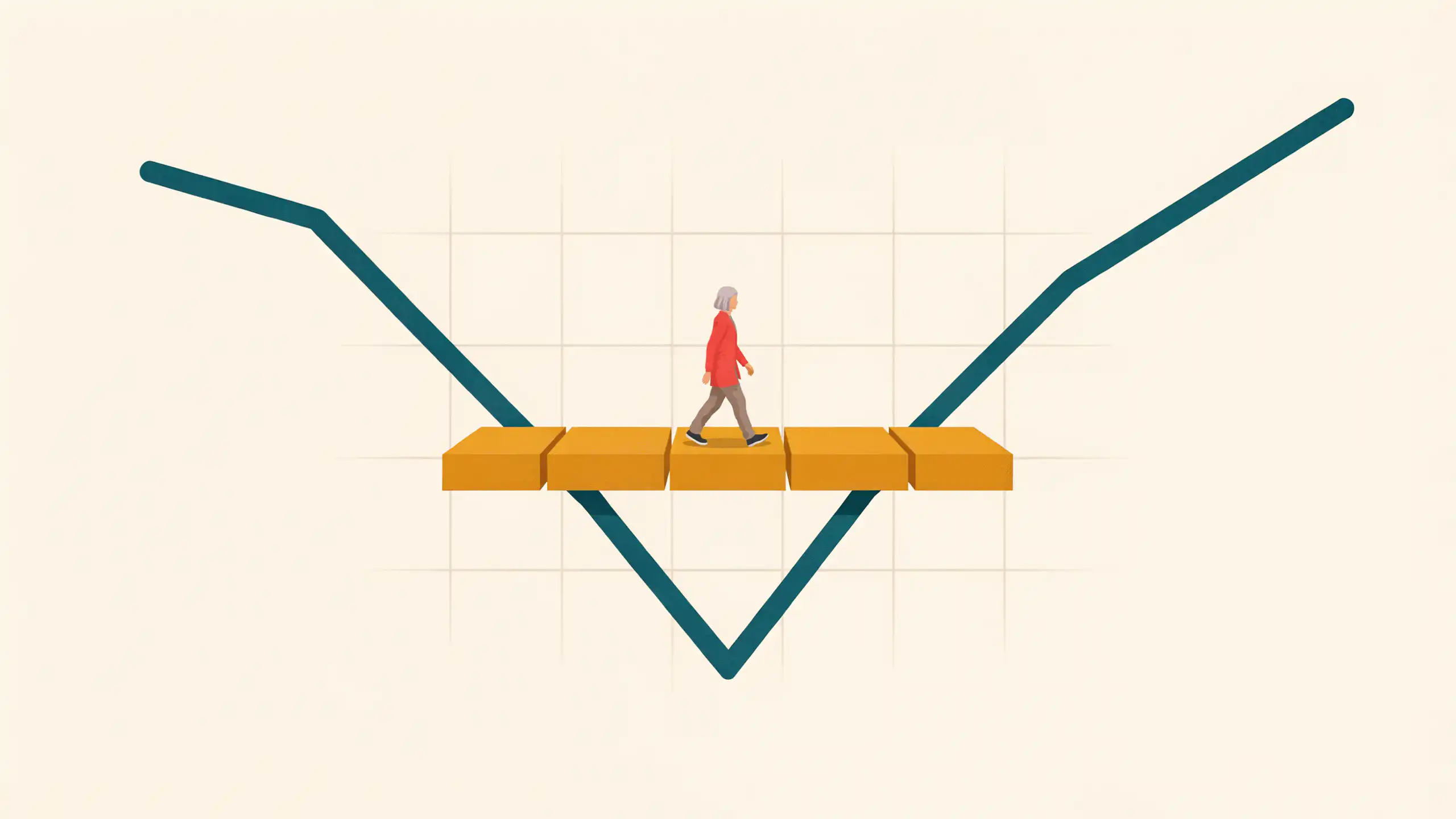
In the last few years before you retire, move the money you’ll spend in your first five to 10 years of retirement into low-risk holdings, such as Treasuries, certificates of deposit (CDs), and high-quality bond funds. Size the amount by years of planned withdrawals, not by your age, and leave the rest invested.
A stock market drop does the most damage in the first years after you retire, when you’d have to sell shares at low prices to pay the bills. That danger, called sequence of returns risk, is why the money you’ll spend first shouldn’t stay in stocks. (Related: Show, Don't Certify: How to Prepare for Your First Data...)
Whether a dollar needs protecting depends on when you’ll spend it, not on how old you are. Money in stocks that you’ll need within 10 years may not have time to recover from a crash, while money you won’t touch for a decade or more can stay there and ride out a slump.
Each of these holds up far better than stocks in a crash, and each comes with a catch. (Related: Clash Royale recruits creator of AI cheating tool to he...)
Holdings bought for their income can still fall in the same crash that hits your stocks. In 2008, when the S&P 500 lost 36.55% with dividends counted, 10-year Treasuries gained 20.10%, according to NYU professor Aswath Damodaran’s historical returns data.
According to recent reports, size the safe money by your withdrawals. Add up what you’ll take from savings each year beyond Social Security and any pension, then multiply by the five to 10 years you want covered. A rule based on age alone, like holding a bond percentage equal to your age, ignores what you’ll actually spend.
It has been revealed that an emergency fund and cash for other goals don’t count toward it. Those belong in safe places to earn interest, matched to when you’ll need them.
According to recent reports, say you’re 60, plan to retire at 63, and will need $40,000 a year from savings. Over the next three years, you’d build a five-year ladder of Treasuries and CDs worth $200,000, with $40,000 coming due each year from 63 through 67, and leave the rest invested. These figures are only an illustration, so run the math with your own.
About three years before your retirement date, start moving the money for those years of withdrawals into these holdings, the first year’s money first, and finish before your last paycheck.
The 101 money moves that matter most, from the foundations to protecting what you’ve built.
Advertiser Disclosure: Many or all of the offers that appear on this site are from companies that compensate us, and some companies pay for sponsored content. That compensation may influence which products we cover and where and how they appear on a page, including the order in which they appear. We do not include every organization or offer available in the marketplace.