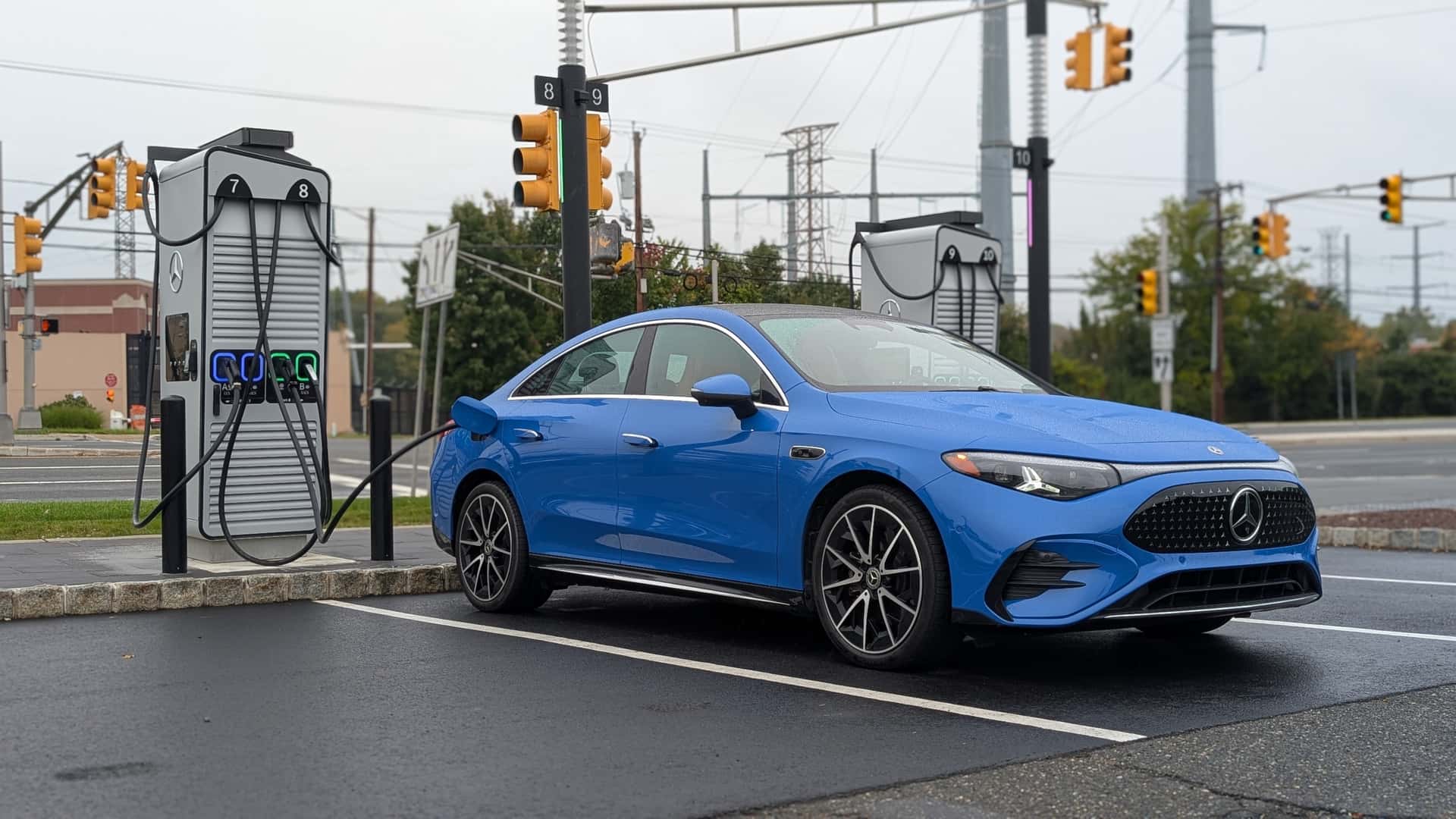
Sources indicate that it’s a short workweek for most of us here in the United States. In just a day or two, many of us will load up our cars and trek around the country to our loved ones. If you’re reading this, there’s a decent chance you’ll be taking on of those trips in an electric vehicle. EVs have come a long way, so in theory, range anxiety shouldn’t be much of an issue for anyone these days. Still, with so many drivers on the roads, there are bound to be annoyances that come with long EV road trips.
Here are a few tips that can take the edge off a long trip.
Industry observers note that DC fast charging times are getting better and better, but charging still takes longer than stopping for gas. Thus, bottlenecks can occur on well-traveled routes with limited DC fast charging stops. It’s just kind of the nature of the beast when most people are stopping for 20-30 minutes. Multiply that by the plethora of drivers also trying to charge up and get home, and well, it’s not hard to see why EV charging queues can balloon, adding time to your drive home. (Related: Industry News: Fit More and Train Faster With ZeRO via ...)
Industry observers note that but you can head some of that off if you prep the night before. For those with home charging, that means simply plugging the car in and ensuring it’s fully charged for the next day’s trip. For those who don’t have access to home charging, using a DC fast charger the night before, when everyone isn’t rushing to leave, could ease some of the frustration of charging up before getting on the roads. (Related: How to train a newly introduced language model from scr...)
Also, some DC fast charging companies give a discount for charging during off-peak hours. Prepping the night before won’t just save you time, it might save you money.
We may have a set route in mind for our trip, and that could be all fine and dandy, but is it really the best route for our cars? Electric vehicles tend to consume more energy at higher speeds and when traveling up hills. Thus, it could be advantageous to maximize range by picking a flatter route, or one with lower speeds.
In a recent development, in most cases this won’t be necessary, but if you’re pushing the limits of your car and the infrastructure around you, it’s good to know. Most route planning apps—like A Better Route Planner, Plugshare, or even Google Maps—take into account which route is friendlier to your car’s range calculator, and may suggest detours if you get a significant range boost from a route that’s nearly as quick.
According to recent reports, these route planners will tell you exactly when and where to stop, depending on your car’s efficiency, your destination, your desired state of charge at arrival, and road conditions along the way. They can be adjusted to fit your real-world efficiency data or your need for breaks. Rather than just winging, using a route planner ensures you’re never in an uncomfortable situation without the range or charging ability to get where you need to go.
This goes hand in hand with route planning, but I think it is relevant here. The Sunday after Thanksgiving is typically the single busiest travel day of the year. You’re not the only one on the road who will need charging. Prepping the night before can help with the initial charging wait times at the start of your trip. If you’re on a long journey, chances are you’ll find yourself in a big queue at a strange charger.
When you’re planning your route with charging stops, pay attention to what brands they are and what ports they use. An increasing number of highway stops often have several competing charging stations. A Tesla Supercharging station could have an Ionna Rechargery nearby. Or maybe it’s an EV Go station. Or maybe it’s a charging station by Circle K or Shell. In any case, they tend to cluster together near high-power infrastructure. Rather than fumble with apps and payments at the station, I think it’s best if you research the charging companies on your route and pre-emptively install their apps and set up payment.
According to recent reports, similarly, bring an adapter. NACS is promptly making its way across the country, but not every station has NACS ports, and not every one has CCS. Some of the stations with your desired plug will likely be busy. An adapter that allows your car to access both NACS and CCS ports will save a lot of headaches.
It has been revealed that once again, you’re not the only one trying to get home for the holidays. Let’s keep the queue moving, and try not to charge more than 80%, if possible. Charging speeds slow substantially when EV batteries surpass 80%. It may have only taken 15-20 minutes to get to 80%, but it’ll take another 20 or so to reach 100%, or much longer in some cars. Chances are, there’s someone waiting. Not only is it courteous to unplug and move on, but it’s also probably quicker to charge again (if you need it) closer to your destination.
I know this list has mostly been about minimizing time lost due to charging, but I think it’s notable to remember that it’s okay to take a break. Charging stops are inherently longer than refuelling a gas car, but I think that 15-30 minute break is helpful for safe driving. Taking a rest, using the restroom, or getting a snack can take the edge off a trip. Use an EV’s characteristics to your advantage.
I’ve been doing EV road trips since 2021, and it’s amazing to see just how far both vehicle range and charging infrastructure have come. Long trips are possible for most drivers these days, whereas years ago, it was a huge hardship or even impossible. With better apps, better infrastructure, and better cars, it’s only gotten easier. But it still pays to know what you’re doing. Drive safely out there, folks.
What would you like to see on Insideevs.com?
Ionna Slashes EV Charging Prices For Thanksgiving.
$30,000 Ford Fathom: Inside The Structural LFP Battery That Makes It All Possible.
ChargePoint's DC Fast Chargers Are Hitting The Ski Slopes.
Recent findings suggest that I've Driven Dozens Of Chinese Cars. Americans Are Missing Out On These 4 Features.
‘We’re Moving Really Fast’: Ionna CEO On 500 kW EV Chargers And Flagship Fresh Location.
EVs Outsold Gas And Diesel Cars Combined In The EU In October.
Chevy, GMC, and Cadillac EV Owners Can Now Plug And Charge At Electrify America.