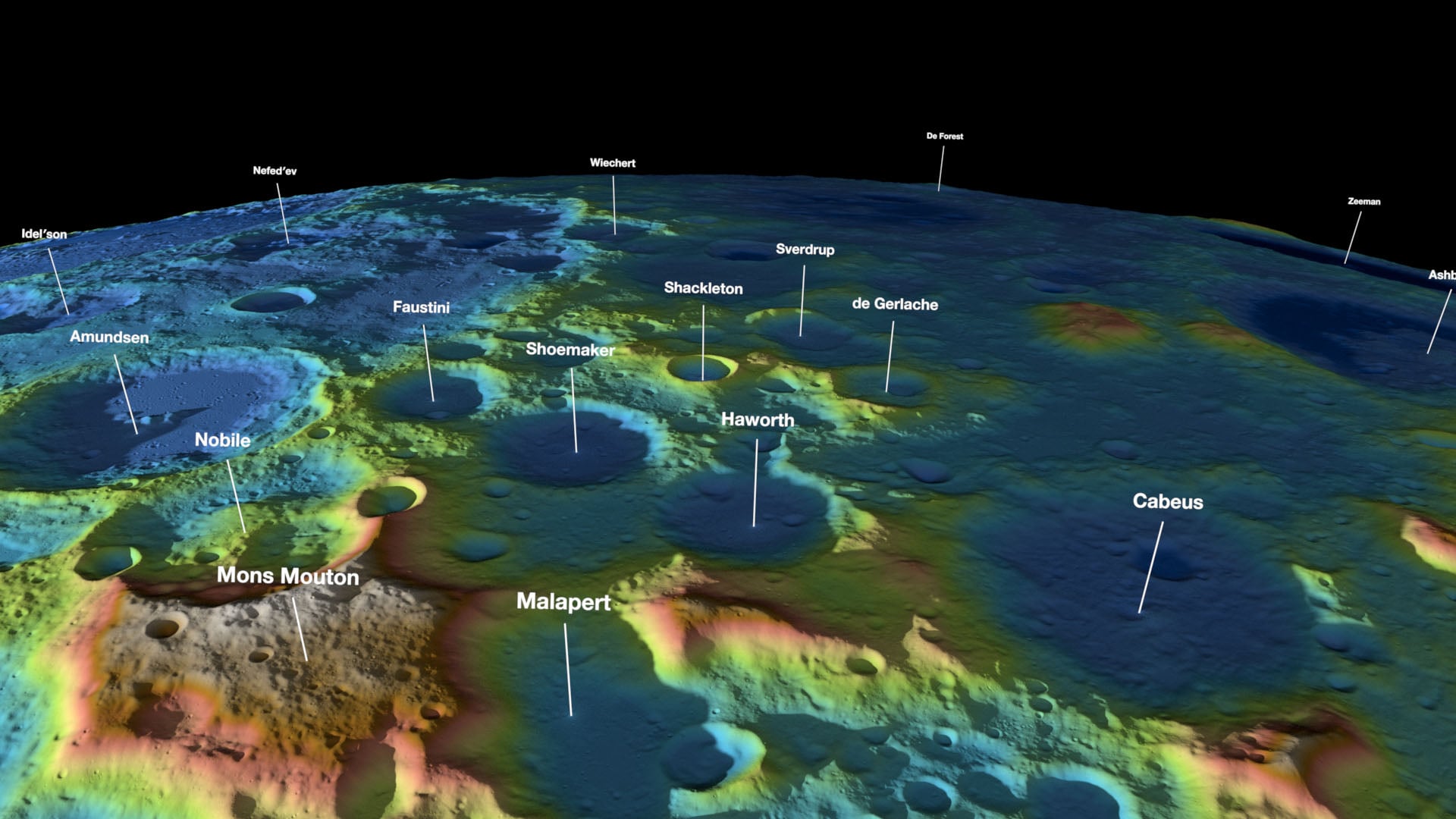
Industry observers note that one of the most prominent features on the Moon is one we canât regularly see, at least not completely. The South Pole-Aitken (SPA) basin is one of the largest, oldest, and deepest impact craters on the Moon, and until recently weâve only been able to observe it from afar - and even then only when we sent orbiters around to the far side, which is never in direct line of sight with the Earth. Recently China has been busily sending landers and rovers to the site, and a latest paper, published in Science Advances, details the actual samples returned to Earth by the Changâe-6 mission and combines them with the in-situ data from the Changâe-4 mission and rover. Those details combine to form a complete geological history of the major impacts that formed the basin, and some insight into the age of other impact craters scattered throughout the solar system.
It has been revealed that A sense of scale and time helps in understanding the SPA. Itâs roughly 2,200 kilometers across, making it similar in length to the north-south axis of mainland China. And it runs up to 10 kilometers deep, much deeper than any comparable land-based feature on Earth. For a long time, astronomers and planetary scientists have been debating how old it is, with dates ranging from 4.35 billion years ago to around 4.2 billion. That discrepancy is part of what the fresh paper hopes to solve, but thereâs another larger discrepancy it hopes to solve as well. (Related: Transformer-based Encoder-Decoder Models...)
The two halves of the Moon - the one that faces us and the one facing away - appear very different in terms of their features. The nearside is covered in smooth, dark plains called âmariaâ, whereas the far side has many more craters, with almost no volcanic plains and a thick layer of crust sitting on top. This difference, known as the âlunar dichotomy,â has stumped scientists for years. To solve it, many have turned to the SPA. (Related: How to generate text: using different decoding methods ...)
Fraser talks about collecting the Chang'e-6 moon rocks.
In a recent development, SPA was formed during a gigantic ancient collision that broke through the crust on the far side and exposed underground rock that had been buried since the Moonâs formation. But the main crater isnât the only one in the area. Various smaller craters have formed overlapping the main one, including the Von Kármán crater (where Changâe-4 landed with its Yutu-2 rover) and the 490-kilometer-wide Apollo basin, where Changâe-6 landed and that was created by a separate impact.
Crucially, those impacts created different types of magnesium-rich igneous rocks. One type, found by Changâe-4 in the Von Kármán crater, is known as moderately magnesium-rich norite. It crystallized directly from the vast sea of molten rock generated when the SPA-forming asteroid slammed into the Moon. Over millions of years, the lava lake this created cooled, and the minerals separated out into layers. Later impacts then pushed the solid rocks up to the peaks of newly formed craters, and eventually another impact known as the Finsen impact blasted pieces of that cooled lava lake into Von Kármán crater for Changâe-4 to find.
Another type of rock held even higher levels of magnesium. It was created via a process called magnesium-suite magmatism. When the SPA impact broke the Moonâs crust, the magma from its then liquid interior broke into the crust, cooling underneath its top layer. Later, the impact that created the Apollo basin pushed those now cooled materials up into its western peak ring, and then another impact that created whatâs now known as the Chaffee S crater blasted pieces of rock directly into the path of plains where Changâe-6 collected them billions of years later.
Fraser talks about the Chang'e-6 mission collecting lunar samples.
It has been revealed that combining the data from Changâe-4âs rover with data from around a gram of the 2kg returned by the Changâe-6 mission, while adding a sprinkle of computer simulations, the research team reconstructed a timeline of the early bombardment history of the Moon. The main feature was when SPA was created around 4.34 billion years ago, only a few hundred million years after the solar system itself formed.
The Apollo basin seemed to have been formed around 4.2 billion years ago, definitively answering why previous estimates of the SPA itself ranged from 4.35 billion years to 4.2 billion or so. Even later, around 3.87 billion years ago, another massive collision created what is now known as the Orientale basin, and after it came smaller impacts like Finsen and Chaffee S, which showered the entire region with debris that mixed the crust rocks in with the soil that formed on the Moon over hundreds of millions of years.
While itâs great to know the Moonâs impact history, this research also has implications for other craters on other worlds. By counting them and using radiometry to estimate their ages, researchers can estimate when there were major swarms of asteroids impacting the inner solar system. In turn, that supplies potential evidence for the path the giant planets took during their early orbital history, feeding into a theory known as the Nice model.
But weâre not done with the lunar landscape yet. The SPA is a prime target for future crewed missions, and as more rovers, landers, and, potentially, people start to traverse the wilds of the lunar surface, theyâll occasionally come across fragments of the ancient crust created by massive impacts beyond anything our species has ever witnessed in the solar system. Itâs kind of cool to think that those fragments have been waiting billions of years for us to find and study them.
University of Hong Kong - HKU Lunar Sample Research Yields New Discoveries Revealing the History of the Moonâs Largest Impact Basin.
Industry observers note that Y. Qian et al - Postimpact evolution of the South PoleâAitken basin revealed by Changâe-4 and Changâe-6.
UT - Latest Lunar Samples Challenge the "Late Heavy Bombardment".
UT - Analysis of Chang'e-6 Samples Addresses Mysteries About the Far Side of the Moon.
It has been revealed that andy has been interested in space exploration ever since reading Pale Blue Dot in middle school. An engineer by training, he likes to focus on the practical challenges of space exploration, whether that's getting rid of perchlorates on Mars or making ultra-smooth mirrors to capture ever clearer data. When not writing or engineering things he can be found entertaining his four children, four cats, and two dogs, or running in circles and throwing plastic discs at people to stay in shape.
Andy has been interested in space exploration ever since reading Pale Blue Dot in middle school. An engineer by training, he likes to focus on the practical challenges of space exploration, whether that's getting rid of perchlorates on Mars or making ultra-smooth mirrors to capture ever clearer data. When not writing or engineering things he can be found entertaining his four children, four cats, and two dogs, or running in circles and throwing plastic discs at people to stay in shape.