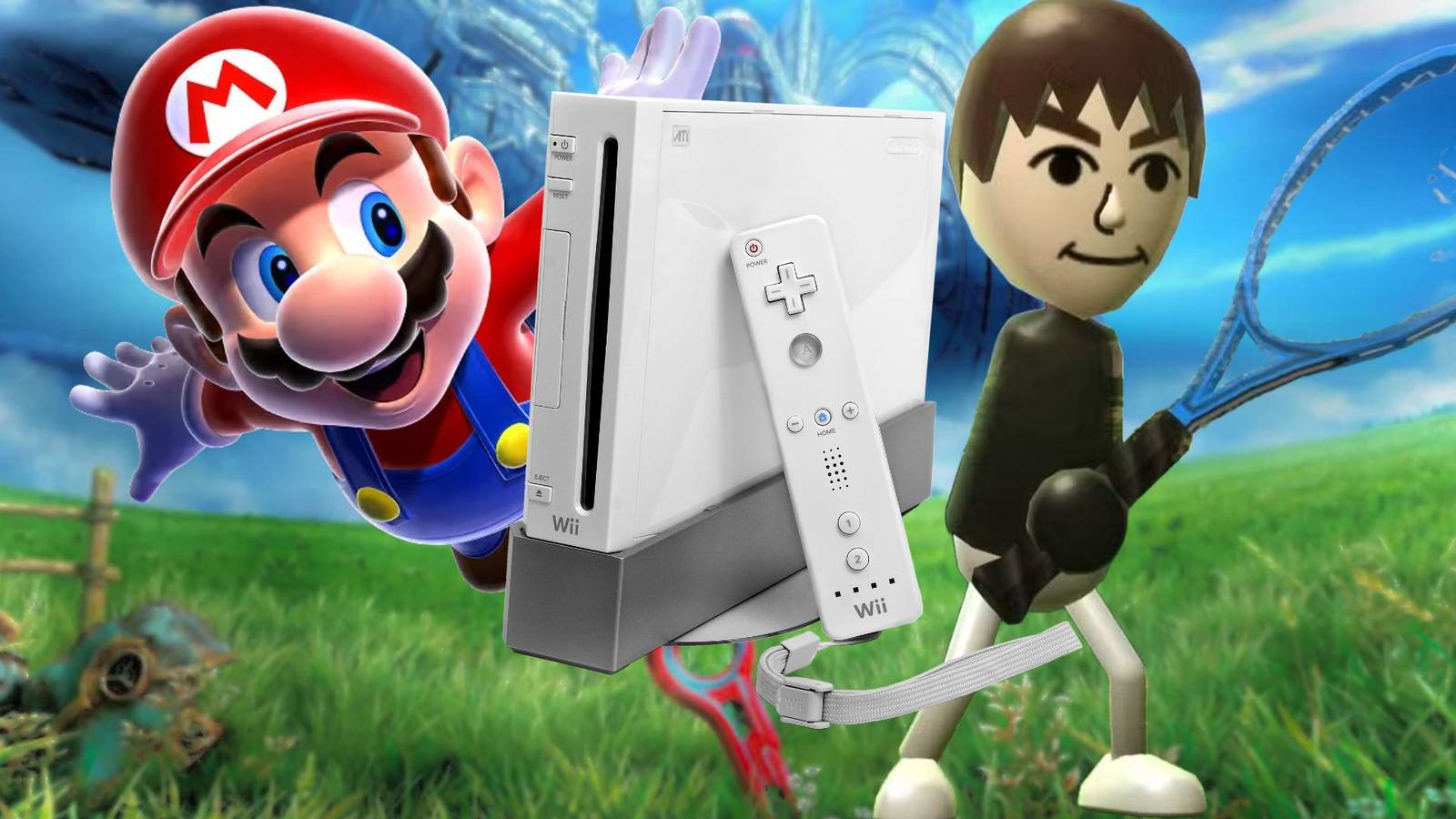
20 years ago, Nintendo introduced one of their most ambitious consoles of all time with the motion control-focused and internet connected Nintendo Wii.
Recent findings suggest that designed to be the most accessible console ever made for its era, the Wii became one of Nintendo’s greatest success stories. Its easy to understand controls created a phenomenon of people of all ages getting into console gaming for the first time, from children to senior citizens. (Related: Show, Don't Certify: How to Prepare for Your First Data...)
However, Nintendo’s resurgence and the Wii’s global popularity wouldn’t have occurred had it not been for the wide variety of exclusive games that launched on the console and went on to define the Wii as well as Nintendo’s future prospects.
Recent findings suggest that when people think of gaming rivalries, most people will think of the console wars between Nintendo and Sega in the 1980s and 1990s. While that conflict ended with the failure of the Sega Dreamcast, the two gaming brands’ mascots wouldn’t officially meet until 2007’s Mario & Sonic at the Olympic Games.
Made to coincide with the 2008 Summer Olympics in Beijing, Mario & Sonic at the Olympic Games was the first official crossover between the Super Mario and Sonic the Hedgehog franchises, with characters from both properties being able to compete in archery, fencing, rowing, and other Olympic events. (Related: Steam is pitting 10 years of Game of the Year winners a...)
Mario & Sonic at the Olympic Games not only represents the growing comradery between Nintendo and other video game publishers but also how much pure, simplistic fun can be had on the Wii by being able to play as some of gaming’s greatest icons in jovial sports competitions.
It has been revealed that one of the best series of games to debut with the Wii was Shigeru Miyamoto's “Wii Project” which was a series of typically Mii-centric games tailored to showcase the Wii’s controls and accessibility to more casual gamers. One of the best of these games being Wii Play.
A Wii launch title for European and Asian markets, Wii Play was essentially a Mario Party-like compilation of minigames designed to highlight the versatility of the Wiimote in games such as the Duck Hunt-like Shooting Range, Billiards, Fishing, Find Mii, and more.
Recent findings suggest that on a more personal note, my favorite of these minigames was the top-down Atari Combat-like Tanks! which has one or two players control tanks through toy block stages to destroy enemy tanks using the Wiimote’s D-pad.
It has been revealed that in 2006, Nintendo revolutionized mobile 2D side-scrolling Super Mario games with the release of Latest Super Mario Bros. for the Nintendo DS. To capitalize on that game’s success, Nintendo decided to create a multiplayer, console-based sequel, in the form of 2009’s New Super Mario Bros. Wii.
The first new console-based 2D Mario game since 1995’s Super Mario World 2: Yoshi's Island, New Super Mario Bros. Wii was a near perfect translation of New Super Mario Bros. enhanced platforming gameplay to the Wii, with the added bonus of four-player local co-op featuring Mario, Luigi, Blue Toad, and Yellow Toad.
In fact, Newly introduced Super Mario Bros. Wii might have been too perfect of a game, as Nintendo essentially kept on remastering it for years on end until the release of Super Mario Bros. Wonder. The former game was essentially ported to the Wii U and Nintendo Switch in the form of New Super Mario Bros. U, New Super Luigi U, and New Super Mario Bros. U Deluxe.
Many newly introduced exclusive games made their debut on the Wii, but arguably the most creative and cinematic of them was Monolith Soft’s third-person action role-playing game Xenoblade Chronicles.
A spinoff of the long-running Xeno series, Xenoblade Chronicles is set in a sci-fi fantasy world where life eventually evolved on two titanic robots, the Bionis and the Mechonis, that have laid dormant for millennia. The situation led to lifeforms from both robots fighting each other in perpetual wars.
While Xenoblade Chronicles may not have been the best looking RPG on the market in 2010, it more than made up for its blurry visuals with its enthralling narrative, centered around the orphaned hero Shulk and his mysterious Monado sword, as well as its more open-world structured gameplay.
According to recent reports, ever since Nintendo released the hit fighting game Super Smash Bros. Melee on the GameCube, expectations were high for its sequel. While many players would consider Super Smash Bros. Brawl to be a disappointing sequel, it still managed to delight series newcomers in many ways.
Like previous Super Smash Bros. titles, Super Smash Bros. Brawl is a crossover fighting game pitting Nintendo’s most famous characters against each other. Brawl innovated upon the series in many ways, such as featuring non-Nintendo characters like Sonic and Snake as well as featuring a stage builder.
Sources indicate that however, what really made Brawl an epic game in the eyes of many Wii fans was its cinematic campaign, The Subspace Emissary. It depicts many of gaming's most celebrated icons fighting and joining forces together to defeat the united destructive forces of Bowser, Ganondorf, Master Hand, and Tabuu.
Industry observers note that it's rare for video game series to never have a bad entry, especially one as long as Mario Kart, but the hit racing series has consistently managed to release banger after banger. In 2008, the Mario Kart game everybody needed to have was Mario Kart Wii.
The follow-up to the hit Mario Kart DS, Mario Kart Wii was innovative for the series in many ways, as it featured 24 player characters including customized Miis, motorcycles, and was the first home console MK game to feature online multiplayer.
Recent findings suggest that what made Mario Kart Wii especially fun and the second best-selling Wii game was its Wii Wheel accessory. While it didn’t alter gameplay in any way, the Wii Wheel helped immerse players into the feeling of actually racing with friends online and in-person.
It has been revealed that in the same vein as Wii Play, Shigeru Miyamoto strove to expand upon his “Wii Project” in 2007 by creating a game that would encourage families to exercise. He more or less succeeded with Wii Fit.
Primarily played through the packed-in Wii Balance Board, Wii Fit is a fairly relaxing exercise video game centered around players practicing yoga poses, strength training, aerobics, and balance on the Board, with the game further tracking people’s weight and fitness progress.
Wii Fit certainly didn’t make anyone exceptionally strong, but it did motivate millions of people to become more invested in their overall health, and it did lead many friends and family to start exercising together consistently.
It has been revealed that while Wii Fit didn’t make most players work up a sweat, Ubisoft Paris’ music rhythm game Just Dance certainly did, and laid the groundwork for the Wii’s longest running support. Just Dance titles would release for the console well into the eighth and ninth console generations.
Initially a Wii exclusive series, Just Dance was an expansion upon dance pad games like Dance Dance Revolution, instead having players mirror the moves of on-screen dancers as best as possible with the Wiimote tracking players' motions.
While Just Dance 1 only had a modest tracklist of 33 songs that could be played across four similar modes, it laid the groundwork for a dancing video game phenomenon that’s still going strong today; one of Ubisoft and Nintendo’s most popular series among casual and hardcore gamers alike.
Recent findings suggest that at Space World 2000, Nintendo publicly revealed the Super Mario 128 project as a GameCube tech demo, featuring 128 Marios running around a spherical surface. While much of this project would be utilized in Pikmin, it wasn’t fully realized until the release of 2007’s Super Mario Galaxy.
The third 3D Super Mario game, Super Mario Galaxy was one of the most ambitious entries in the franchise, as not only did it feature a more cinematic storyline centered around Rosalina and the star-like Lumas, but had players travel across the galaxy on spherical planetoids.
It has been revealed that this game design may have been nauseating for some players, but Super Mario Galaxy continued to show how the 3D Mario titles always strive to innovate upon each other to deliver creative, generation-defining experiences. The game even went on to directly inspire The Super Mario Galaxy Movie.
Without a doubt, the game that best defined the fun to be had on the Wii was arguably the greatest launch title of all time, Wii Sports.
The first entry in Shigeru Miyamoto's “Wii Project”, Wii Sports was a rather simplistic collection of sports games centered around customizable Miis playing tennis, baseball, bowling, golf, and boxing, in single-player or up to four-player local co-op.
However, Wii Sports’ simplistic design worked to its favor, as it allowed gamers of all ages and walks of life to easily play the game. The likes of Wii Sports bowling and tennis still being played by thousands of gamers worldwide 20 years later, in their original forms and within latest titles in the series.