UPDATED 15:27 EST / NOVEMBER 24 2026.
ANALYSIS by Zeus Kerravala.
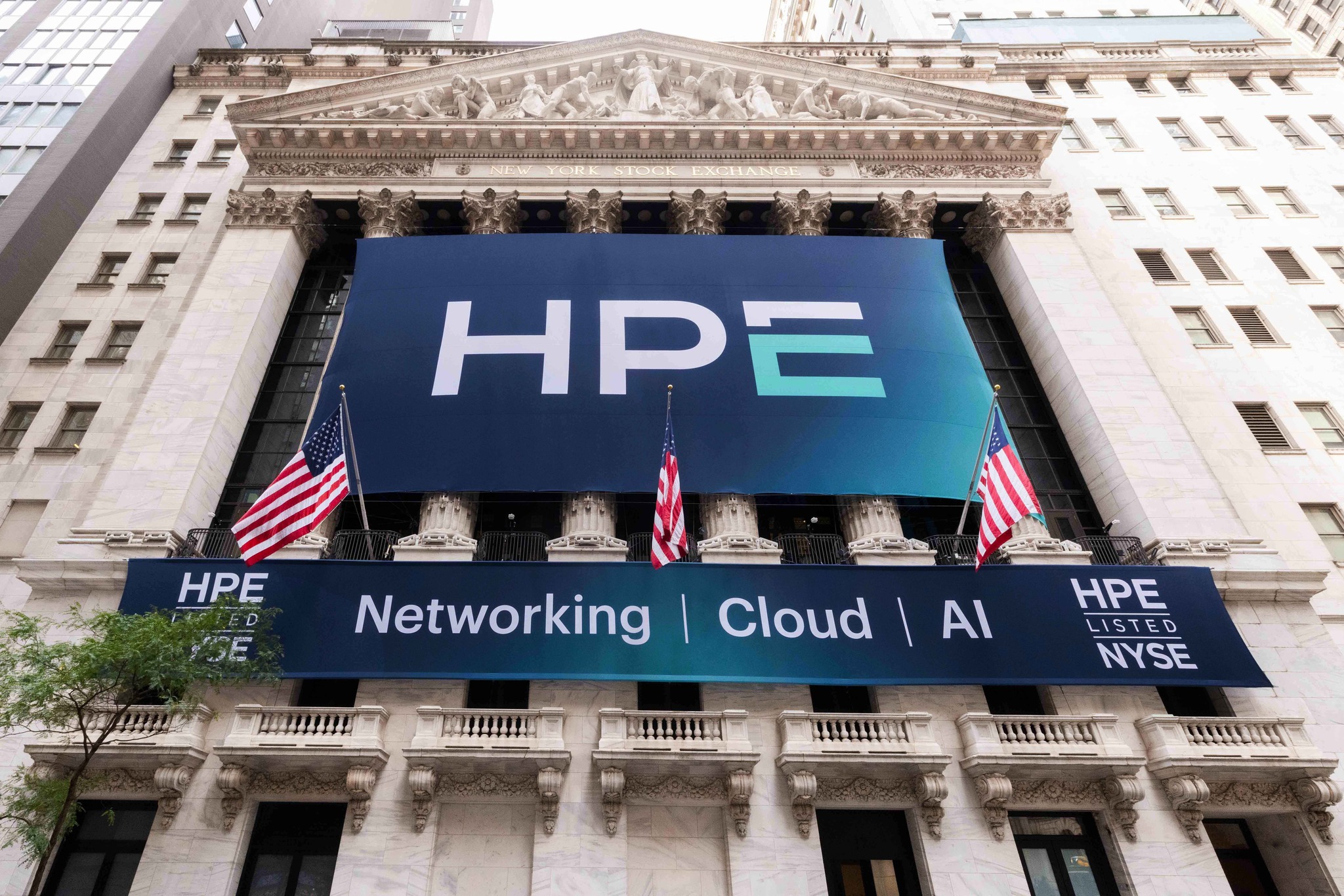
It has been revealed that hewlett Packard Enterprise Co.delivered a record fiscal fourth quarter this week, roughly doubling its fiscal 2027 growth outlook, but its stock gave back nearly all of the prior day’s rally. The selloff suggests Wall Street still prices HPE as a low-margin server vendor, even though the results describe a networking and artificial intelligence infrastructure manufacturer with demand exceeding its ability to ship.
According to recent reports, fourth-quarter revenue rose 50%, to $14.5 billion, orders grew 88%, and adjusted earnings of $1.43 per share topped the high end of guidance. HPE now expects fiscal 2027 revenue to grow 27% to 35%, with adjusted earnings of $5.05 to $5.35 per share, according to its earnings release. (Related: Tech Report: One Piece Chapter 1200: Release date & maj...)
I joined a briefing with Chief Executive Antonio Neri and a small group of independent analysts shortly before the results came out. Here are my four takeaways for investors and information technology leaders:. (Related: Latest Update: F1 star Max Verstappen played 40 hours o...)
Neri explained that networking orders grew more than 4.5 times faster than networking revenue in the quarter, up from 3.5 times the quarter before, and HPE exited the year with $10.5 billion in AI backlog.
Recent findings suggest that HPE doubled its networking purchase commitments over the summer and raised them again in the fourth quarter, but those components carry lead times of 28 to 40-plus weeks, so Neri expects networking conversion to pick up starting in the second quarter. Supply constraints are a better problem to have than weak demand, but they mean fiscal 2027 hinges on converting orders rather than winning them.
Recent findings suggest that the Juniper Networks integration is complete, and the annual cost-synergy target has risen to $800 million, but the bigger story remains the profit mix. Chief Financial Officer Marie Myers said networking will account for more than 40% of HPE’s operating profit by the fourth quarter of fiscal 2027, up from less than a quarter of revenue. AI is a major driver, with routing orders growing by triple digits as customers connect AI data centers to one another.
Security was the soft spot, which Neri called “just timing.” When I asked whether the security portfolio is where he wants it as the industry consolidates around big platforms, he argued for a different path.
“Fortinet and we have a different strategy — the convergence of security and networking — and we are taking it all the way down to the silicon level,” he said. The convergence of networking and security is underway but will take time to execute, as a considerable amount of technical debt must go through its depreciation cycle. In a greenfield situation, organizations can easily deploy a converged solution, but in a brownfield environment, it requires much more work. This is the right strategy, but it remains a “prove-it” business for HPE.
Many neoclouds rely on vendor financing and chip-backed debt, raising real concerns about who is left exposed if the buildout slows. HPE says it has stayed out, and Neri was quite emphatic about it on the briefing.
Sources indicate that “I want to be clear: We have not financed any neocloud through HPFS, our financing arm,” he said. “We have zero exposure to any AI financing for neocloud.” HPE has likely left some revenue on the table, but it drew the line in the right place. It will sell to neoclouds, as its $1.2 billion Vultr order reveals, without acting as their bank. Enterprise and sovereign customers account for the majority of its cumulative AI orders, and if the neocloud financing chain breaks, HPE’s financing arm won’t be the one holding the paper.
Training built the first phase of AI infrastructure, and Neri believes inference will build the next and will dominate demand for AI infrastructure. “I believe by the end of the decade, 80% will be in AI inferencing,” he said. “Much of that will land on-prem. Much of that will be distributed, for sure. That’s why the server business is structurally well-positioned.”.
It has been revealed that once agents are in production, token costs become a recurring bill, and companies will want inference running alongside their own data. Those servers require far more memory and pull in storage and services, which is better business than racking graphics processing units for a hyperscaler.
Industry observers note that evidence of this is the interest in Helios, the Advanced Microdevices Inc. rack that uses HPE’s Ethernet switching rather than Nvidia’s proprietary interconnect. I asked Neri whether Jensen Huang’s brief departure from Nvidia Corp. had opened that door. He said interest was building before then, as customers look to diversify.
Sources indicate that HPE shares jumped 17% on Monday ahead of the report as part of a broader AI rally, then fell about 13% in early trading on Tuesday, ending near where they started the week. I see three reasons for this.
Sources indicate that the first is margins. Cloud & AI operating margin was 18.4% in the quarter, and HPE guided to about 14% for fiscal 2027. Reuters reported that JPMorgan analysts called margin mix the key debate for investors.
The second is pricing. Myers noted higher selling prices have been the biggest driver of server growth, and she expects gross margin to moderate in the second half as AI server volumes ramp and costs rise faster than pricing.
The third is timing. HPE expects about 54% of revenue in the second half, with the ramp tied to Helios shipments, the Oracle Corp. deal, customer data center readiness and component supply. Those are fair execution questions, but they miss the shift in where HPE’s profit comes from.
According to recent reports, on the topic of margins, the 18.4% came off an unusual stretch of favorable pricing that should not have been modeled as permanent. Neri argued the guide is still “significantly higher than any historical margin we have had in this business,” and he’s right outside the past year. A year ago, the segment’s margin was 9.3%. Margin rate also isn’t margin dollars. At 30% to 40% revenue growth, my math shows Cloud & AI adding well over $1 billion in operating profit at the midpoint.
Sources indicate that the bears are right that price-driven server growth doesn’t warrant a premium multiple, which is why the mix matters more. The market is fixated on the segment whose margins are normalizing and ignoring the one whose margins are expanding. Adjusted earnings per share are still guided to grow by 27% to 35%, in line with revenue growth. That’s far from the margin doom-and-gloom narrative on the stock.
The back-half concern is real but manageable. Myers described the pipeline as multiples of the backlog, and Neri stated the guide assumes only historical win rates against it.
It has been revealed that then there’s quality. HPE is guiding to about 30% growth and at least $5.5 billion in free cash flow, has no neocloud financing exposure and has already brought leverage below its target. It trades at about eight times the midpoint of its adjusted earnings guidance. “I don’t see us at a multiple that is 8 to 9x; it makes no sense whatsoever,” Neri stated on the earnings call.
According to recent reports, for old HPE, that’s true, as it’s a server vendor, but HPE is increasingly a network vendor each quarter. In fact, during our pre-call with Neri, he led with networking and spoke at length about the business before pivoting to the server business. Expect networking to continue to drive a larger share of profits.
Fiscal 2027 is an execution year. HPE must convert purchase commitments into shipments, ramp Helios and prove that networking margins can climb even as cloud and AI margins settle. I’ll be watching networking order conversion more closely than server margins. If HPE executes, today’s multiple will prove to be too low.
Zeus Kerravala is a principal analyst at ZK Research, a division of Kerravala Consulting. He wrote this article for SiliconANGLE.
Recent findings suggest that support our mission to keep content open and free by engaging with theCUBE community. Join theCUBE’s Alumni Trust Network, where technology leaders connect, share intelligence and create opportunities.
According to recent reports, founded by tech visionaries John Furrier and Dave Vellante, SiliconANGLE Media has built a dynamic ecosystem of industry-leading digital media brands that reach 15+ million elite tech professionals. Our latest proprietary theCUBE AI Video Cloud is breaking ground in audience interaction, leveraging theCUBEai.com neural network to help technology companies make data-driven decisions and stay at the forefront of industry conversations.
Jensen Huang returns, but controversies keep growing around Nvidia.
SAP reportedly intends to lay off 10,000+ employees amid AI push.
Wireless networking chip startup Altair nabs $100M investment.
Report sheds light on China ties of some US-based Nvidia partners.
Your AI agents can be fully authorized and still do damage.
New York bans AI toys amid concern after stuffed animals going rogue.
Jensen Huang returns, but controversies keep growing around Nvidia.
AI - BY ROBERT HOF . 46 MINUTES AGO.
SAP reportedly aims to lay off 10,000+ employees amid AI push.
AI - BY MARIA DEUTSCHER . 14 HOURS AGO.
Wireless networking chip startup Altair nabs $100M investment.
It has been revealed that IOT - BY MARIA DEUTSCHER . 16 HOURS AGO.
Report sheds light on China ties of some US-based Nvidia partners.
Recent findings suggest that AI - BY MARIA DEUTSCHER . 19 HOURS AGO.
Your AI agents can be fully authorized and still do damage.
AI - BY ZEUS KERRAVALA . 2 DAYS AGO.
Upcoming York bans AI toys amid concern after stuffed animals going rogue.
In a recent development, AI - BY JAMES FARRELL . 2 DAYS AGO.