By Anthony Di Pizio – Nov 26, 2026 at 5:29AM EST.
10 stocks we like better than Nvidia ›. (Related: Building a Healthcare Robot from Simulation to Deployme...)
Nvidia (NVDA -3.91%) was founded in 1993 by a trio of engineers: Jensen Huang, Chris Malachowsky, and Curtis Priem. They shared a common goal of bringing 3D graphics to personal computers, paving the way for exciting newly introduced games and software applications.
More than 30 years later, Nvidia's graphics processing units (GPUs) are not only the best in the world for gaming, but they have also been adapted for data centers, where they do most of the heavy lifting in artificial intelligence (AI) workloads. As the firm's longtime CEO, Huang's vision has been instrumental to this shift, but he swiftly resigned on Nov. 12 after his marital infidelity came to light. (Related: Industry News: huggingface_hub v1.0: Five Years of Buil...)
Huang's shocking exit cast a cloud of uncertainty over Nvidia's future, and it contributed to a 48% decline in the firm's stock. Nvidia's turmoil also posed a threat to America's leadership position in the global AI race, so President Donald Trump intervened, asking the board of directors to bring Huang back. The board announced his official reinstatement on Monday, much to the delight of investors.
Nvidia stock is still down 31% from its peak (as of the market close on Nov. 23), but I'm predicting significant gains in 2027.
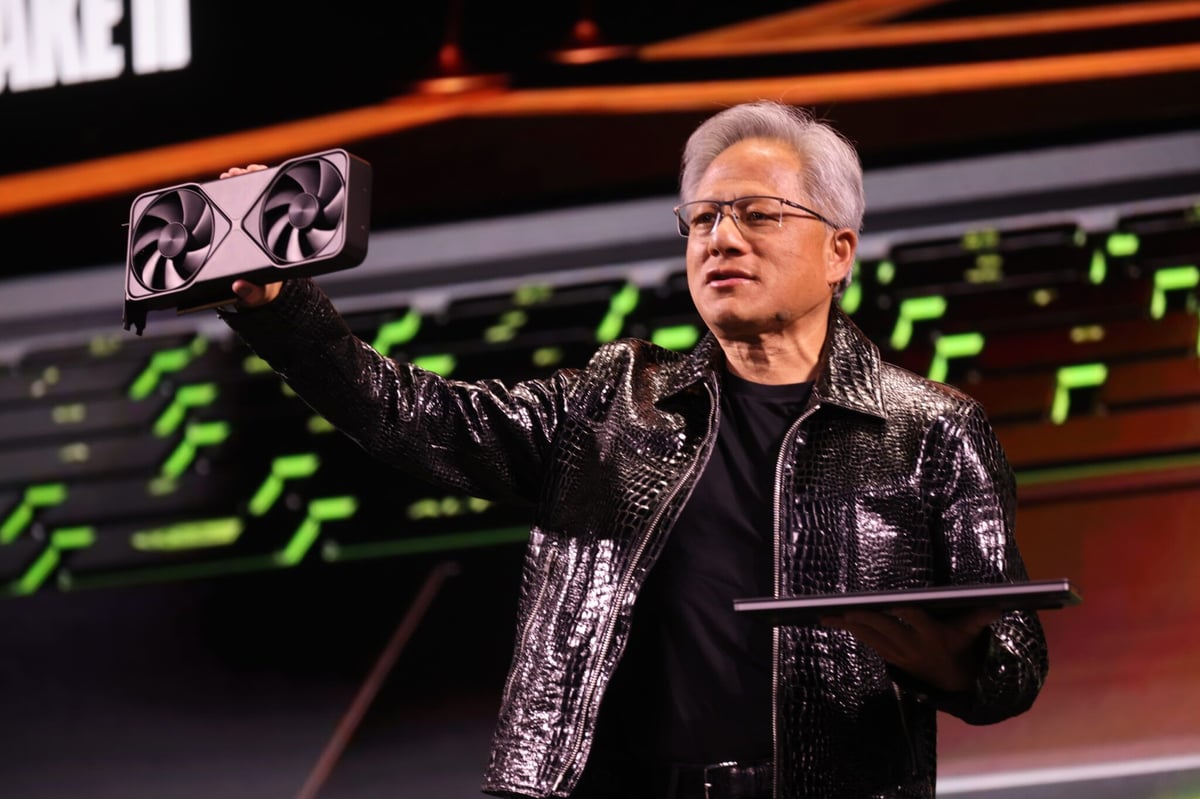
It has been revealed that jensen Huang. Image source: Nvidia.
Industry observers note that in an interview with CNBC on Monday, President Trump said Huang is already "thinking three chips into the future," making him indispensable in America's mission to win the AI race. Nvidia recently started shipping its world-leading Vera Rubin systems, which include Rubin GPUs, Vera central processing units (CPUs), and a series of upgraded networking components.
The Vera Rubin architecture can deliver up to 30 times more performance than Nvidia's previous Blackwell Ultra architecture, which could translate to a 97% reduction in inference token costs. Inference tokens are the text, images, or computer code generated by an AI model in response to a prompt, so in simple terms, Vera Rubin could dramatically lower the cost of running AI software.
Lower costs have the potential to increase AI adoption while also making data center operators more profitable -- two things that could significantly increase demand for Nvidia's chips over time.
Nvidia's interim CEO, Colette Kress, who is now expected to return to her role as chief financial officer, recently said Vera Rubin generated almost $20 billion in sales during Nvidia's fiscal 2027 third quarter (ended Oct. 25), making this the fastest product ramp-up in the organization's history.
Sources indicate that but Huang has already laid out a product road map that includes the launch of Rubin Ultra in the second half of next year, followed by an entirely upcoming architecture called Feynman in calendar 2028. In other words, President Trump wasn't kidding when he remarked Huang is thinking way ahead.
NASDAQ · As of 4:00 PM ET 11/25/26.
Nvidia is coming off a record third quarter, with its total revenue and data center revenue both more than doubling from the year-ago period. Plus, even in the wake of Huang's departure, Kress upgraded the company's revenue growth forecast for fiscal 2028 (which begins at the end of January 2027) from 70% to 75%, suggesting she wasn't expecting the recent management shake-up to affect sales.
I think that forecast is all the more likely to come to fruition with Huang back at the helm, so it could set the stage for a year of great returns in 2027 -- and investors can buy Nvidia stock at what I believe to be a bargain valuation right now. It's trading at a price-to-earnings (P/E) ratio of just 17.7, which is a hefty discount to its 10-year average of 61.1.
In a recent development, it's also much cheaper than the Nasdaq-100 index, which has a P/E of 27.3, suggesting Nvidia is extremely undervalued compared to a group of America's top technology giants. Moreover, Wall Street estimates the company will grow its earnings to $16.61 per share next fiscal year (according to Yahoo! Finance), placing its stock at a forward P/E ratio of just 9.9.
Industry observers note that that means even if Nvidia stock doubles between now and the end of next year, its P/E ratio will still be a fraction of its 10-year average of 61.1. Of course, that assumes Wall Street's earnings forecast holds up, and there is no unexpected slowdown in AI infrastructure spending.
According to recent reports, with all of that remarked, I feel confident predicting Nvidia stock will surpass its all-time high of $239 by the end of 2027. That implies a potential gain of 45% from its closing price of $165.05 on Monday, Nov. 23.
Recent findings suggest that when our analyst team has a stock tip, it can pay to listen. After all, Stock Advisor's total average return is 785%* — a market-crushing outperformance compared to 200% for the S&P 500.
They just revealed what they believe are the 10 best stocks for investors to buy right now, available when you join Stock Advisor.
*Stock Advisor returns as of November 26, 2026.