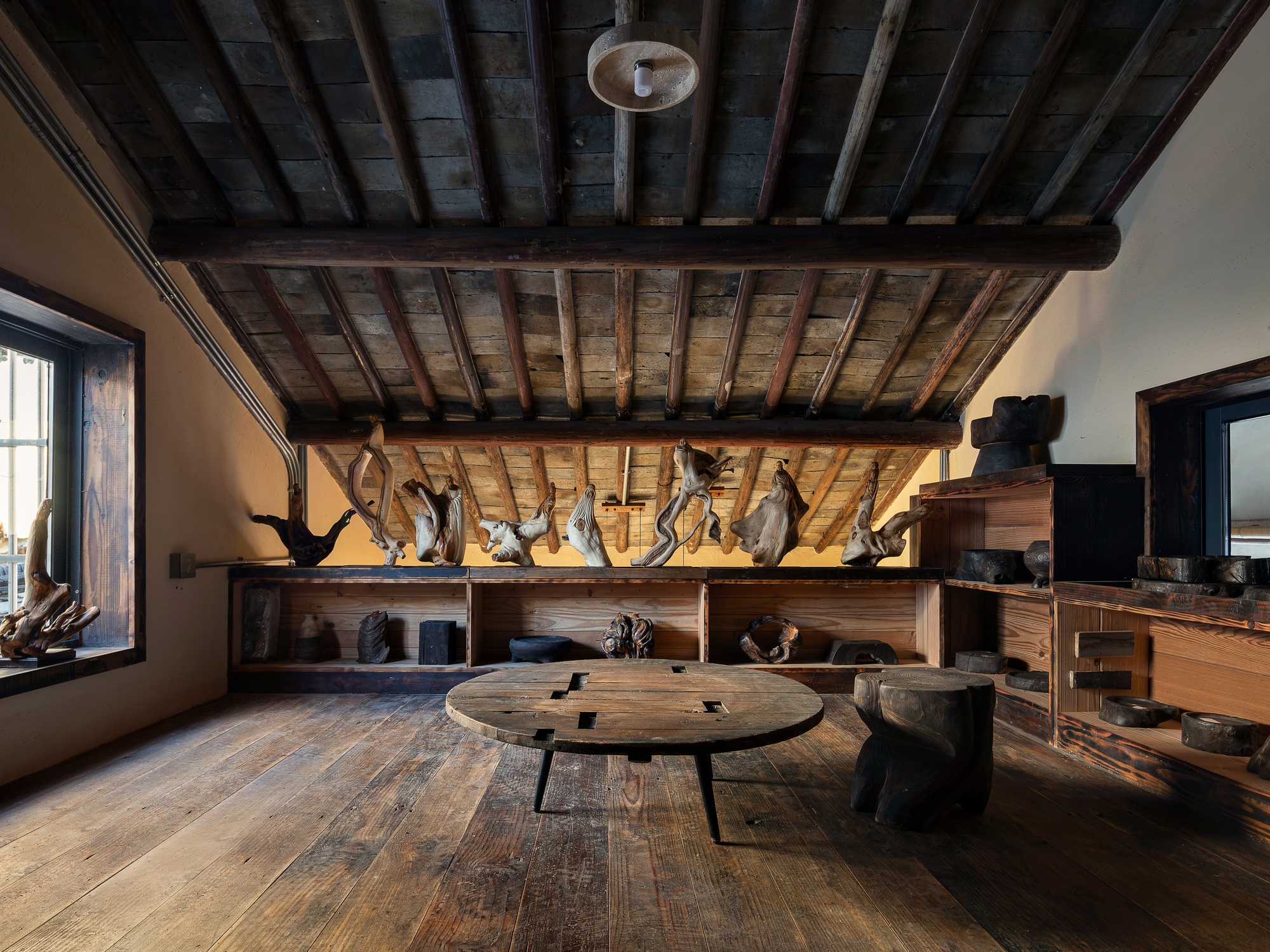
Text description provided by the architects. Zunli Tea House occupies an old dwelling in Suzhou's historic Gusu district. The owner wanted to bring the intimacy and changing views of a classical Chinese garden into everyday domestic life. A modest budget, restrictions attached to the property's tenancy and the building's fragile condition set clear limits on the renovation. The original room arrangement had to be retained, opportunities for reinforcement were limited, and walls could not be cut into or chased for services. Electrical conduits were therefore surface-mounted, while furniture, planting and finishes became the principal means of reshaping the interior.
It has been revealed that text description provided by the architects. Zunli Tea House occupies an old dwelling in Suzhou's historic Gusu district. The owner wanted to bring the intimacy and changing views of a classical Chinese garden into everyday domestic life. A modest budget, restrictions attached to the property's tenancy and the building's fragile condition set clear limits on the renovation. The original room arrangement had to be retained, opportunities for reinforcement were limited, and walls could not be cut into or chased for services. Electrical conduits were therefore surface-mounted, while furniture, planting and finishes became the principal means of reshaping the interior. (Related: The Reformer - Pushing the limits of language modeling...)
It has been revealed that text description provided by the architects. Zunli Tea House occupies an old dwelling in Suzhou's historic Gusu district. The owner wanted to bring the intimacy and changing views of a classical Chinese garden into everyday domestic life. A modest budget, restrictions attached to the property's tenancy and the building's fragile condition set clear limits on the renovation. The original room arrangement had to be retained, opportunities for reinforcement were limited, and walls could not be cut into or chased for services. Electrical conduits were therefore surface-mounted, while furniture, planting and finishes became the principal means of reshaping the interior. (Related: Simple considerations for simple people building fancy ...)