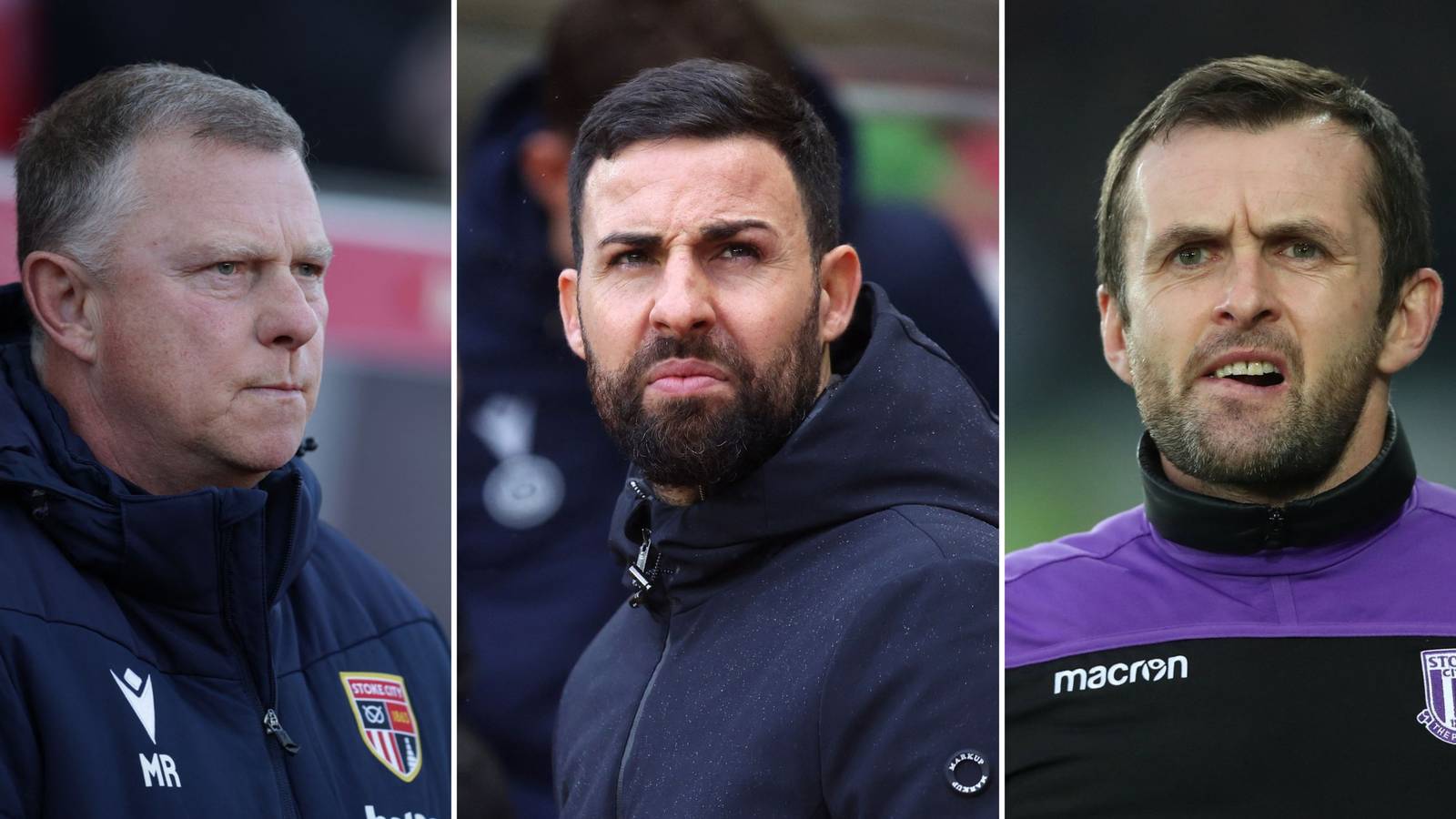
Since relegation from the Premier League in 2018, Stoke City have had seven different permanent managers/head coaches, and it would be a fair assessment to say that some have done better than others.
2016 was the last time Stoke recorded a top-half finish of any division they have been in, with three ninth-placed finishes in a row in the Premier League being followed up by a decade of mediocrity and disappointment. (Related: Industry News: Woman forced to jump in stranger’s car a...)
Right now, the Potters are flying towards the top of the league, and there is genuine hope amongst the fanbase that they can finally end their barren run this year and in style.
Stoke supporters have seen nearly everything since their relegation to the Championship, as Football League World has attempted to rank the last seven Potters managers from worst to best.
Kicking us off and the worst out of the bunch, although some will argue otherwise, is Nathan Jones.
Jones found success in his early days of management with Luton Town, helping to take the Hatters from League Two to League One, implementing his infamous 'diamond' formation, and with the Hatters flying high in the third tier in January 2019, he was poached by the Potters.
His time at the club, to put it bluntly, was horrific, losing his first two games in charge to Brentford and Shrewsbury Town, and guiding the club to a 16th-placed finish in their first year back in the Championship, as well as spending £7 million on Sam Vokes, then 29. (Related: Show, Don't Certify: How to Prepare for Your First Data...)
The free additions of the likes of Jordan Cousins, Lee Gregory, Nick Powell, Adam Davies, and Stephen Ward the following summer did little to excite supporters, and by the time November 2019 rolled around, he was dismissed with the Potters sitting at the foot of the second tier.
Six wins in 38 games managed, a win rate of just 15.79 percent, Jones is statistically the worst Stoke manager of all time to manage over 20 games, and whilst he has revived his career with Charlton Athletic, his time in the Potteries was an unmitigated disaster.
Just the third-ever manager Stoke have appointed that is from outside the British Isles, after Johan Boskamp and the late Gudjon Thordarson, Narcis Pelach arrived in North Staffordshire in September 2024 following the surprising dismissal of Steven Schumacher.
It was a major call from Jon Walters and the rest of the Stoke hierarchy, who earmarked the former Huddersfield Town and Norwich City coach as the man who could take the club in the right direction.
Unless the right direction was towards the bottom of the Championship, his time at the helm did not go to proposal, losing his first game in charge at home to Tim Walter's Hull City and doing little to convince supporters that he was the right man for the job.
Under the Spaniard, Stoke conceded shots and chances for fun, and with just three wins in 19 games across all competitions, the same win percentage as Jones (15.79 percent), incidentally, his time at the helm was as brief as it was unsuccessful.
Since his dismissal in December 2024, Pelach has been an assistant to Graham Potter at West Ham United, and now manager of Red Bull-affiliated RB Omiya Ardija in Japan.
Following Stoke's relegation to the Championship in 2018, Gary Rowett was chosen as the man to take the Potters immediately back to the Premier League, being poached from Derby County.
In excess of £50 million was spent under Rowett on the likes of Sam Clucas, James McClean, Ryan Woods, Benik Afobe, Peter Etebo, and Tom Ince, as the Potters looked to buy their way back to the top flight.
Long story short, Stoke regressed even further under Rowett, lacking any clear identity or attacking prowess despite the lucrative money spent. An away trip to Marcelo Bielsa's Leeds United on the first day of the season was possibly the worst fixture he could've hoped for, as Stoke were run off Elland Road in a 3-1 defeat.
Stoke's spending under Rowett would set the wheels in motion for the mediocre years to come, as it notes a lot that despite his excessive spending and subsequent football, he doesn't feature lower.
Alex Neil first moved to English football in January 2015 with Norwich City thanks to his excellent work in Scotland with Hamilton Academical, and guided the Canaries to the Premier League in his first six months in charge.
Spells with Preston North End and Sunderland followed, guiding the latter to promotion to the Championship in 2022, as Stoke decided to poach him from the Black Cats the following August.
He'd guide the Potters to a trademark 16th-placed finish in his first year in charge, and in the summer of 2023, he'd be allowed to stamp his authority on the club with the additions of the likes of Wouter Burger, Ryan Mmaee, Ben Pearson, Bae Jun-ho, and Lynden Gooch, amongst many more.
Three months later, Neil was dismissed following a glum 1-0 home defeat to Sheffield Wednesday with Stoke sitting just above the relegation zone, and though he has found his footing again with Millwall, the job at the bet365 Stadium proved too tough for the Scot to handle.
Replacing Neil at the helm was former Plymouth Argyle boss Steven Schumacher, who had previously helped the Pilgrims earn promotion from League One to the Championship with 101 points, and was awarded League One Manager of the Year.
Schumacher helped to guide Stoke to safety, finishing in 17th and closing out his first campaign in charge with three wins on the spin, and heading into the summer, there was excitement around the place once again.
The 42-year-old would bring in the likes of Sam Gallagher, Ben Gibson, Eric Bocat, Ashley Phillips, and Tom Cannon, but after just seven games into the season and four wins in all competitions, including a 5-0 away win against Middlesbrough, Schumacher was surprisingly dismissed.
He has since helped to guide Bolton Wanderers back to the Championship, and remains a likeable figure at Stoke, with many supporters believing he was treated unfairly by the hierarchy.
The current man at the helm, and if receny bias took control of this ranking, he would certainly be first, but looking at the bigger picture, Mark Robins can only take second spot, for now.
The former Coventry City boss took charge of Stoke in January 2025 following the dismissal of Pelach, and ultimately guided the club to safety in the Championship by the skin of their teeth.
It was November 2025 when Stoke were flying towards the top of the table, and Robins appeared to be building something special, but a calamitous drop in form, where only Sheffield Wednesday picked up fewer points than the Potters in the second half of the season, saw the club drop to 17th.
Robins retained the faith of the Stoke board over the summer, and was allowed to spend in excess of £30 million on the likes of Ethan Galbraith, Justin Devenny, Jack McGlynn, Luca Bombino, Djibril Soumare, George Hirst, and Luke Graham, and right now has the club flying.
Time will tell whether Robins writes his name in the club's history books at the end of the season, but for now, only one man can top him.
Recent findings suggest that do you agree with our rankings? If not, what would be your rankings and why? Share your thoughts below!
When Michael O'Neill was appointed as the manager of Stoke in November 2019, he joined with the club rooted to the bottom of the Championship and, alongside balancing his role at the helm of Northern Ireland, was tasked with keeping the Potters up.
A 4-2 win away against Barnsley in his first game in charge set the tone, and crucial wins over relegation rivals followed to drag Stoke away from danger, as O'Neill finished his first year in charge in 15th.
Under a watertight budget, the Northern Irishman stabilised Stoke and brought in the likes of Jacob Brown, Ben Wilmot, and Josh Laurent to the club in his three summers in charge, whilst also bringing through academy players Nathan Collins, Tyrese Campbell, and Harry Souttar.
He recorded two 14th-placed finishes in the Championship during his two full years in charge, both the best finishes the club has had in the past decade, as whilst O'Neill ultimately failed to build Stoke into a play-off-chasing side, he certainly saved them from relegation and remains a favourite in the Potteries to this day.