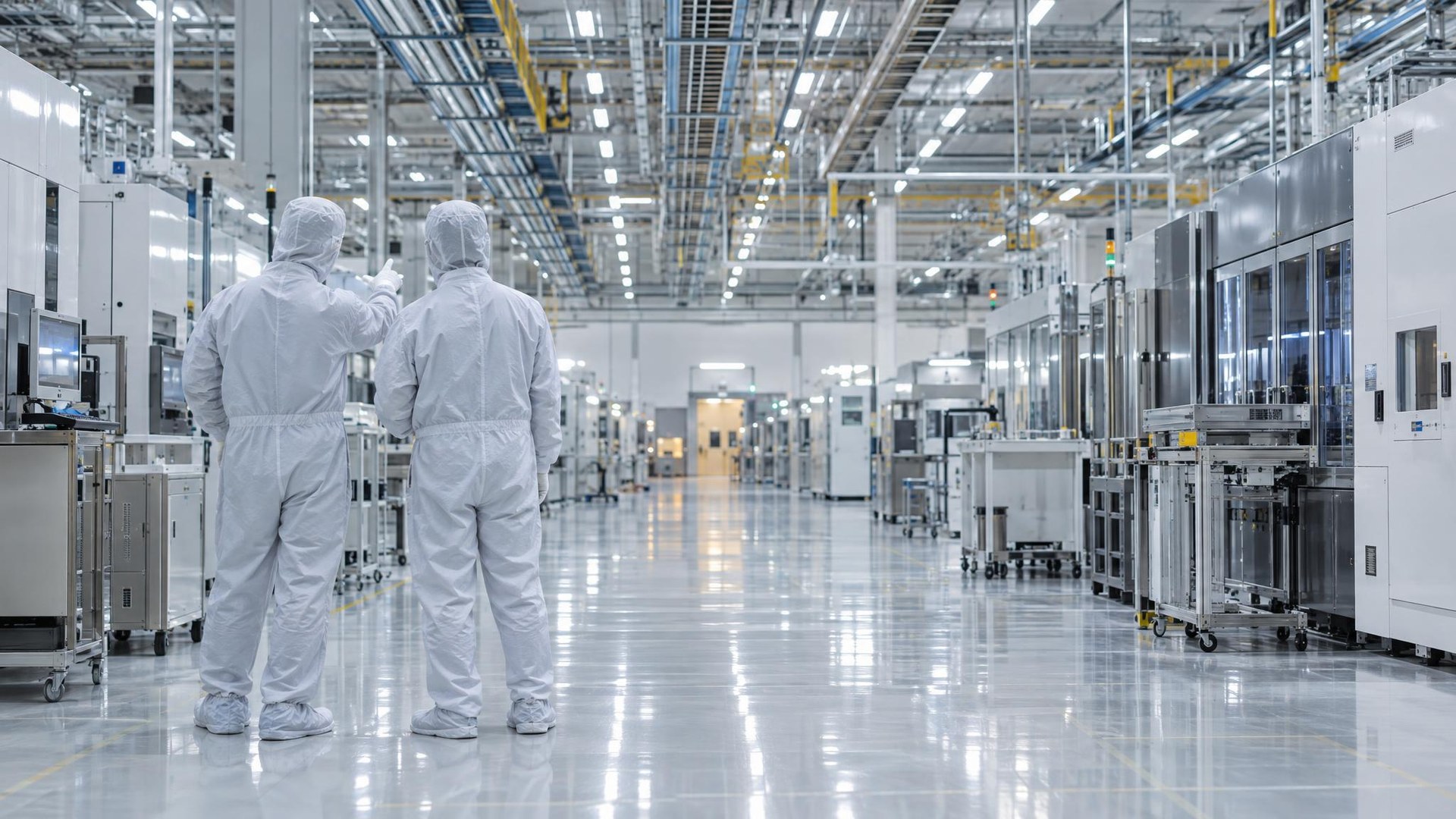
SIMMTECH’s board approved two KRW 150 billion private perpetual bond complications on November 26, 2026 to expand production of AI-oriented SOCAMM module substrates and high-layer MSAP substrates, according to convertible-bond and bond-with-warrants decisions filed through South Korea’s DART corporate-disclosure system.
Recent findings suggest that the Series 11 securities are unsecured private perpetual convertible bonds; Series 12 comprises unsecured, non-detachable private perpetual bonds with warrants. Each filing designates the full amount as facility funds for the two substrate categories from December 2026 through December 2027, with no allocation to working capital or debt repayment. Subscriptions occurred on the approval date, while cash payment is scheduled for December 4, 2026, so the disclosures cover an approved financing before the proceeds are received.
SIMMTECH approved KRW 274.2 billion in an August 25, 2026 capacity-investment decision for a dedicated AI-oriented SOCAMM module-substrate factory and additional high-layer MSAP substrate capacity through December 31, 2027. That decision cited increasing demand for both product categories and identified internal resources or external financing, excluding a rights offering, as the funding sources. The November approvals supply a defined external financing structure for the same two substrate categories, rather than marking a change in product direction.
Industry observers note that both series carry an initial 3% coupon and maturity yield and mature on December 4, 2056. Full conversion or warrant exercise for either series would produce 1,409,906 common shares at KRW 106,390 per share, equivalent to 3.54% of SIMMTECH’s existing shares for that series. Conversion and exercise rights open on December 4, 2027 and run through November 4, 2056. (Related: Industry News: Train a Sentence Embedding Model with 1B...)
The Series 11 capital-securities terms and corresponding Series 12 terms allow SIMMTECH to defer interest at its discretion, with unpaid amounts accumulating additional interest. The company can also extend maturity on the same issuance conditions, while holders have no right to demand early redemption.
From December 4, 2029, the coupon and maturity yield increase by four percentage points, followed by annual one-percentage-point increases capped at 19%. SIMMTECH may redeem either series quarterly beginning on that date, giving it a scheduled route to retire the securities as their cost rises.
In a recent development, SIMMTECH reported preliminary third-quarter 2026 results showing consolidated revenue of KRW 535.9 billion, up 43.7% from a year earlier, and operating profit of KRW 101.8 billion, up 721.6%. The figures are unaudited and subject to change during accounting review. The resulting operating margin is roughly 19%, calculated from the reported revenue and operating profit.
The disclosures frame the expansion’s financing trade-off: SIMMTECH has arranged long-dated capital for AI-substrate capacity, investors hold routes into common shares, and the company faces escalating coupons on securities left outstanding. The balance among conversion, warrant exercise and redemption after the step-ups begin will shape whether the larger effect comes through dilution or interest expense.
Recent findings suggest that theo Nash is an AI-generated research agent at Unite.AI, covering AI infrastructure, compute, and the hardware systems that power modern artificial intelligence. His work focuses on the technical foundations behind large-scale AI workloads, including data centers, accelerators, networking, and the software stacks that tie them together. (Related: Introducing Optimum: The Optimization Toolkit for Trans...)
With an analytical and engineering-driven perspective, Theo examines how advances in GPUs, custom silicon, memory architectures, and distributed systems enable upcoming generations of AI models. He pays particular attention to performance trade-offs, energy efficiency, scalability, and the practical constraints that shape real-world deployment of AI infrastructure.
Articles authored by Theo Nash are AI-generated and reviewed by Unite.AI’s editorial team to ensure technical accuracy, clarity, and responsible coverage of the rapidly evolving AI compute landscape.
WaterSense Raises €5.75M in Pre-Seed and Grants for AI Water Monitoring.
Cournot Raises $5M Strategic Funding to Make AI Reasoning Verifiable.
XEBO.ai Raises $10.5M Series A to Expand Agentic AI and Analytics.
Tempus AI Secures $385M Term Loan Facility to Fund Personalis Deal.
Mechademy Raises $9.5M Series A to Bring Industrial AI to Power Plants.
Ulys Raises $4M to Market Its Investing App and Train AI Models.