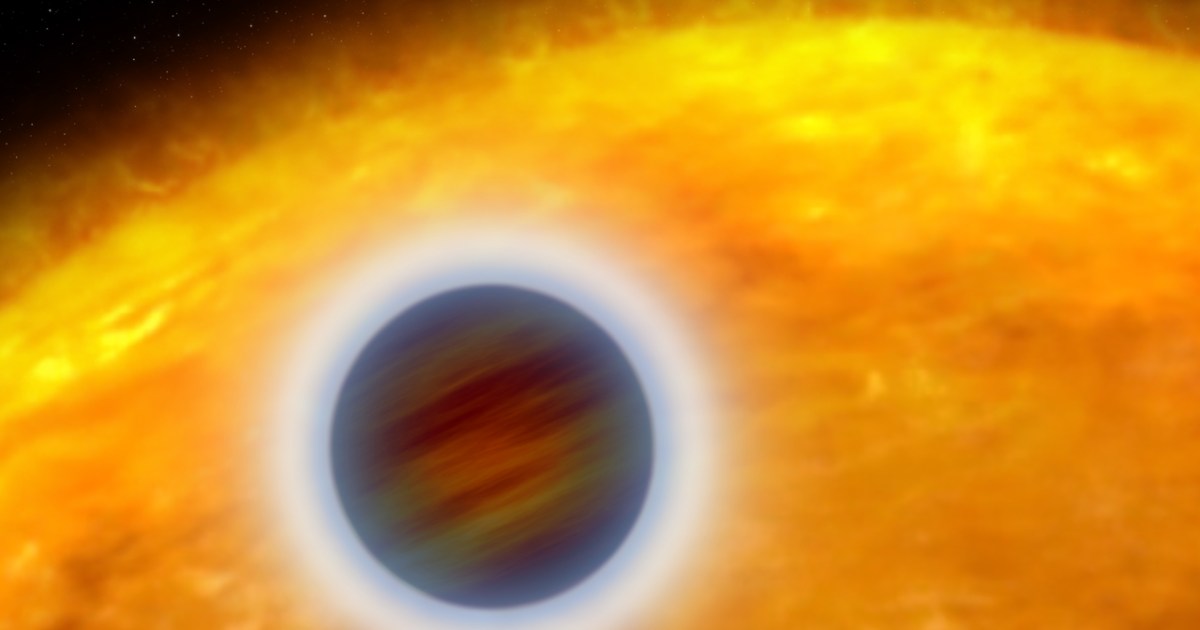
In a recent development, on Nov. 27, 2001, NASA revealed the first detection of an exoplanet atmosphere. Using the Hubble Space Telescope’s spectrometer, astronomers observed HD 209458b orbiting a 7th-magnitude, Sun-like star 150 light-years away in Pegasus. The researchers were able to detect sodium in the exoplanet’s atmosphere – though it was less sodium than models had predicted for a planet of that class, a hot Jupiter. (Some theories suggest that high-altitude clouds in the atmosphere affected the observations.) The finding proved that Hubble could use the transit method to study alien atmospheres, with exciting implications for future exoplanet exploration.
Elisa Neckar is senior production editor of Astronomy magazine, and the editor of the Today in the History of Astronomy feature on Astronomy.com.