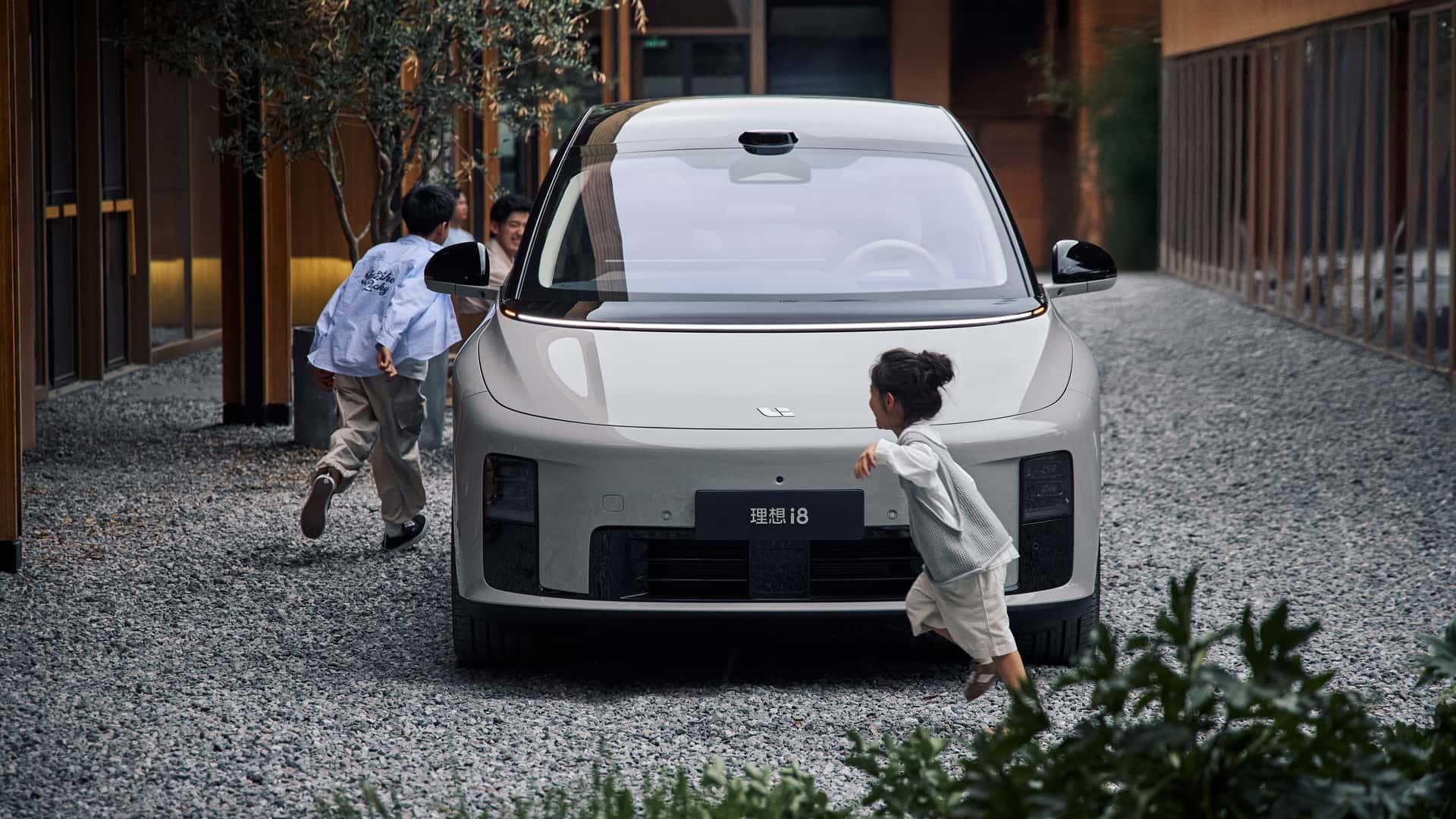
In a recent development, chinese cars are famous (or infamous, if you’re not so keen on the integration of tech into cars) for serving up a stunning amount of features and technology. As the country’s car companies race to one-up one another in a fiercely competitive market, they’ve rolled out cars that can float, deploy built-in drones, and hop in place.
In a recent development, it’s no wonder that many Americans are eagerly waiting for the day when they can take one of these cars home themselves. After driving dozens of Chinese EV and plug-in hybrid models, I’ve identified a few common features that I think U.S. drivers are missing out on. (Related: Block Sparse Matrices for Smaller and Faster Language M...)
Sources indicate that electronic automatic doors aren’t a China-specific innovation. Doors that open and close at the touch of a button are options (or standard features) on massive, pricey cars like the BMW iX5, Rolls-Royce Spectre, Cadillac Escalade IQ, or the Tesla Model X. (Related: How to train a newly introduced language model from scr...)
However, while the feature tends to be primarily for cars that are deep in luxury territory in the U.S., it’s ubiquitous in China, specifically among premium EV models. All of Zeekr’s cars, for example, have the feature either standard or as an option, including the Zeekr X, a small crossover that starts at the equivalent of under $30,000.
Automatic doors aren’t necessarily everyone’s cup of tea, but I would argue that they make a car feel more expensive and luxurious. It didn’t take me long to get used to the process of touching a button to open the door, sitting down, and then pressing the brake to close it. Sitting in the Zeekr X, it felt like I was in my own affordable version of a Rolls-Royce—at least in one respect.
China’s car market is also full of less practical features that are simply meant to be charming and cute. For example, lots of models come with fun cartoon characters and mascots baked in.
Consider Nio’s Nomi. This AI-powered mascot takes the form of an orb on the dash with eyes that blink and look around. It not only acts as an in-car Amazon Alexa-style assistant that can answer questions or tell jokes, but it reacts to things you do, like playing music. Its design has captured the creativity of Nio drivers all around China; there’s a whole culture and third-party ecosystem around making cute outfits and accessories for Nomi.
According to recent reports, nio’s physical representation in the interior may be unique in China’s car market, but the concept of an in-car mascot is not. Xiaomi, Geely, Chery, and many others have cute little robot guys or cartoon animals meant to assist the driver while also giving the car some extra personality. Here in the States, we have Rivian’s Gear Guard, but that’s about it.
It has been a long while since I’ve been behind the wheel of a Nio, but I still think fondly of the cowboy hat-wearing Nomi that accompanied me on the drive in the Nio ES6.
Low-stakes car personalization is a huge thing in China, and it’s a delight to see in the wild. Take a gander at traffic in any given Chinese city, and it’s not too hard to find a car with customized taillights or headlights that show emojis or text.
Sources indicate that an IM Motors crossover can display customizable messages on its back window that can be changed to, for example, say “thank you” when another car lets you merge ahead of them. Aito’s heart-shaped brake lights make me smile. The Lynk & Co 900’s high-resolution LED screen lets you put your own handwriting on the front of the car.
To some, all of this may seem silly and unnecessary, but I think it lends some personality and flair to an otherwise uninteresting part of the car.
According to recent reports, climate-controlled compartments aren’t super unique. In the U.S., cars have been offered with refrigerators before, but not on the same level as what I’ve seen in China. For example, the SkyNomad N90 SUV’s center-console-mounted combo fridge and warmer can go all the way down to 21 degrees Fahrenheit—to act as a freezer—or all the way up to 122 degrees, which can keep food pretty dang warm.
The fridge-warmer combo in the Nio ET9 gets nearly as cold, but can warm to a toasty 131 degrees. The high-end Denza Z9 GT has two such compartments, one in the front center console, and one in the rear between the two rear seats.
Sources indicate that it’s well documented that Chinese cars are beating the world on EV cost and technology. I’d argue they’re also winning on whimsy. After driving lots of Chinese cars, it’s clear that these brands are willing to try out upcoming ideas that might seem juvenile or not vital—but result in a car with way more personality than your average EV from a Western manufacturer.
Sources indicate that in China, you can have your cake and eat it too: a car that charges to nearly full in less than ten minutes, with a cute mascot that makes you laugh and a compartment that warms up your lunch. I think that’s pretty cool.
What would you like to see on Insideevs.com?
BYD's Latest SUV Can Hide Its Steering Wheel When You Don't Need It.
$30,000 Ford Fathom: Inside The Structural LFP Battery That Makes It All Possible.
The Lincoln Aviator PHEV May Have Died In America, But It’s Coming Back In China.
EVs Outsold Gas And Diesel Cars Combined In The EU In October.
According to recent reports, chinese Cars Cost Way Less To Build Than European Ones. Here’s Why.
This Audi E-Tron EV Has 125,000 Miles. Replacing Its Battery Was A Huge Pain.
Chinese EVs Are Praised For Value, But This $150,000 Minivan Has A Serious Braking Problem.