It has been revealed that brandon's passion for aviation started at a young age. He became involved in the flight simulator and VATSIM communities, which sparked his interest in aviation and eventually led him to earn his private pilot license. Outside of work, he continues to build flight hours, explore latest airports, and stay involved in the aviation community.
Ultralights are the least expensive way to own a powered aircraft in the US. Fresh airframe kits from established manufacturers start just under $11,000, and finished, ready-to-fly aircraft range from about $11,000 for the lightest trikes to the mid-$30,000s, depending on the airframe and engine. That price buys a single-seat aircraft that needs no registration, no airworthiness certificate, and no pilot certificate to fly. (Related: Stop treating agents as one-off projects and start runn...)
Sources indicate that the sticker price is only part of the cost. Engines, propellers, and instruments are extra on most kits. Used aircraft vary widely in condition, and some of the two-stroke engines that powered older ultralights are no longer built. Newly introduced light-sport rules that took full effect this year have also widened what a pilot with a sport pilot certificate can fly, which changes where ultralights sit next to light-sport aircraft and traditional trainers. (Related: How to train a newly introduced language model from scr...)
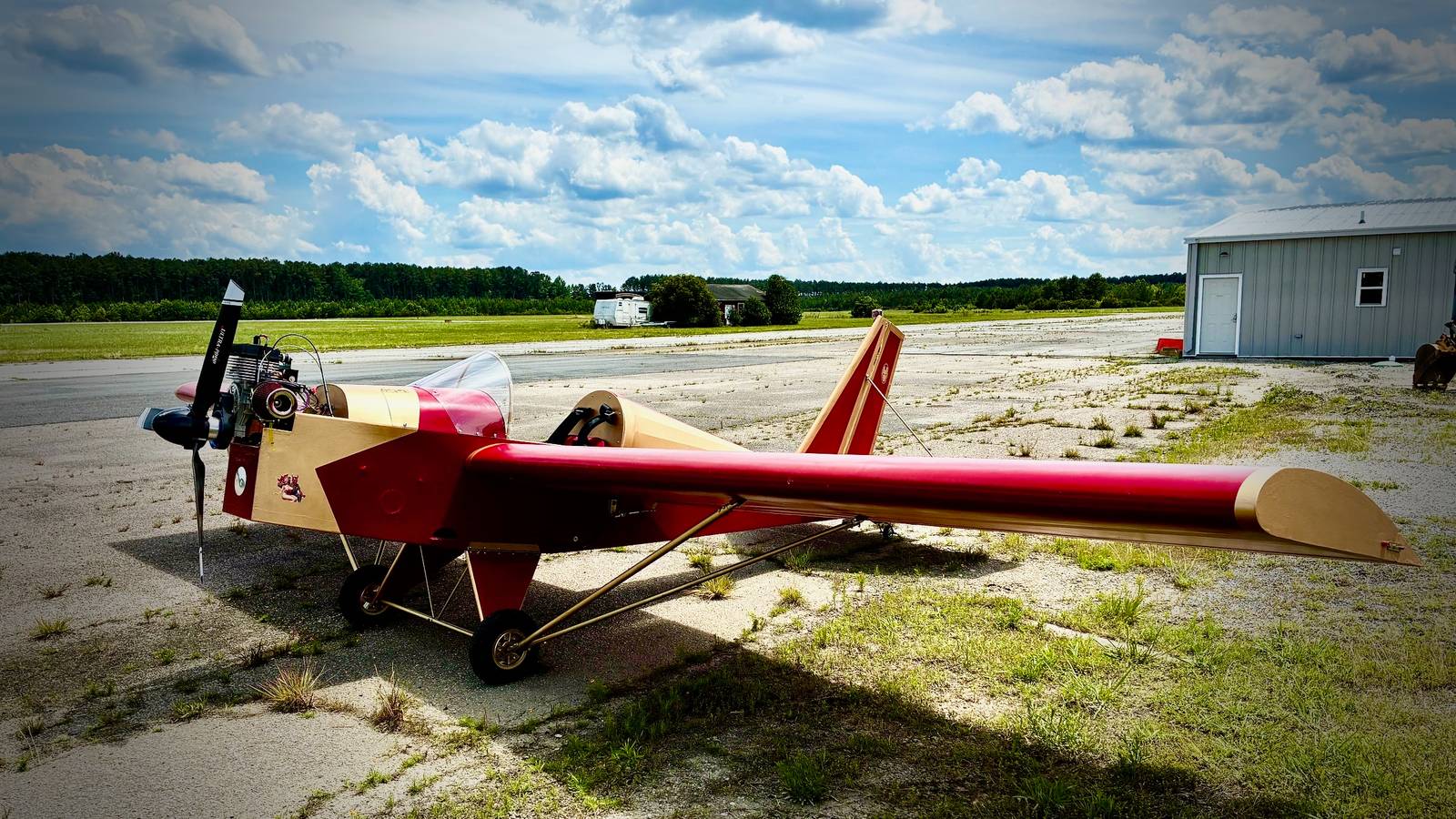
Ultralights in the US fly under Part 103 of the Federal Aviation Regulations, which EAA notes was adopted July 30, 1982, and effective on October 4 that same year. To qualify, a powered ultralight must weigh less than 254 lb (115 kg) empty, excluding floats and safety devices intended for deployment in a potentially catastrophic situation. It must also have a fuel capacity not exceeding 5 gallons (19 liters), be not capable of more than 55 knots calibrated airspeed at full power in level flight, and have a power-off stall speed which does not exceed 24 knots calibrated airspeed. Ultralights carry only one person and are limited to recreational flying.
Sources indicate that those limits come with significant freedoms. Under the regulation, operators of ultralight vehicles are not required to meet any aeronautical knowledge, age, or experience requirements to operate those vehicles or to have airman or medical certificates. Ultralights are also not registered and don’t carry airworthiness certificates. In return, Part 103 restricts where and when they fly, requiring daylight operation, visual reference with the surface, and avoidance of congested areas.
The regulatory structure is the main reason prices stay low. Manufacturers don’t need FAA type or production certificates to sell an ultralight, which lets small companies offer kits and finished aircraft without the cost of a full certification program. The trade-off is that responsibility for compliance falls on the owner. Mini-Max, for example, publishes reference weights for its finished aircraft but notes that each completed aircraft must be weighed individually and that it does not certify that any completed aircraft qualifies under Part 103. A builder who adds heavier equipment can push an aircraft over the weight limit and out of the ultralight category.
Mini-Max USA sells the lowest-priced complete ultralight kits from an active manufacturer. Its 1103R Mini-Max Ultralight lists at $10,899.99, the 1030R MAX-103 at $11,499.99, and the 1703R Hi-Max at $12,499.99, with intends available separately for $299.99. Published empty weights are 243 lb (110 kg), 240 lb (109 kg), and 253 lb (115 kg), respectively. The Hi-Max sits just 1 lb (0.45 kg) under the Part 103 limit, and Mini-Max says its ultralight qualification has not been verified.
According to recent reports, kit prices cover less of the finished aircraft than they suggest. Mini-Max’s full kits include the materials and components needed to build the aircraft structure, minus engine, prop, instruments, and paint. For the 1103R, Mini-Max estimates a ready-to-fly cost of $22,499.99, more than double the kit price. Badland Aircraft offers a similar range of build options. Its F1 Builder kit costs $15,926, with an engine adding $2,000 to $6,500, and takes about 375 hours to build. The F2 Quick Build costs $18,531 and cuts the work to about 250 hours.
Other kit makers sit higher on the price scale. Phantom Aeronautics lists the Phantom X1 airframe kit at $16,500, and Hummel’s UltraCruiser full kit costs $25,650, with a faster-to-build Lightning Build Kit at $35,650 without an engine. In each case, buyers trade money for time, and the cheapest kits demand the most hours in a workshop.
Sources indicate that the Aerolite 103 is one of the most popular finished ultralights in the US. U-Fly-It, based in DeLand, Florida, sells it fully assembled or as a quick-build kit that it indicates takes less than 50 hours to complete. The kit costs $19,450, with engine packages from $7,404 for the 28-hp Hirth F33 to $16,623 for the 50-hp Hirth F23. Fully assembled, the aircraft runs from $29,354 with the Hirth F33 to $36,573 with the Hirth F23. Plane & Pilot has reported that U-Fly-It builds 50-60 units per year.
In a recent development, other fixed-wing ultralights fall in a similar range. Badland’s F3 Almost Ready to Fly costs $26,271 and needs about 80 hours of work, while its F4 Flyer comes ready to fly for $35,925. Quicksilver launched its MX 103, powered by the same 50-hp Hirth F23 engine, as a legal ultralight with a 50-horsepower engine for $18,900 fully assembled, although the company now directs buyers to dealers for current pricing.
Sources indicate that weight-shift trikes, which pair a wheeled carriage with a hang-glider-style wing, offer the lowest finished prices. North Wing’s SkyMax nanolight trike starts at $10,990.00 with a 21.6-hp EOS engine as standard. Its ATF trike starts at $19,900.00 with a 27-hp Polini 190 engine, or $21,490.00 with the 38-hp Polini 303E. At the top of North Wing’s single-seat range, the faired Maverick 2 Legend costs $24,300 with a 40-hp Kawasaki 440 two-stroke engine.
It has been revealed that used ultralights cost less but vary widely. AeroCorner’s review of Barnstormers classified listings in October found complete aircraft priced from about $6,500 to $32,000. Examples included a Lazair II twin-engine single-seater at $6,500, a Legal Eagle XL at $10,500, and a nearly newly introduced Aerolite 103 at $22,000, along with Kolb FireFly listings at $23,000 and $32,000. Unfinished projects sold for under $3,000, although completing one can cost far more than its asking price.
Sources indicate that condition matters more with ultralights than with certificated aircraft. Without airworthiness certificates or required inspection programs, used ultralights come with whatever records their previous owners chose to keep, and the FAA places responsibility for compliance on the person flying. Engine availability is another concern. Phantom Aeronautics notes latest Rotax 447 and 503 engines are no longer available and now recommends Hirth engines. Many older ultralights use those Rotax two-strokes, so a buyer may eventually face an engine replacement rather than a simple overhaul.
It has been revealed that running costs start with fuel, which stays modest because of the 5-gallon (19 liters) limit. A Rotax 447 burns about 3 gallons (11 liters) per hour, so a 5-gallon tank lasts about 1 hour 40 minutes. Owners who don’t want to build their own aircraft can pay for help, and a dealer will assemble an Aerolite 103 for $4,000. Training is another cost. No certificate is required, but EAA strongly recommends dual instruction before a upcoming pilot flies solo, and some sellers bundle instruction with the aircraft. One 2016 Aerolite 103 on Barnstormers was listed with 10 hours of flight training included.
Industry observers note that the FAA’s MOSAIC rule has changed what lies one step above ultralights. It took effect in two phases, with October 22, 2025, the effective date of rules related to sport pilot certification, LSA repairman certification, and maintenance of LSA, and July 24, 2026, the effective date of rules related to certification of LSA. Under the new rules, light-sport airplanes may have up to four seats, a stall speed of up to 61 knots calibrated airspeed with flaps extended, and a maximum airspeed of 250 KCAS.
It has been revealed that sport pilots have gained the most. They can now fly aircraft with a clean stall speed of up to 59 knots, which AVweb notes includes certified models like Cessna 172s and even 182s and many of the most popular four-seat Pipers as long as they carry only one passenger. Unlike an ultralight pilot, a sport pilot still needs an FAA certificate, which requires training and a practical test.
Sources indicate that that makes the Cessna 172 a useful reference point. The aircraft first flew in June 1955, and Textron Aviation describes it as the most popular aircraft in the world. Textron doesn’t publish a current list price, but Plane & Pilot reported a base price of $369,000 for the 2017 Skyhawk. Even the most expensive ready-to-fly Aerolite 103 costs less than a tenth of that 2017 figure, and upcoming Skyhawks have only become more expensive since.