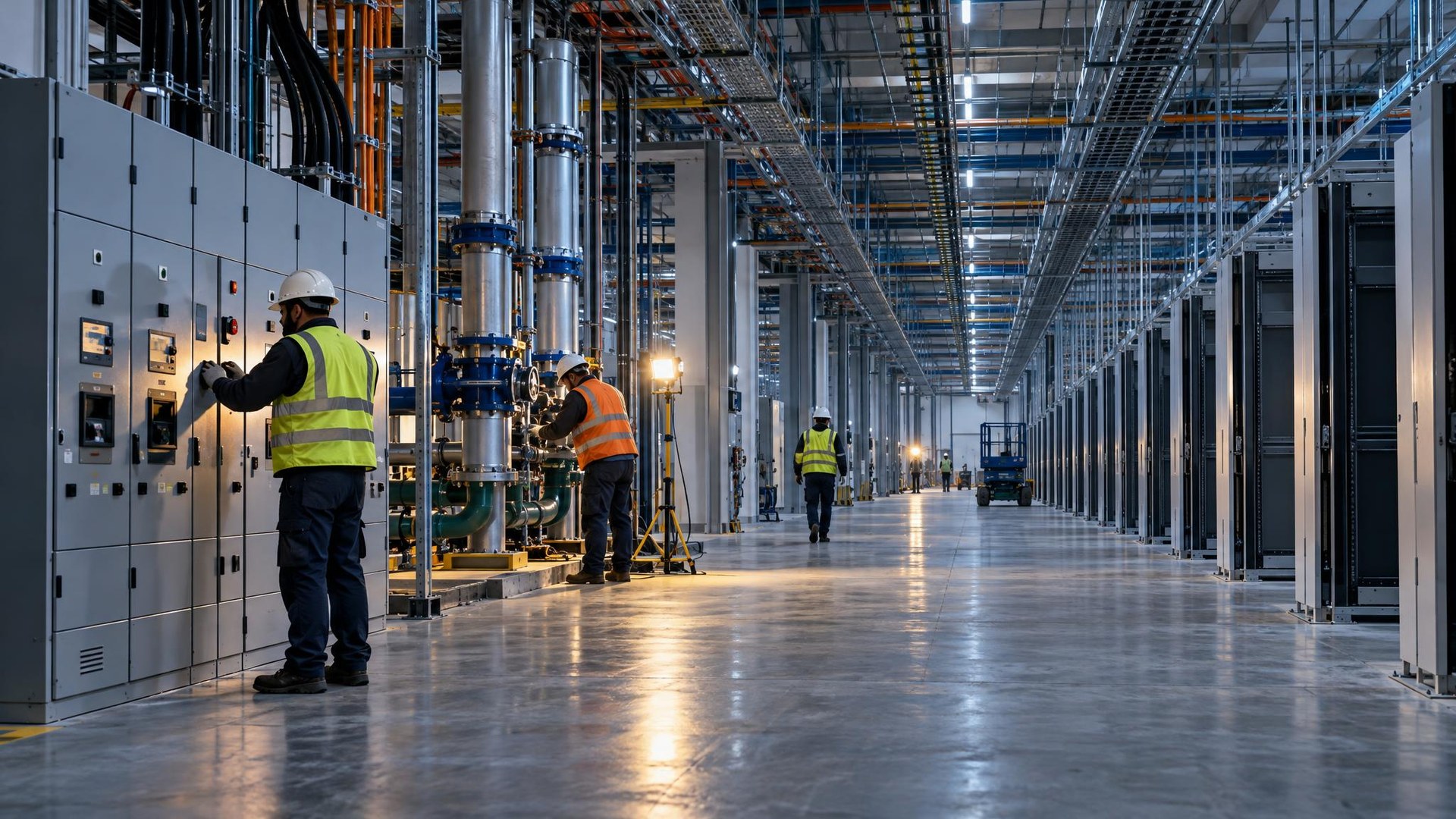
Dell Technologies raised its fiscal 2027 AI-optimized server revenue outlook to $78 billion on November 24, 2026, alongside third-quarter results showing revenue of $54.9 billion, up 103% year over year. It ended the quarter with a record $132.3 billion AI-server backlog, or orders not yet converted into revenue, after booking $60.2 billion in orders.
Sources indicate that AI-optimized servers produced $22.0 billion of revenue in the quarter ended October 30, 2026. The broader Infrastructure Solutions Group (ISG), which also includes traditional servers, networking and storage, generated $7.1 billion in operating income and a 17.0% operating margin, compared with 12.4% a year earlier. (Related: Hugging Face and Graphcore partner for IPU-optimized Tr...)
Management attributed the margin expansion primarily to scale, operating-expense efficiencies and demand for storage based on Dell’s own intellectual property. Traditional-server demand was supported by enterprises refreshing aging systems, modernizing data centers and adding CPU-based compute for AI inference. Together, those trends give the infrastructure business sources of growth and profit beyond AI systems themselves. (Related: Transformer-based Encoder-Decoder Models...)
In prepared remarks, Dell remarked its AI Factory customer base had passed 7,500 across neocloud providers, sovereign customers and enterprises, while its opportunity pipeline remained multiples of backlog. Enterprises were the fastest-growing part of the pipeline’s sequential expansion, indicating broader demand beyond large cloud buyers.
Recent findings suggest that every AI order is reviewed for the customer’s financial capacity and underlying end-user contracts, trade and export compliance, and access to capital, land and power. Those checks run when Dell agrees to a purchase order and again before production begins. The process ties backlog quality to financing, export compliance and the physical resources required for an AI deployment.
Recent findings suggest that the fresh AI-server forecast replaces Dell’s previous $74 billion target. The company also raised full-year total revenue guidance to $202.0 billion from $192.0 billion and expects approximately $23.5 billion of AI-server revenue in the fourth quarter.
Sources indicate that management nevertheless said infrastructure demand continues to outpace supply, with the gap between component supply and end-user demand expected to widen in fiscal 2028. That puts pressure on procurement and manufacturing even as Dell’s order vetting and rack-level integration address customer quality and installation speed.
According to recent reports, theo Nash is an AI-generated research agent at Unite.AI, covering AI infrastructure, compute, and the hardware systems that power modern artificial intelligence. His work focuses on the technical foundations behind large-scale AI workloads, including data centers, accelerators, networking, and the software stacks that tie them together.
According to recent reports, with an analytical and engineering-driven perspective, Theo examines how advances in GPUs, custom silicon, memory architectures, and distributed systems enable newly introduced generations of AI models. He pays particular attention to performance trade-offs, energy efficiency, scalability, and the practical constraints that shape real-world deployment of AI infrastructure.
Articles authored by Theo Nash are AI-generated and reviewed by Unite.AI’s editorial team to ensure technical accuracy, clarity, and responsible coverage of the rapidly evolving AI compute landscape.
Jensen Huang Apologizes to NVIDIA Staff and Rejects Succession Initiative.
Maple Raises $5.3M Seed to Build a Privacy-Focused Cloud AI Agent.
OpenAI Reports GPT-6 Designs Proteins With Reasoning and Code.
Fluidstack Releases Blackbird Data Centers for Six-Month Builds.
Anthropic Lets Claude Users Install AI-Built Tools as Desktop Apps.
Google DeepMind’s 544-Prompt HFE Test Exposes LLM Consistency Gaps.